Get in touch with Tengyang Company

Diagnose Adhesive Surface Science Interface Failures Before You Change the Adhesive

Last Updated: September 2026
Diagnostic guide for failure analysis teams for bonding, Lamination and associated processes and quality.
Adhesive surface science is the study of the interface between two bonded materials and the surrounding environment, if any. Analysis may include contact, adhesion, and failure mechanisms. For failure analysis, the question “What’s this material?” isn’t adequate. Ask: “What’s the history of this bond face?” The answer may include the condition of the face before, during, and after the lamination process.
A resin certificate may provide little or no information regarding a release agent, coating or migrated additives and may also contain cleaning residue, finger prints, and be temporarily stored in a treatment delay state prior to interface.
The Surface History Clock
There are eight possible conditions that may affect a bonding face. They’re: release, handling, storage, cleaning, activation, delay, bonding, and conditioning.
Surface state may change unpredictably, and contact angle may mislead an analyst about the actual condition.
What the Surface Remembers
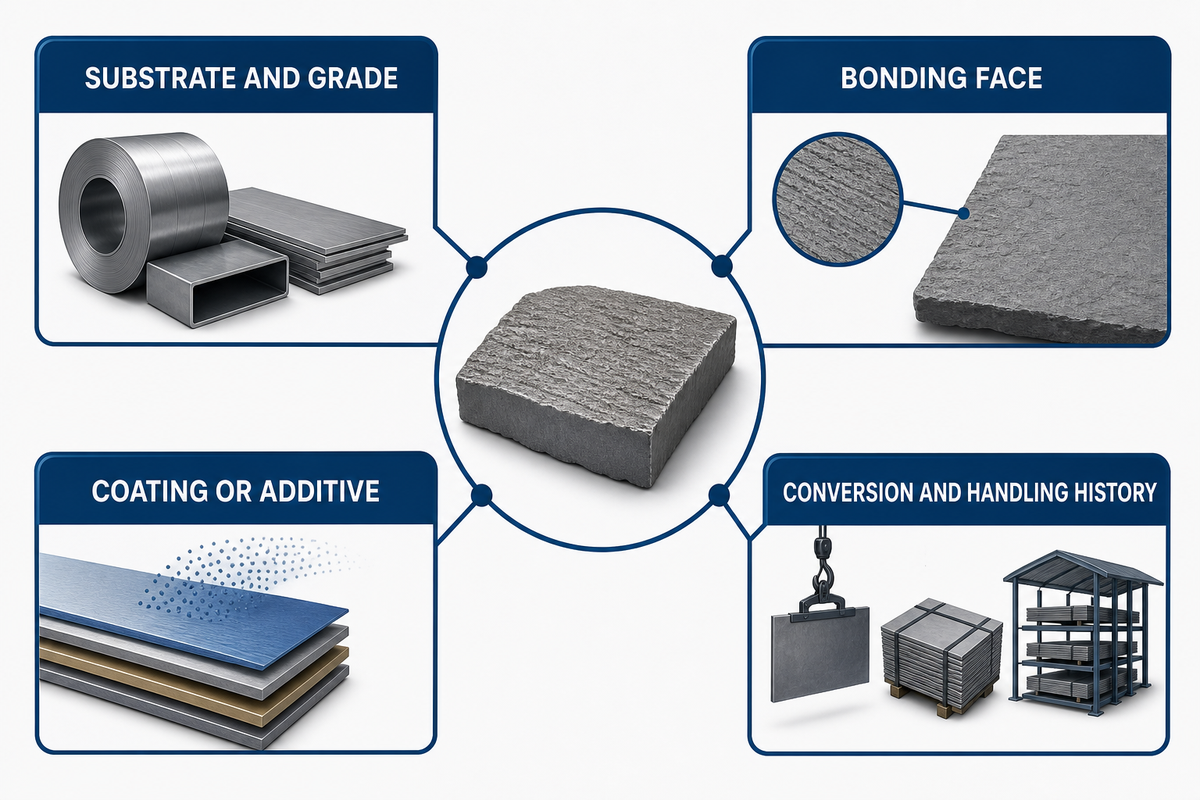
Science of adhesion educational series maps substrate surface, material surface, surface quality, composition of a surface, surface energy of the substrate, solid surface area, clean surface status, adhesion processes, adhesion failures, and materials with low surface energy against the test record. Compare chemistry of the adhesive, manufacturing processes, surface treatment processes, advancements in surface characterization, macroscopic adhesive joints, strong adhesion, principles of surface preparation, using an adhesive, chemical surface state, and factors that weaken the bond.
The appearance of adhesive as received by customers is referred to here as bondable. It includes effects of processing, transporting, and handling. Bondable appearances are different from idealized representations of bulk adhesive. Thus, two adhesive samples of the same polymer type can have different surface properties. Adhesion science considers evidence on the surface of a material, changes in surface, and the surface of the substrate to be data, and not decoration, on the bulk material.
In interfacial phenomena, interactions between two phases, e.g. liquid and solid, occur at their common boundary. Such interactions are referred to as interfacial forces. In adequate systems, these forces may contribute to adhesion. However, such interactions don’t remove the need for an analysis of the actual surface of the material. In some cases, the adhesive may be unstable and the load may be carried by the bulk material.
In 2017, a report by the Oak Ridge National Laboratory mentioned the condition of a surface as one of the determinants of a material’s failure to perform the intended function (adhesive bonding). It explained the term cleanliness as roughness, and it referred to functional groups on the surface as active sites. Although the report focuses on metals, its terminology is used here for clarity.
“The surface preparation needs to consider the cleanliness, roughness, and functionality of the surface.”
When the surface of a bulk adhesive is unknown, a record of the bulk adhesive, its form and conversion, and any coating or additive used, should be created. If a team has information only on the type of adhesive, the surface identity is generally unknown. In such a situation, the team may consider the bulk adhesive to be of a different type from that actually used, especially if a formulation has been changed.
Wetting Is Necessary, Not a Durability Certificate
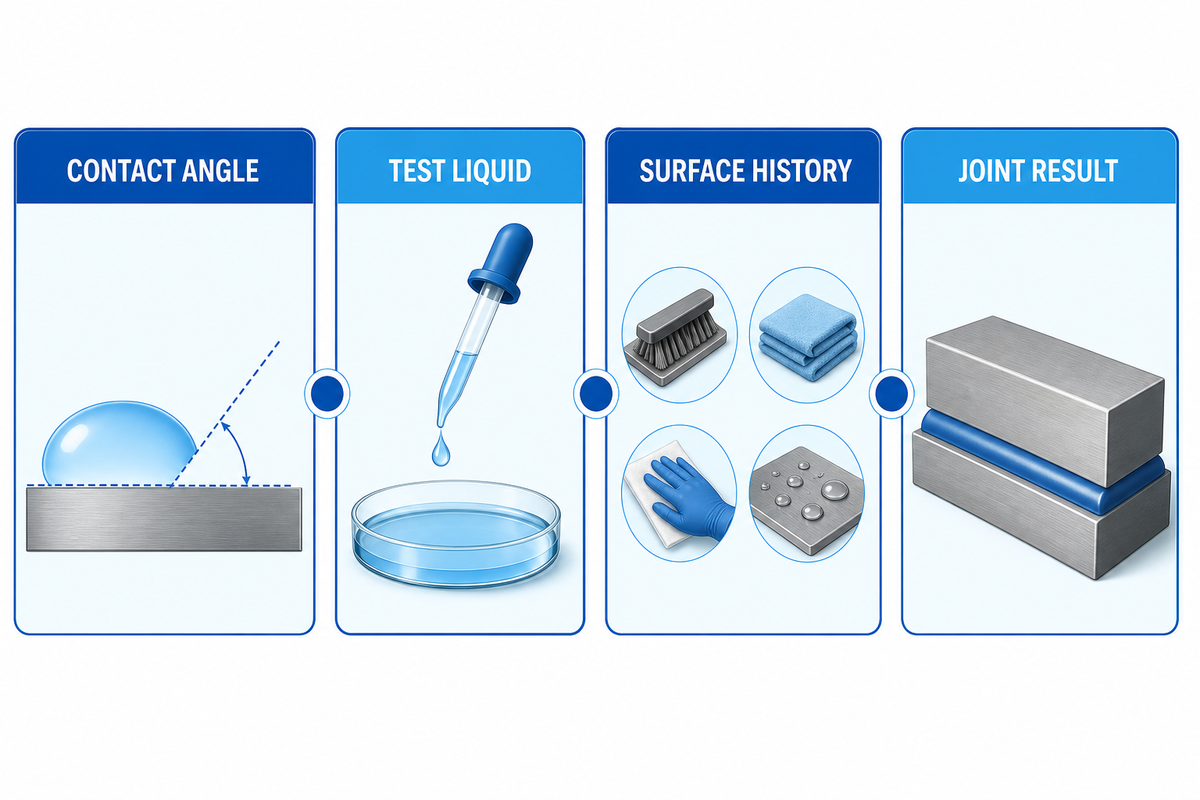
For a practical follow-up on wetting measurements, use the contact-angle testing guide to keep the reading tied to substrate, liquid, and measurement conditions.
Wettability is the propensity of a liquid to spread. Improved wettability is often reflected in lower contact angle. Reduced contact angle, however, doesn’t guarantee bond strength, retained performance, or service life.
contamination is the formation of interfacial Cure lines during the final steps of the cure cycle, and is influenced by the substrate, the adhesive, Stress, and other factors. Low surface energy can challenge a coater, and high surface energy won’t solve the problem of an inadequate or incompatible adhesive.
| Evidence | What it can support | What it cannot prove alone | Record with it |
|---|---|---|---|
| Specified-liquid wetting screen | A controlled comparison of surface readiness | Universal release limit or durable adhesion | Liquid, lot, location, time, environment |
| Contact angle measurements | Wetting change for one test system | A transferable bond-strength prediction | Liquid, angle type, timing, morphology |
| Surface chemistry or XPS | A focused composition or contamination hypothesis | Finished-joint performance | Sampling position and analysis conditions |
| Mechanical joint test | Response of the tested assembly | Performance in an untested geometry or exposure | Construction, process, conditioning, failure mode |
| Visual surface inspection | Visible soil, damage, side, and handling differences | Molecular cleanliness or bondability | Lighting, magnification, location, photograph |
| Roughness or profile reading | A defined topography comparison | Cleanliness, chemistry, or effective wet contact | Instrument, direction, sampling, filter |
| Microscopy | Local texture, transfer, pores, or fracture features | A unique failure cause | Scale, preparation, field selection |
| Conditioned joint test | Retained response after one defined exposure | Service life outside that exposure | Initial control, exposure, test, changed failure location |
NASA’s 2010 Ti-6Al-4V surface-preparation record combined contact-angle goniometry, microscopy, X-ray photoelectron spectroscopy (XPS), lap shear, and durability testing. It serves as a good case study, but isn’t a current specification. A good practice is to perform a joint test and related surface preparation test.
This example uses Northline Laminate. Illustrative example only, Northline Laminate: a team records a 38° water contact angle at 23 °C. These measurements don’t define Tengyang specifications or acceptance limits.
KRÜSS states that for certain systems, predicted shear stresses may not correlate with the mechanics of the cured state. If asked for a “good” contact angle, a complete statement would include the specified liquid, the method, the time, the condition of the surface, and correlated results.
Classify Failure Location Before Testing a Cause
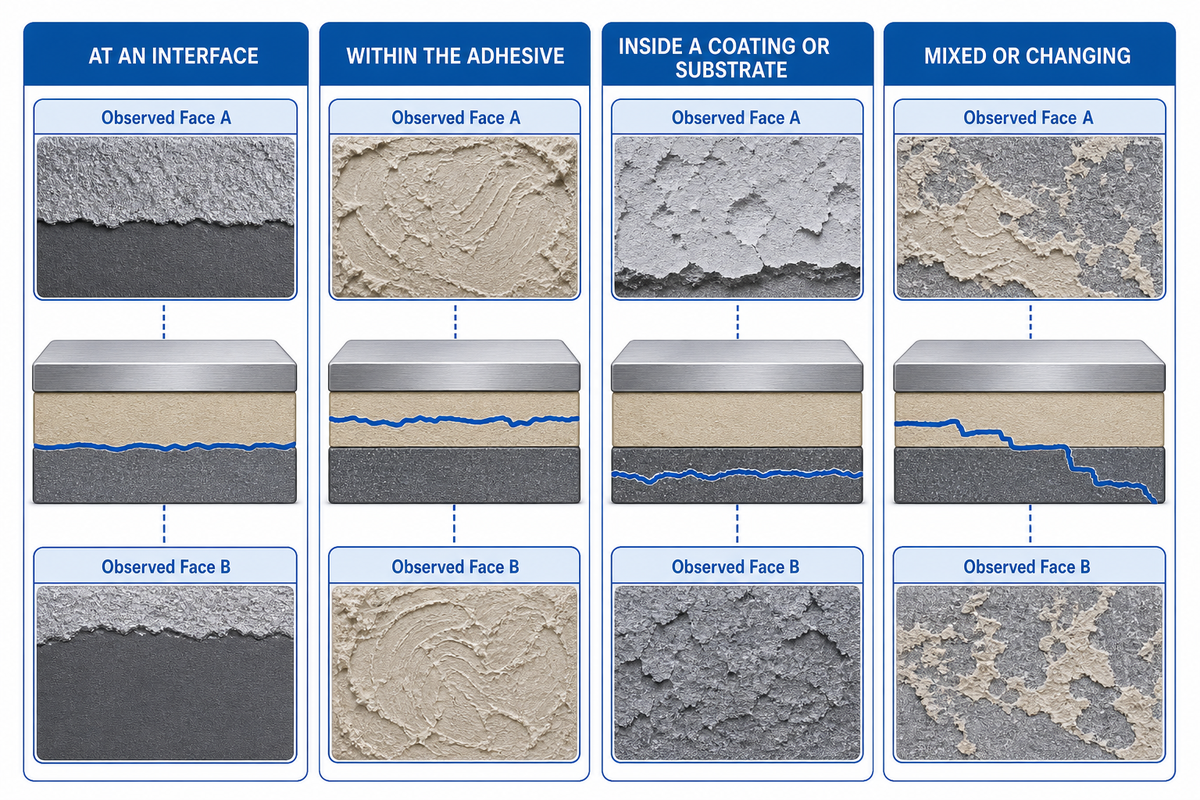
Where a joint failure occurs doesn’t necessarily specify the failure mode. Both faces of a failed specimen should be documented, if possible, prior to removal or analysis. The condition of a specimen should be reported, as well as the rate, the history of the specimen, and the environment in which the test was performed.
At an interface
Residue appears mainly on one face. Ask about surface contamination, compatibility, wetting, treatment uniformity, and process history.
Within the adhesive
Material remains on both faces. Check layer condition, heating or cure, cooling, thickness, and loading, not just surface preparation.
Inside a coating or substrate
A weak layer tears or delaminates. Investigate that layer’s integrity before trying to modify the surface above it.
Mixed or changing
Several locations appear or shift after exposure. Map approximate areas and compare replicates instead of forcing one label.
The official ASTM D5573-99 (2019) catalogue page states that for fiber-reinforced-plastic joints, failure mode, not appearance, determines joint adequacy. For example, it may not always be the case that an absence of delamination indicates that the joint is adequate. Other causes may be at work. Likewise, the presence of a cohesive part of the joint may not indicate adequacy of the joint.
Consider morphology as the initial step in a causal investigation. In the case of separation at a single interface, examine a controlled external variable. If coating transfer occurs, evaluate the integrity of the coating. If the adhesive coating changes, investigate the conditions under which the bond-line is formed and conditioned. In the meantime, production may ask for an immediate change in material, but often leaving the failed surfaces as they’re provides more useful information for the next test.
The Surface History Clock Is Not a Countdown
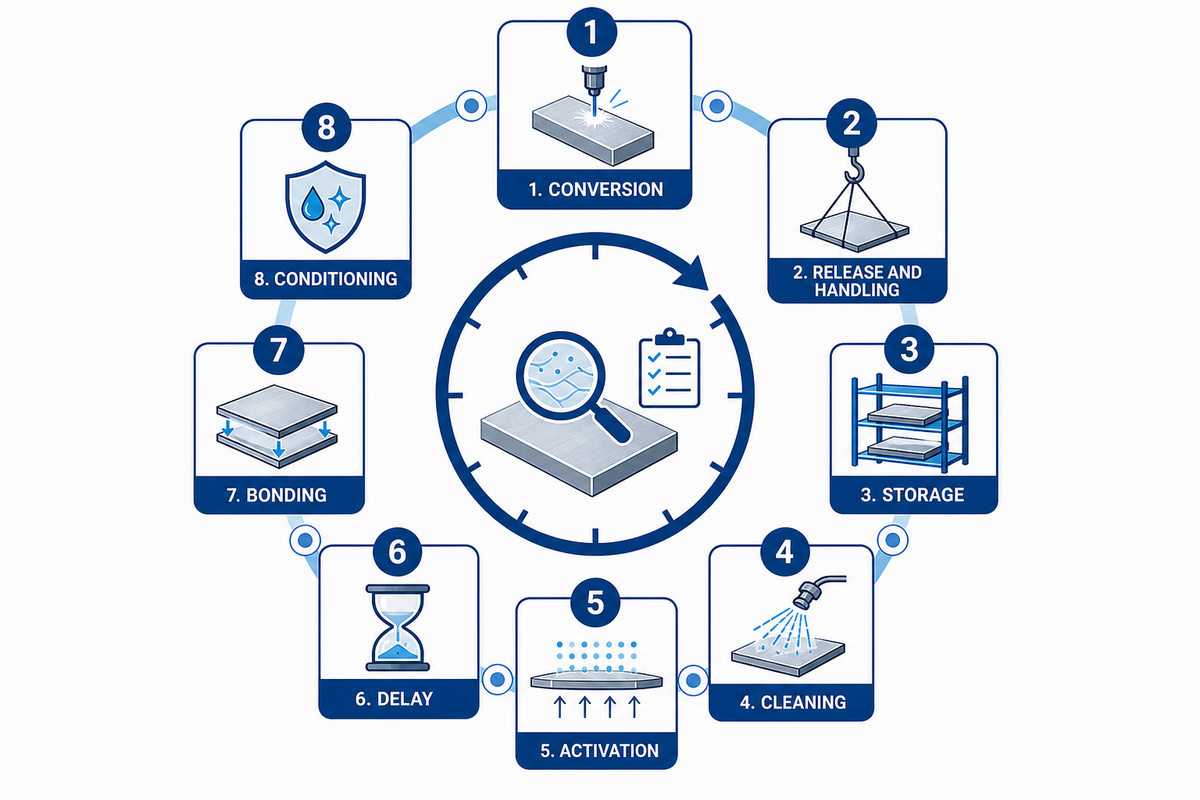
The Surface History Clock is the record of the most probable time a bond face was changed and helps recover missing process history. The Clock isn’t a decay curve, and its use is limited to the conditions and environment under which it was created and used.
| Clock position | Record | Diagnostic question |
|---|---|---|
| 1. Conversion | Extrusion, molding, coating, finish, side | Was the intended bonding face created consistently? |
| 2. Release and handling | Liner, roller, glove, tool, stacking contact | Could transfer or contact alter the specific surface? |
| 3. Storage | Time, packaging, temperature, humidity | Did exposure or migration change surface states? |
| 4. Cleaning | Agent, concentration, wipe, rinse, dry time | Was contamination removed or redistributed? |
| 5. Activation | Method, settings, side, coverage, sampling | Was treatment uniform without surface damage? |
| 6. Delay | Treatment-to-bond interval and exposure | Did the measured condition still exist at bonding? |
| 7. Bonding | Adhesive identity, heat, pressure, dwell, cooling | Could the process create full contact without damage? |
| 8. Conditioning | Time, load, heat, moisture, washing, flexing | When and where did performance change? |
One 2023 published article listed studies and explained why the Surface History Clock isn’t a decay curve. The variation in aging of polymers is dependent on the conditions of treatment and storage as well as the methods of measurement. That article also states that the relationship between adhesion forces and polymer surface free energy isn’t well defined.
Northline Laminate, continued: the illustrative record compares a 15 min delay with a 2 h delay while storage remains at 40% RH. These tests evaluate the extent of an expected delay; they don’t define a service limit.
Don’t borrow a treatment-to-bond delay time from another coupon. Develop time-series plots of the actual levels of substrate, treatment, packing, adhesive, and joint test. Release limits depend on the clock and the validated process system.
Five Failure Patterns and the Next Controlled Question
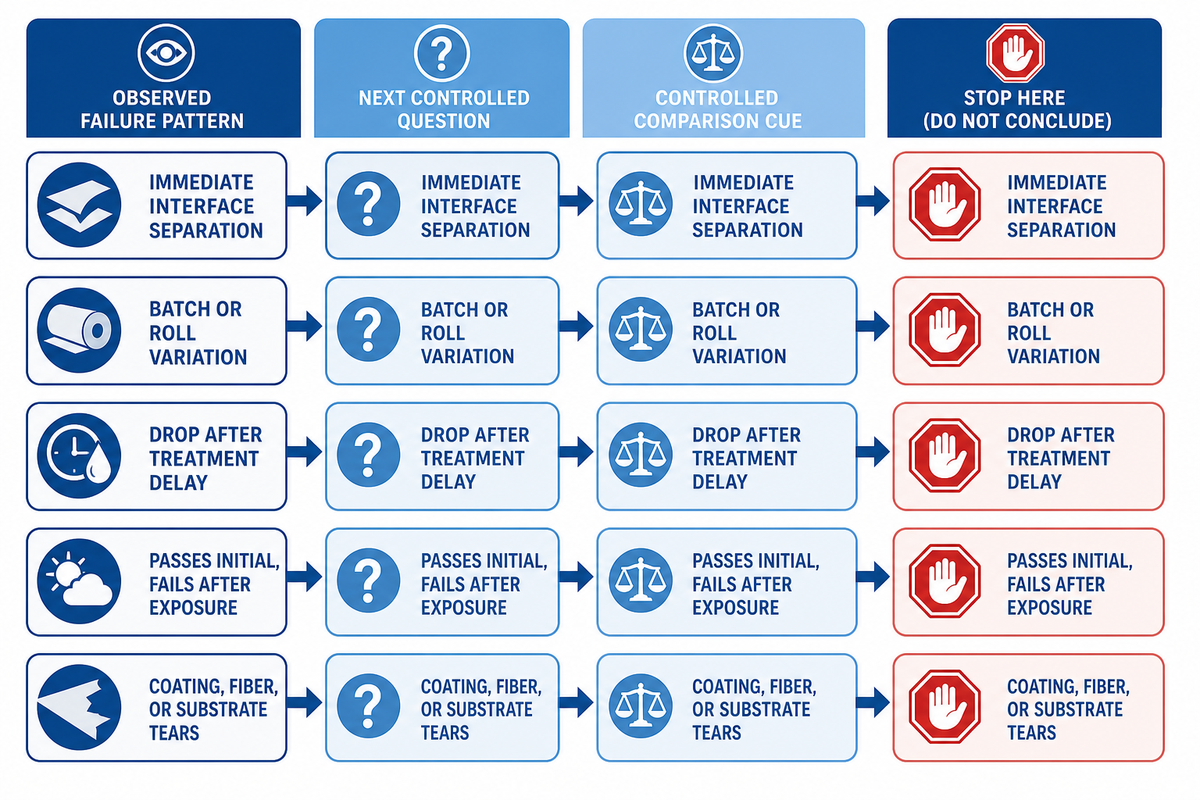
The NIST experimental-design handbook cautions that a one-factor-at-a-time comparison cannot reveal interactions. For these failure patterns, keep the next comparison narrow and record the variables that were held constant.
An incorrect assumption regarding the root cause should be treated as a defect and mapped to the next comparison. Defects should be described in terms of timing, nature, and location of failure. Adjustments in inputs, processes, or materials should be evaluated based on the information gained and the equivalence of factors. Although similar symptoms shouldn’t be considered as the cause of failure.
| Observed pattern | First variable to inspect | Next comparison | Stop condition |
|---|---|---|---|
| Immediate, widespread interface separation | Wrong face, gross contamination, insufficient contact, incompatible surface | Verified face and controlled preparation against the current control | Stop if the substrate or coating cannot tolerate the process |
| Batch or roll variation | Surface history, side, finish, treatment uniformity | Mapped specimens from defined positions and lots | Stop pooling data when position or lot is confounded |
| Performance drops after a treatment delay | Exposure and storage between activation and bonding | Actual time points with fixed packaging and joint test | Stop claiming a universal clock outside the tested system |
| Initial result passes; exposed result fails | Water, heat, flexing, washing, chemical contact, or stress | Matched initial and conditioned joints with fracture records | Stop using the initial test as service validation |
| Coating, fiber, or substrate tears | Integrity of the layer carrying load | Layer test or representative construction change | Stop increasing surface treatment above a weak layer |
Although polyethylene and polypropylene have low-temperature resistance, they can still be considered “low-energy” materials. As such, they can be easily wet by a adhesive. Wetting should be verified. “Low-energy” materials are poor choices as adhesive, but they shouldn’t always be rejected.
Separate Cleaning, Roughening, Treatment, and Chemistry Changes
The site’s surface-energy reference is the next reading when a cleaning or treatment change needs a defined surface-state comparison.
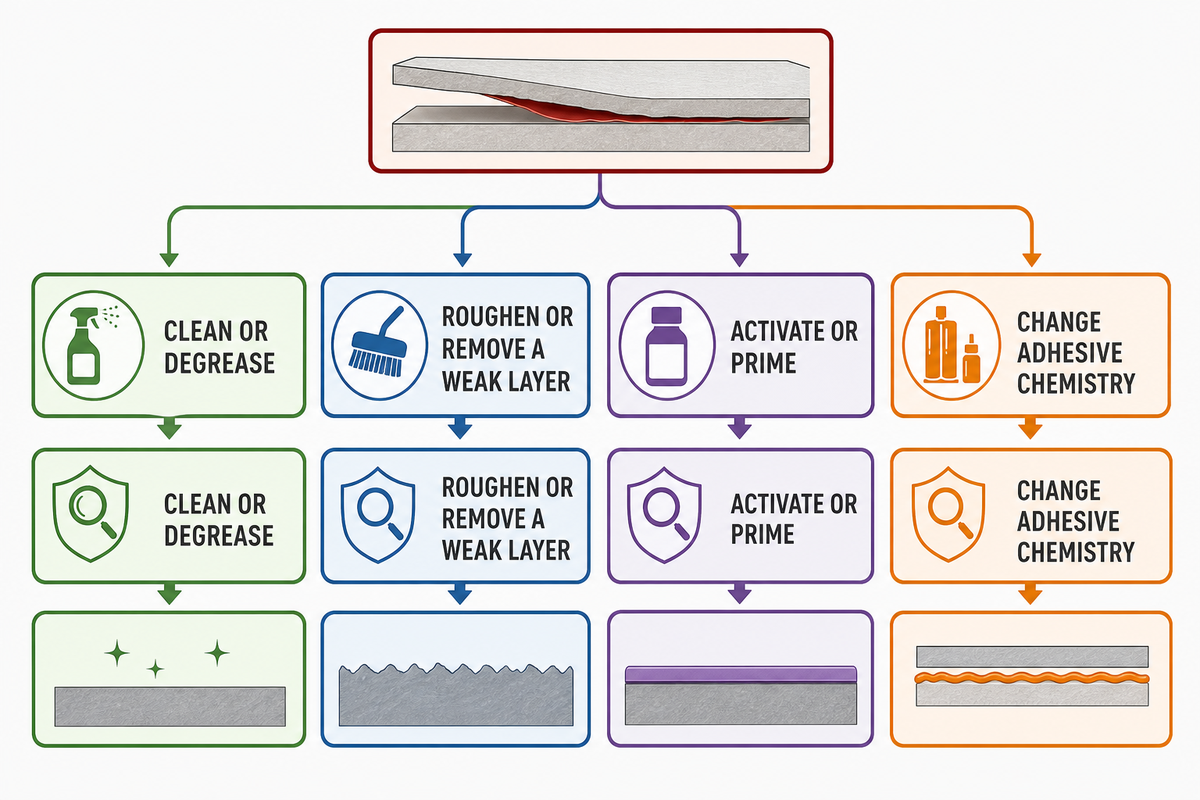
Approaches to modify surface such as etching, activation, or adhesive replacement, should be evaluated to see if they address the suspected cause of concern. If a surface needs to be modified for adhesion, the meaning is lost and many different processes can be used.
| Intervention | Purpose | Evidence to check | Boundary |
|---|---|---|---|
| Clean or degrease | Remove a removable contaminant | Agent compatibility, residue, rinse and dry record | Cleaning does not activate every polymer |
| Roughen or remove a weak layer | Expose sound material or accessible texture | Dust, damage, loose fibers, actual contact area | More surface roughness can trap air or damage a coating |
| Activate or prime | Modify the surface chemistry for a stated system | Uniformity, treated side, delay, damage, joint result | A better wetting screen is not automatic durability |
| Change adhesive chemistry | Match two materials, process, flexibility, and exposure | Controlled surfaces and representative joint validation | A family name is not a grade approval |
The adhesive and Sealant Council identify preparation, treatment, and the upkeep of treated state. As cited in Brighton Science, the abrasion of a weak layer may lead to the removal of undesired material, but excessive texture may limit effective contact.
When multiple changes are proposed, for example, abrasion, plasma, corona, and flame treatments, and the formulation in the same run, the experiment can’t differentiate the effect of each of the changes. Narrow the hypothesis. If multiple factors are expected to fail by design, for example, interact, a sequential approach to experimental design should be avoided.
Use Measurements as Evidence, Not Verdicts
For joint-level follow-up, the peel-strength test-reading page shows why load, width, specimen identity, and reported units must stay attached to the result.
The ASTM D5573-99 catalogue frames failure mode as evidence for interpreting a joint, not as a visual pass/fail shortcut. Record the measured result with the failure location and conditioning history before drawing a durability conclusion.
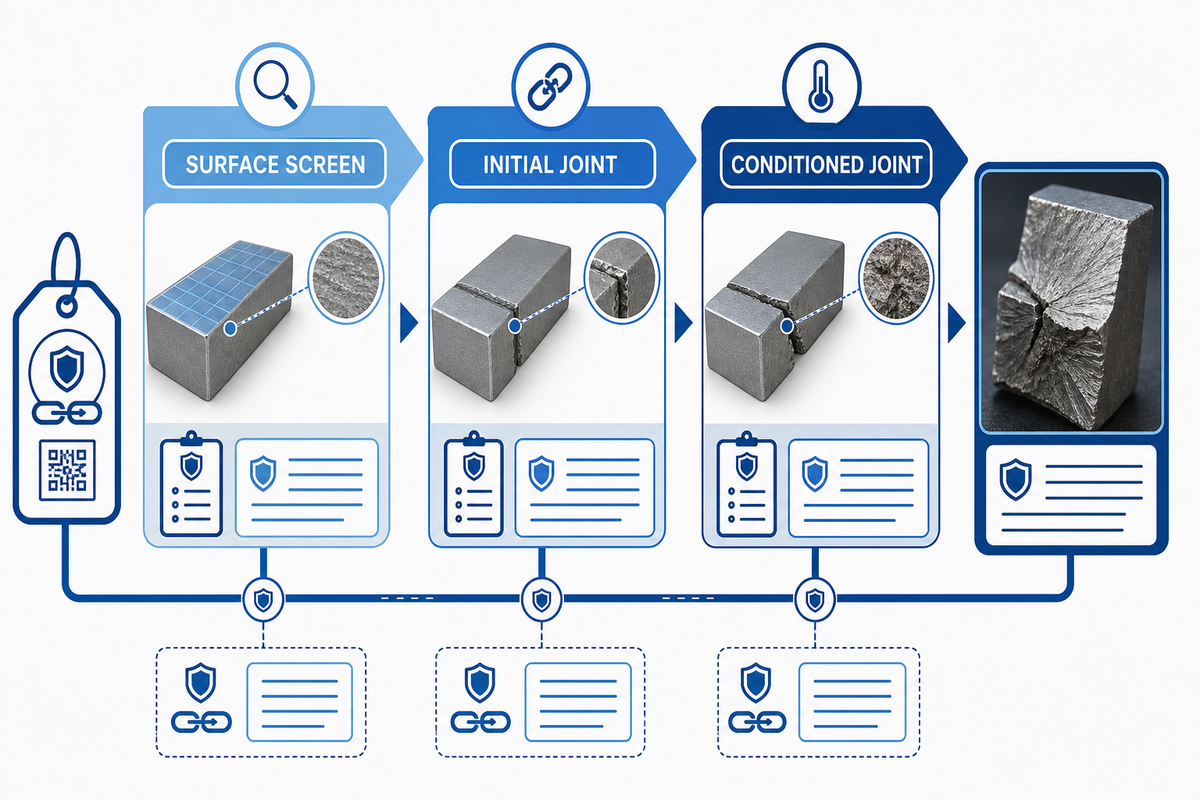
Verification should proceed from a superficial assessment of the specimen to a joint test to a conditioned joint test. Each level addresses a different inferential level. In the conditioned joint test, the question is whether the strength and the other relevant properties of the joint meet the desired level.
- Surface screen: A surface screen determines whether the specimen is in a stable state to warrant comparative tests.
- Initial joint: A joint test determines whether the specimen can be assembled into the desired configuration.
- Conditioned joint: The conditioned joint test evaluates the strength of the assembled joint specimen and determines whether it’s fit for use.
Joint strength may be evaluated by several tests. While such tests may provide evidence on the strength of the joint, a systematic evaluation of the joint, and the cause of the failure may not be resolved. A complete approach to problem-solving should be adopted.
Don’t assume that values recorded from various liquids, instruments, specimen histories, locations, or environments are measurable on the same scale and can be combined for analysis. A purchasing decison requires traceability to the relevant processes in the supplier’s facility and acceptance criteria definition. Absence of such relationships means that the value is an observation in the process, and not a decision for release.
Use One-Variable Trials as Screening, Not Proof
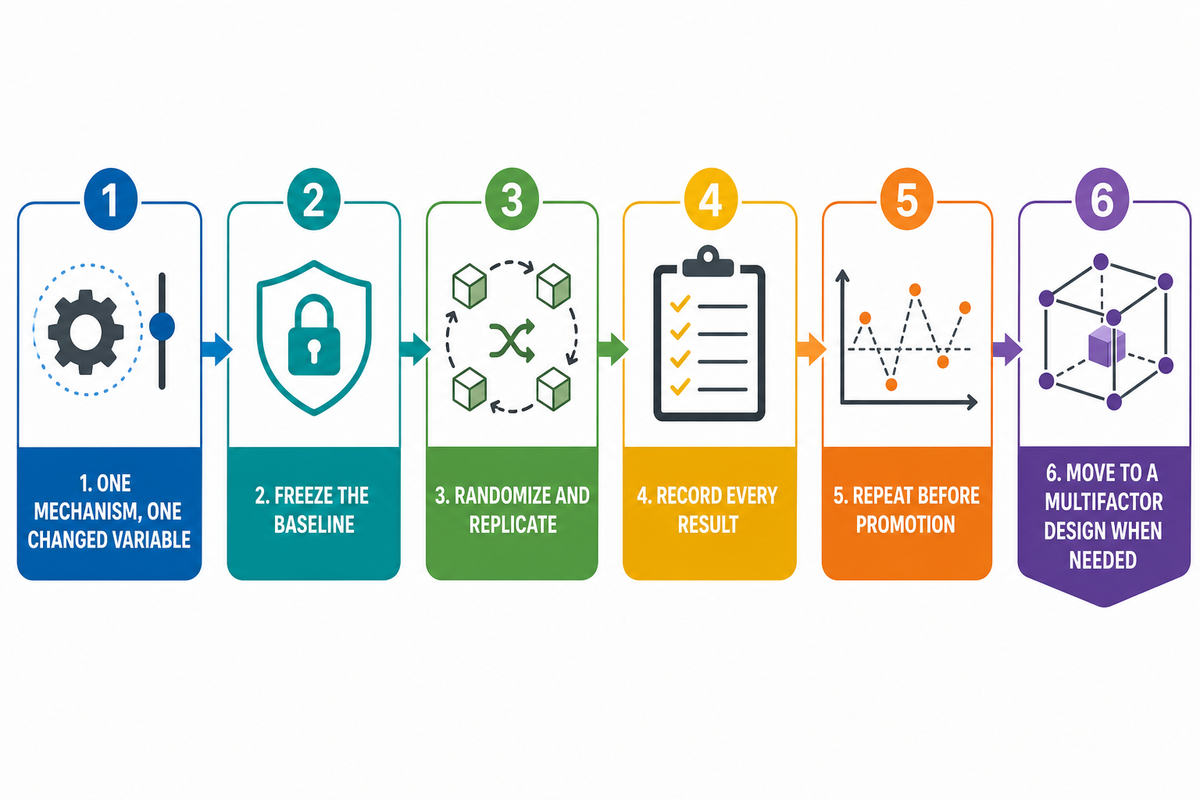
A stable baseline and effective control of external variables allow the use of single variable A/B testing to identify possible causes of variation. Results from such tests can remain ambiguous and may not isolate process factors, chemistry, heat, time, or treatment effects. Research and development personnel should view such tests as a means to define new process and product questions.
A bounded screening card
- State one suspected mechanism and one changed variable.
- Freeze substrate, specimen geometry, adhesive, and process conditions.
- randomize the order of the runs as much as possible and perform enough runs to detect normal process variation.
- Carefully document the results of each run and the location of each fracture. Average results may be misleading.
- Repeat the comparison before promoting it beyond screening.
- If the effects of the process change with different settings, then a full or multivariable design may be more appropriate.
Per the NIST/SEMATECH Engineering Statistics Handbook, one of the main limitations of the one-factor-at-a-time approach to experimentation is that it may not help identify the most critical factor for a given process or system (interaction Factors). This is a general concept of experimental design. A factor that’s found to be positive for a given experiment may in fact be negative for a different experiment.
This screen evaluated whether a hypothesis warranted further investigation. Acceptance criteria came from the relevant product requirement or qualified baseline. A universally applicable impact or effect size wasn’t established.
A Hot-Melt Lamination Diagnostic Walkthrough
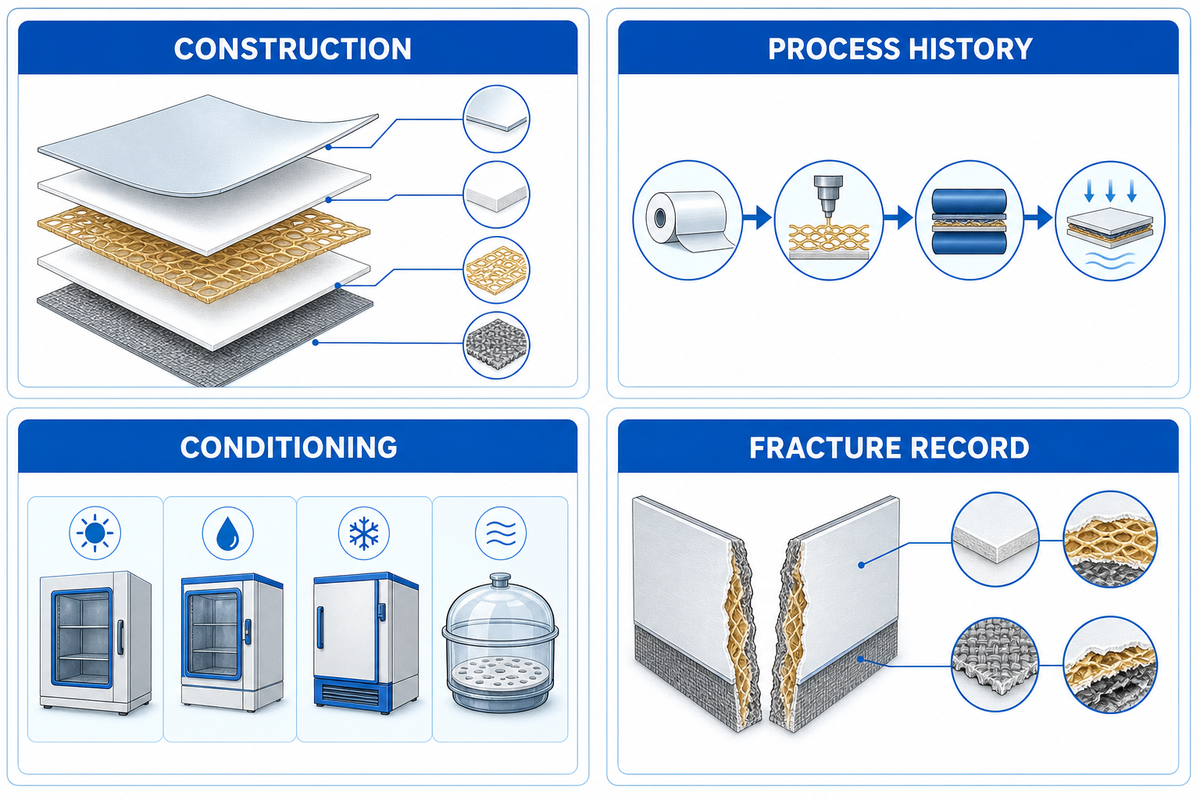
If a hot-melt laminate appears acceptable after processing but adhesive layers separate during handling, don’t change the hot-melt adhesive. Identify and document the type of material in each of the two layers, the type of adhesive coating or film (if any), the mode of failure, and the location of the failure.
Edge separation in a textile-to-film laminate after wash screening may depend on roll and/or lot position. Evaluate both failure modes and the conditions that led to fiber failure versus catastrophic failure. Mixed failure modes shouldn’t be interpreted as weak adhesive.
A 2026 peer-reviewed CFRP hot-melt film study records preparation, adhesive-specific heating and pressure, loading, and fracture location together. A separate VTT cartonboard study used Y-peel at 23 °C and 50% relative humidity and distinguished fiber tear from interfacial failure. Neither study supplies a recipe for textile lamination. Both show why process history and morphology must remain attached to the result.
Northline Laminate, continued: an illustrative process card logs 130 °C, 0.30 MPa, 15 s dwell, and 24 h conditioning; its test record adds a 25 mm specimen width and 100 mm/min rate. Values illustrated on placeholders represent test card structure only and are neither a process window nor a recommendation.
Prior experience should be used to determine the level of the next question. Comparison of specimens should be done by controlling the process. If interfacial failure occurs, review process conditions and determine if the process and conditions were sufficient. Service conditions should also be considered. Bonding surfaces, or the interleaf of dissimilar materials, can also be investigated. Use of an adhesive for bonding in one study doesn’t give sufficient information to use that adhesive for bonding in a different study.
When Diagnosis Becomes Material Selection
The polymer-physics learning hub provides broader material-response context before a team converts a diagnosis into a production specification, linking surface observations to polymer response, temperature, rate, and conditioning so material selection follows a documented mechanism rather than a single contact-angle or peel result.
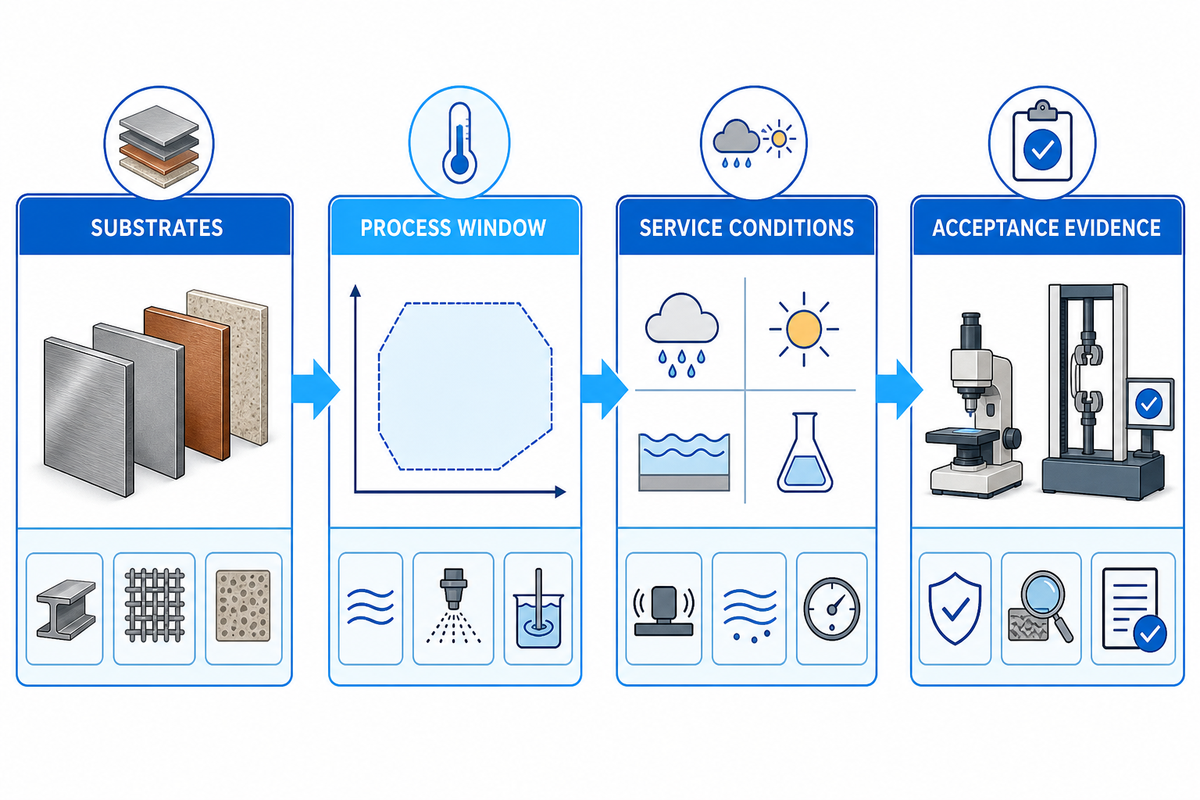
A materials review can be made when a polymer has been identified as substrates and/or bonding, the history of the interfaces has been identified, process and service conditions have been defined, the mode of failure has been documented, and the acceptance criteria have been defined. For a 3M technical specialist, optimal bonding is a context-specific question: compare the chemistry of the adhesive, manufacturing processes, advancements in surface characterization, principles of surface preparation, using an adhesive, and conditions that weaken the bond with the top few molecular layers and the molecular level; strength and durability, mechanical fastening, two dissimilar materials, medical devices, unique challenges, properly wet surfaces, using contact angle, and non-metallic substrates require defined tests. When polymer identification has been made by a supplier, different material formats can be discussed. If sufficient information has been provided about the process and service conditions, a materials supplier can evaluate bonding.
- Coatings, substrates, finishes, bonding sides, and representative samples
- Cleaning, treatment, storage, handling, and treatment-to-bond timing
- Available heat, pressure, dwell, cooling, and line constraints
- Service temperature, moisture, washing, flexing, chemicals, and load
- Test procedures and results. Fracture test pics.
- Acceptance criteria and the authority that owns the decision
Hot melt adhesive films, sheets, powders and granules from TPU, EVA, PA, PES, and PO are available from Shanghai Tengyang. After the diagnostics are completed, you can access a separate process support and material selection page. That page outlining process support and material selection is structured in a way to assist you with the final steps of the process. This document is designed to support you with the diagnostics.
Discuss a Controlled Bonding Trial
Frequently Asked Questions
What is an adhesive surface?
Adhesive films, like substrates, can be coated or treated and may not resemble the bulk of the material. Top material layers can be altered by processing, treatment, aging, and contamination. To characterize a substrate, record its type, finish, bonding side, storage, and elapsed time before bonding. Two substrates of the same bulk polymer can be treated differently and may contain different surface layers, so record face, finish, storage, elapsed time, and exposure before comparing joint results in routine production review.
What does “adhesive science” mean?
The science of adhesion links surface chemistry, interfacial interactions, adhesive cohesion, substrate behavior, process conditions, and joint response during manufacturing and service tests. In manufacturing, the science of adhesion also includes thermal and mechanical conditions. Failure modes and test geometry matter.
Does a lower contact angle always mean a stronger bond?
No. Contact angle reflects a test liquid under one set of conditions; a lower value may not represent stronger performance or durability against the defined acceptance criteria. Evaluate joint performance on specimens that undergo joint testing, conditioning, and service exposure.
Is roughness as important as surface cleanliness to adhesion?
Each effect serves a different purpose. Maximizing adhesion and minimizing cohesion may lead to residual stresses that may cause failure. Stresses may remain dormant until conditions change. Adhesion may serve a different purpose in different cases. It may be necessary to remove contamination to determine the cause of failure.
What are the main types of adhesive failure?
Various failure modes are observed. Failure may occur within the adhesive or coating, or both may fail together. Mixed failure of coating and adhesive may occur. An adhesive or coating may separate from the test specimen. Other failures may be due to test artifacts, such as lack of bond to the test specimen, oxide formation, and test joint design.
When should a manufacturer change the surface treatment instead of the adhesive?
Test the surface route in the presence of evidence such as contamination conditions, weak boundary layers, non-uniform treatment, unstable wetting, or unrecovered delays. Test adhesive chemistries when the surface is constrained but joint formation, stiffness, service temperature, aging, and/or environmental stress cracking are unconstrained and lie outside the constraints of the test conditions.
References & Sources
- Oak Ridge National Laboratory-surface preparation Techniques for adhesive bonding of Aluminum and Copper.
- NASA Technical Reports Server, Laser Surface Preparation for Adhesive Bonding of Ti-6Al-4V
- NIST/SEMATECH Engineering Statistics Handbook – One Variable at a Time.
- PubMed, Review of Plasma-Treated Polymer Surface Aging
- ASTM D5573-99
- Adhesive and Sealant Council, Surface Treatment
- Read the attached Wiley/SPE document to learn more about the best presentation on “Hot-Melt adhesive Film in a Defined CFRP Joint.”
- VTT, Hot Melt bonded Carton
Shanghai Tengyang New Materials Technology Co., Ltd. isn’t affiliated with any patent, certification, laboratory test result, or process described in the cited documents.
ABOUT TENGYANG
Industrial hot melt adhesive materials for bonding routes
Shanghai Tengyang New Materials Technology Co., Ltd. supports material discussions for production teams working with bonded products.
Available forms: hot melt adhesive film, web, powder and granules. Material families: TPU, EVA, PA, PES and PO.
CONTACT PROFILE
Betty Fang
Contact for material inquiries.