Get in touch with Tengyang Company
MEASUREMENT SPECIFICATION 01
Textile Measurements: Linear Density and Barrier Reports
Textile measurement units refer to various quantities which are identified as: yarn mass per length, fabric mass per area, and performance under defined test conditions. This index is there to facilitate interpretation of material reports, support comparable units conversion, and ease setting up the textile bonding inquiry document.
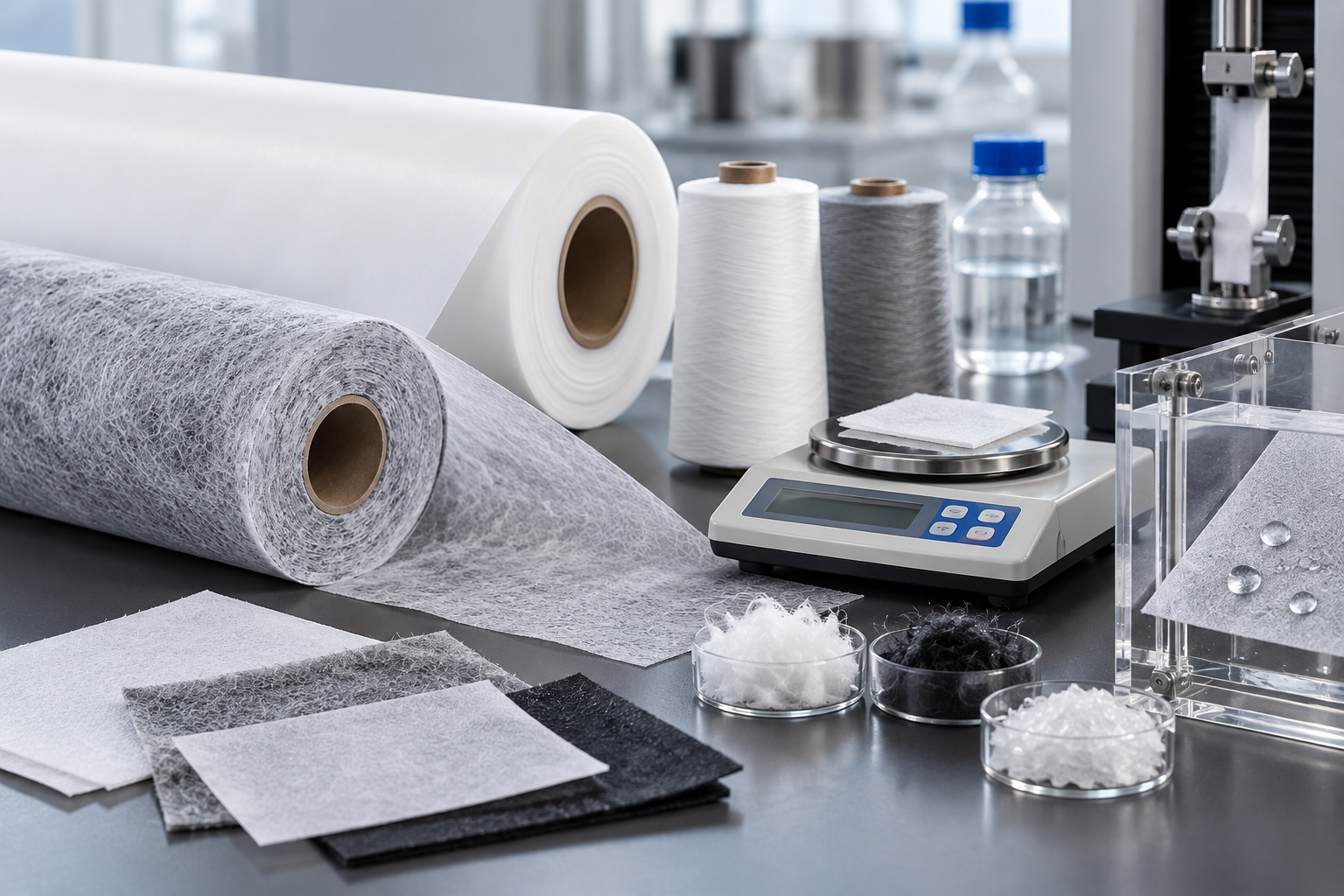
Start with the quantity. A denier value cannot replace GSM, and a water-vapor result cannot stand in for resistance to liquid water. Matching the unit is only one part of matching the report.
Textile Report Quantities at a Glance
Identify the line on your specification before choosing a calculation. Use the tools to catch a unit mismatch before you send your specification to Tengyang. Converting a quantity does not establish material quality or test equivalence; ISO 2060 and ASTM D3776, for example, address different measurements.
 01
Yarn
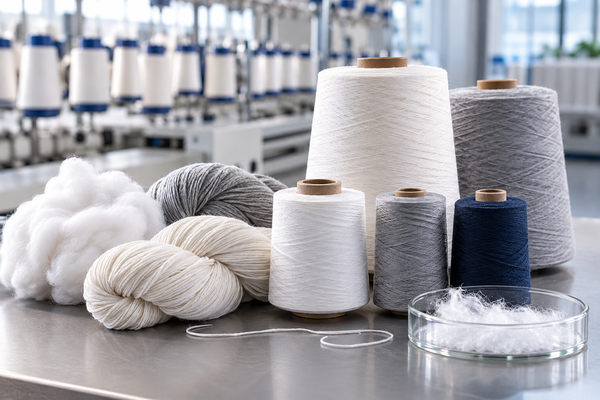
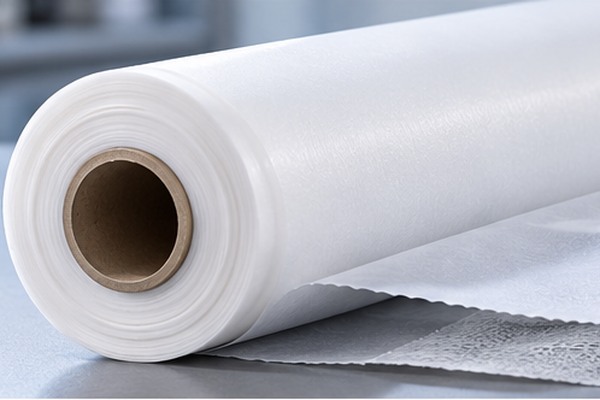
Tex, dtex, denier = lineal densities – count system such as the cotton count or metric count must be specified separately.
 02
Fabric
GSM means grams per square meter. Thickness, roll width and thread count describe separate characteristics.
 03
Barrier reports
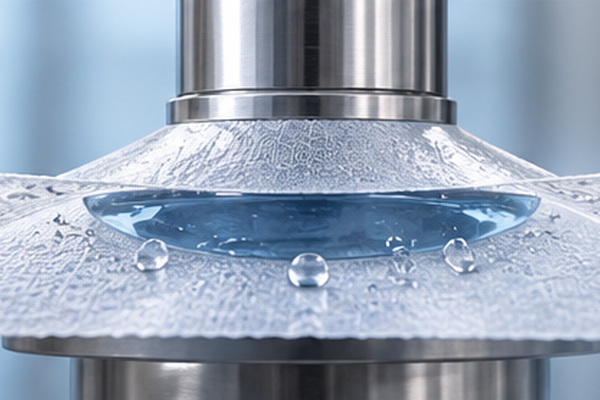
Keep water vapor transmission, evaporative resistance and hydrostatic pressure in separate columns.
Yarn Linear Density and Count Systems
In the direct systems, tex is grams per 1,000 meters, dtex is grams per 10,000 meters, and denier is grams per 9,000 meters.
Tengyang Adhesive Materials
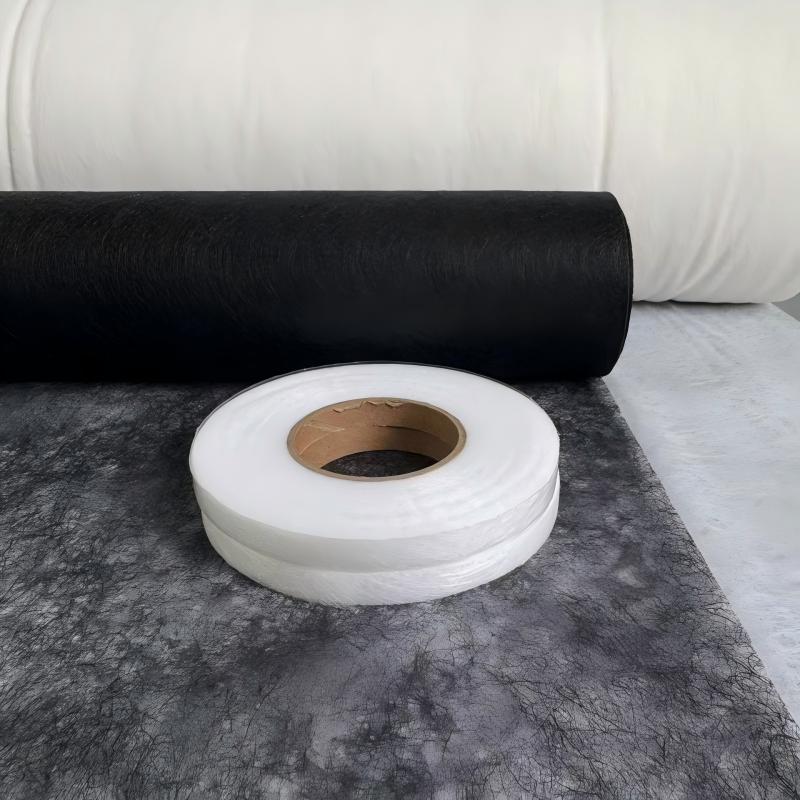
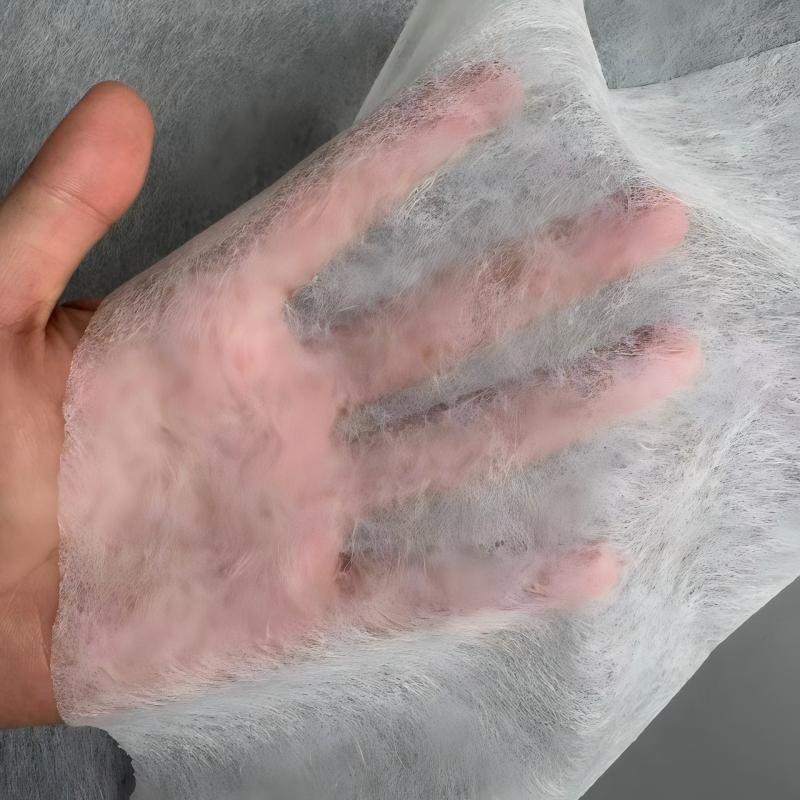
We supply hot melt adhesive films for textile bonding applications. Our film range includes TPU, EVA, PA, PES, and PO. Tengyang also supplies adhesive web, powder and granules, so the enquiry can identify the required material form before comparing dimensions or test reports.
SEC.01 // Film families
- TPU hot melt adhesive film is one choice we use to try to satisfy bonding enquiries.
- EVA hot melt adhesive film is also part of our material offering.
- PA hot melt adhesive film is available from Tengyang.
- Our range includes PES hot melt adhesive film.
- Tengyang also supplies PO hot melt adhesive film.
SEC.02 // Other forms
- We supply hot melt adhesive webs.
- We supply hot melt adhesive powders.
- We supply hot melt adhesive granules.
SEC.03 // Customization
- We support customized thickness and width.
- We support custom color and melting point requirements.
- We provide application support and support application-specific formulations and OEM requirements.
ASTM F1249-25
Enquiry input: Send the two surfaces to be joined, the intended application and the adhesive form under consideration. Include an existing report when barrier behavior is part of the requirement.
Submit EnquiryFabric Construction and Lamination
Matching GSM values do not necessarily mean construction is the same. For instance, a different fabric can have the same grams per square meter while utilizing other fibre, weave, coating or surface finish, and the reported sample may be a whole composite or a selected layer.
01
Garment bonding
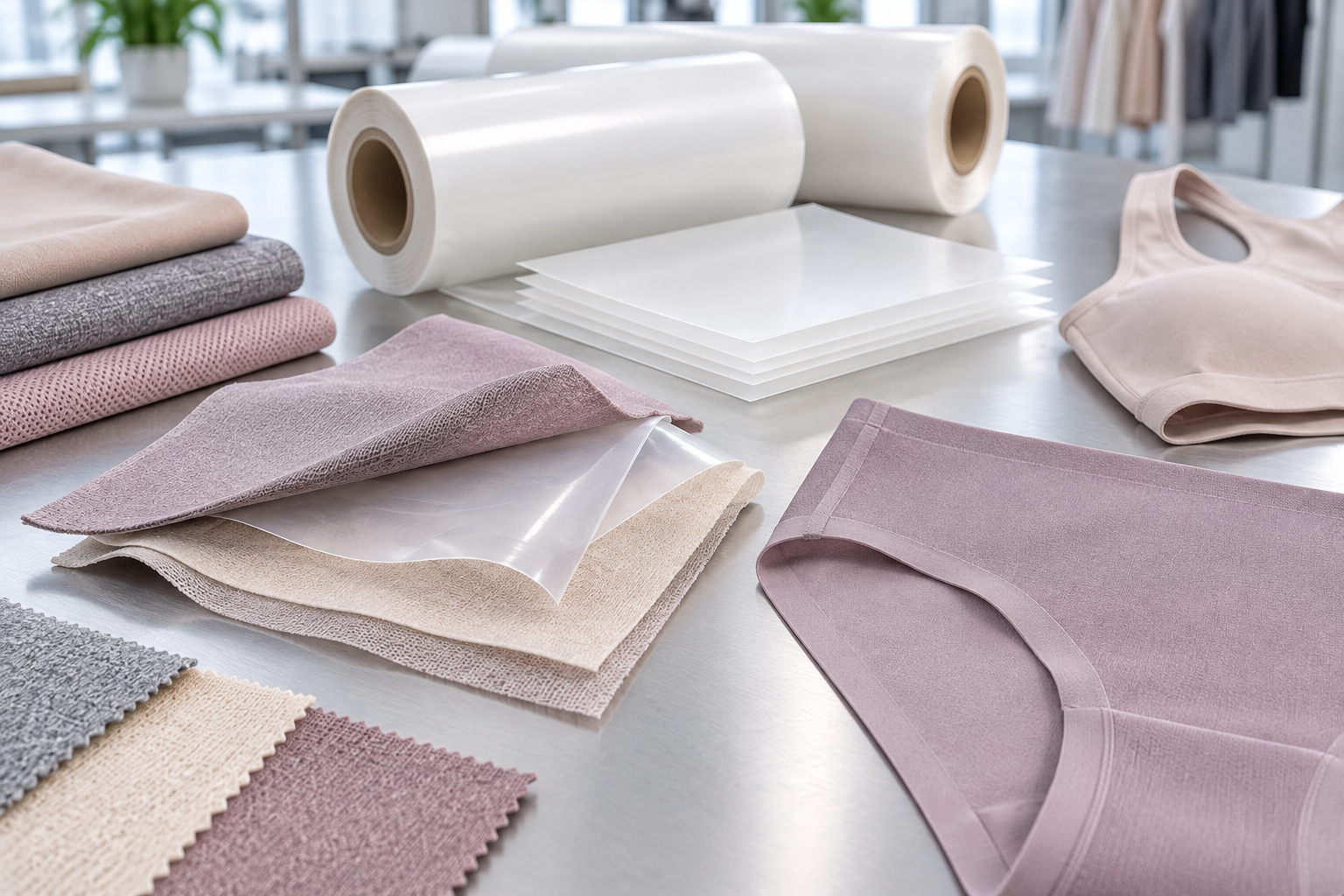
For a garment or underwear application, specify face fabric, linings and adhesive layer along with whether the sample material was recorded as loose fabric, a bonded panel or the completed seam.

02
Shoes and leather
Specify the two bonding surfaces and desired flexibility; base-material weight only refers to one element of the construction and doesn’t imply full part thickness or drape.
03
Other assemblies
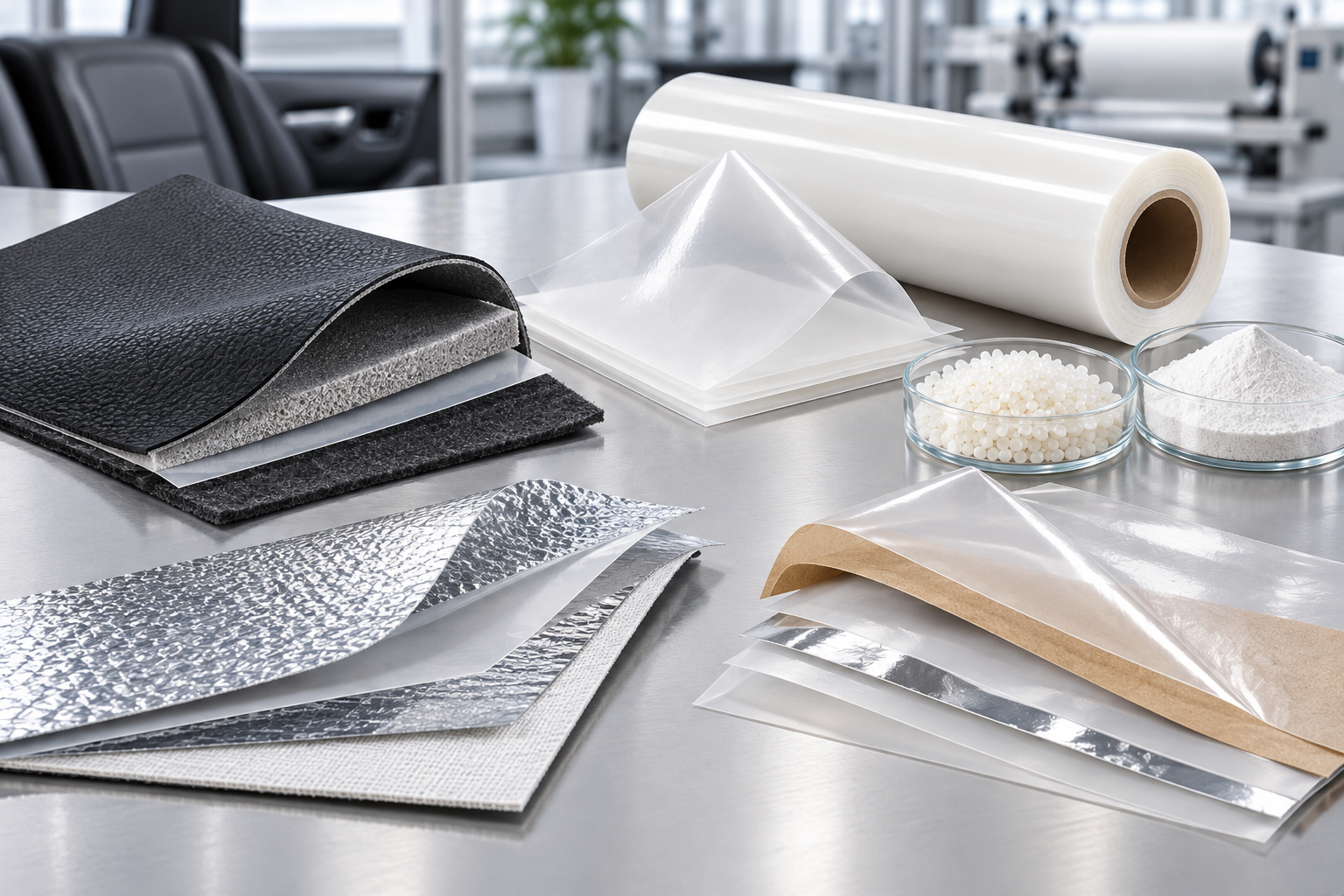
In order to help with automotive interior, reflective materials and packaging applications, specify the exact layer order; this is important especially if a polymer film report was obtained.
ASTM STANDARD COMPLIANCE
ASTM F1249-25 covers single-layer and multilayer flexible barriers within its scope, including coated materials. A report mismatch creates a problem because the tested layers may differ. ASTM F1249 does not require a different method for every laminate; send your specimen description with the test result for a Tengyang application enquiry.
Selection trade-off:
Bonding requirements and the desired textile handle must be considered together. Choosing by the base fabric’s report alone can leave an important assembly requirement unanswered.
Fabric Weight and Dimensional Units
The weight of a fabric value recorded in GSM equates to its mass per square meter, not a thickness value; the simplest calculation for an areal density is grams of the sample divided by square meters of sample, so 2 grams / 0.01 m² = 200 g/m², approximately 5.9 oz/yd². For a measured swatch, divide mass in grams by area in square meters; one gram per 0.01 m² corresponds to 100 grams per square meter. This maths cannot resolve sampling or conditioning errors, please remember this.
Specification line
What to retain
Common comparison error
GSM or oz/yd²
Area basis and specimen preparation
Comparing an ounce of mass with an ounce per square yard
Linear meter or yard
Usable width and length
Treating length as area without the width
Roll mass
Net material mass and packaging exclusion
Using gross shipping weight as fabric weight
Thickness
Method, applied pressure and material scope
Inferring thickness directly from GSM
Adhesive Quote Inputs
We support textile bonding enquiries for garments, shoes, leather and other listed applications. Give Tengyang a consistent specification so film, web, powder or granule options can be discussed on the same basis. Include your required delivery date for discussion with the quotation.
Tengyang application support
Send your bonding specificationBarrier Test Reports And Conditions
Water vapor transmission rate, often simply called WVTR, describes the rate at which water vapor passes through a material specimen under specified conditions; if a report uses moisture vapor transmission rate or MVTR, confirm the measured quantity and method behind that abbreviation.
Report Quantity
Unit Expression
Interpretation Boundary
Water vapor transmission
g/(m²·day)
Mass transferred per area and time under the stated conditions
Evaporative resistance, Ret
m²·Pa/W
Resistance measured with a specified apparatus; not a direct WVTR conversion
Hydrostatic pressure
kPa or stated height
Resistance to liquid-water penetration, not vapor transmission
Different Principles, Different Scope
ASTM F1249-25
Uses a modulated infrared sensor for water vapor transmission through plastic film and sheeting. Its scope includes flexible single-layer or multilayer barriers up to 3 mm thick; it also cautions that simple relationships between thickness, vapor-pressure difference and transmission may not always apply.
ISO 11092:2026
Addresses steady-state thermal and water-vapour resistance, including multilayer assemblies. Although water molecules pass through the specimen, ISO 11092 reports resistance rather than WVTR, so an analysis that directly translates from vapor transmission to sweating guarded hotplate test outcomes, which measure thermal and water-vapor resistance in a different way, cannot simply be performed by numerical translation.
Liquid water is separate: ISO 811:2018
Measures resistance to water penetration under hydrostatic pressure. The ability to let vapor permeate does not provide its liquid-water result; report both when the application needs both.
Important
Identical WVTR units are not interchangeable proof of equivalent performance! Comparing water vapor transmission rate units in isolation leads to flawed ranking because the environmental or driving conditions could be significantly different. ASTM E96/E96M-24a, a gravimetric water-vapor transmission rate test standard including both desiccant and water methods, cautions readers against using such values for other conditions or methods and emphasizes clearly stated temperature and relative humidity alongside measured transmission rates.
Open the report comparability checklist before placing two barrier figures in a comparison table.
Access Checklist
REPORT IDENTITY GRID
How We Work with Textile Reports
Using the Report Identity Grid to organize an enquiry keeps a measurement attached to the test conditions it was generated under, so that a simple unit conversion does not hide a discrepant measure.
QUANTITY
Linear density, areal mass, thickness, vapor transmission, resistance or liquid-water penetration
UNIT
The complete denominator, including length, area and time where relevant
METHOD
Standard number, edition and procedure or option
CONDITIONS
Temperature and humidity, orientation and relevant conditioning
SPECIMEN
Layer construction, thickness and state, including any specified pretreatment
ACCEPTANCE
The actual requirement and the party responsible for confirming applicability
Request a Textile Bonding Discussion
We supply hot melt bonding materials and support OEM and application-specific requirements. Send your textile specification and assembly details to start a material discussion with Tengyang.
Contact
Headquarters
Shanghai Tengyang New Materials Technology Co., Ltd.
No. 58 Fumin Branch Road, Hengsha Township, Chongming, Shanghai, China
Measurement Boundaries
Converting figures, as a numeric value alone without understanding the underlying context, is the wrong answer to discrepant specifications and does nothing for shortcomings arising from unknown sample treatment or specimen conditions.
A useful stopping point
For a reported sample that is missing a method or temperature and humidity description, ask for additional information or complete data, since an equivalence statement lacks a basis without complete information; include the application and asked requirements in your enquiry. If a Tengyang product quote is being prepared, include your desired sample application so we can discuss this alongside the reports that you provide.
Textile Measurement Tools And Resources
FAQ: Textile Measurement Questions
Does heavier fabric always mean better quality?
No, the number alone for fabric weight says very little concerning usage suitability, which must often be based on the applications and material construction itself; the amount of yarn per unit area can also affect the result, and even a heavy sample is not necessarily the better choice for specific purposes.
Which water vapor transmission rate unit should I compare?
Units such as ‘grams/m²/day’ should always be reported and retained with the test method and conditions. These units can be changed to equivalent units without changing the method itself; this does not make different test methods or conditions equivalent.
What should I send for an adhesive enquiry?
Include two separate layers if they are specified, list the application and intended use, and the form the materials will be used in and any specific dimensions needed. Include, if necessary, the actual report and any acceptance standards that the material must meet, and state if resistance to liquid-water penetration is a requirement for the desired material.
Can a photograph confirm that a fabric is 220 GSM?
No. A photograph has neither a measured mass nor a known sample area. Ask for the stated weight and sampling method, then compare a measured specimen with that specification; ASTM D3776 distinguishes small-swatch results from options that can represent a larger piece, so the origin of the sample matters as well as the number on the scale.
Can the local yarn count converter handle Ne and Nm?
No. This converter handles tex, dtex and denier only.