Get in touch with Tengyang Company

Surface Energy: Meaning, Units and Bonding Relevance
Understand solid surface energy, liquid surface tension and wetting. See why one number cannot prove that an adhesive bond will meet a specification.
Technical Process & Resources
- Meaning and units
- Contact angle
- Measurement
- Low energy surfaces
- Hot melt selection
- Bond qualification
- Application review
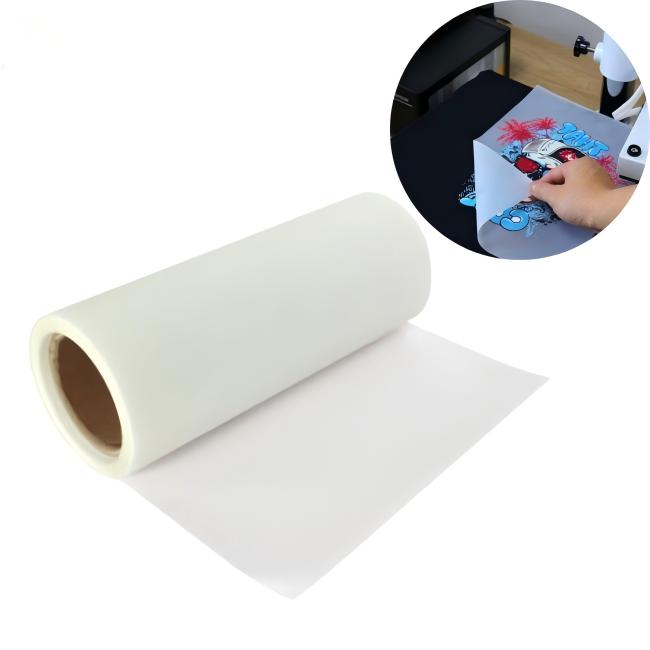
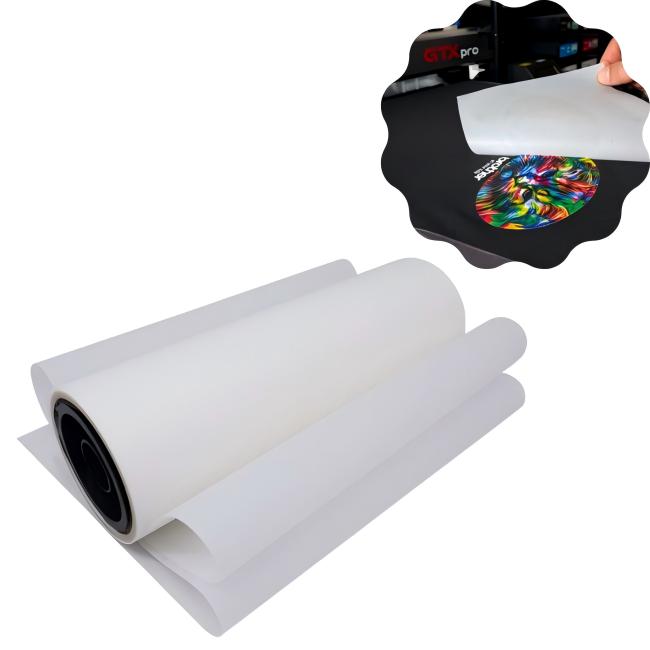
Adhesive materials
We supply hot melt adhesive films, webs, powders and granules.
Film chemistries
Our hot melt adhesive film range includes TPU, EVA, PA, PES and PO materials.
Application support
We help match adhesive materials to your substrates, bonding process and production requirements.
Surface Energy, Surface Tension and Wetting
surface energy meaning: surface free energy is excess free energy of a surface on a per unit area basis. For a solid surface, it can be used to understand energy required to create new surface and Available Interactions when a liquid contacts it.
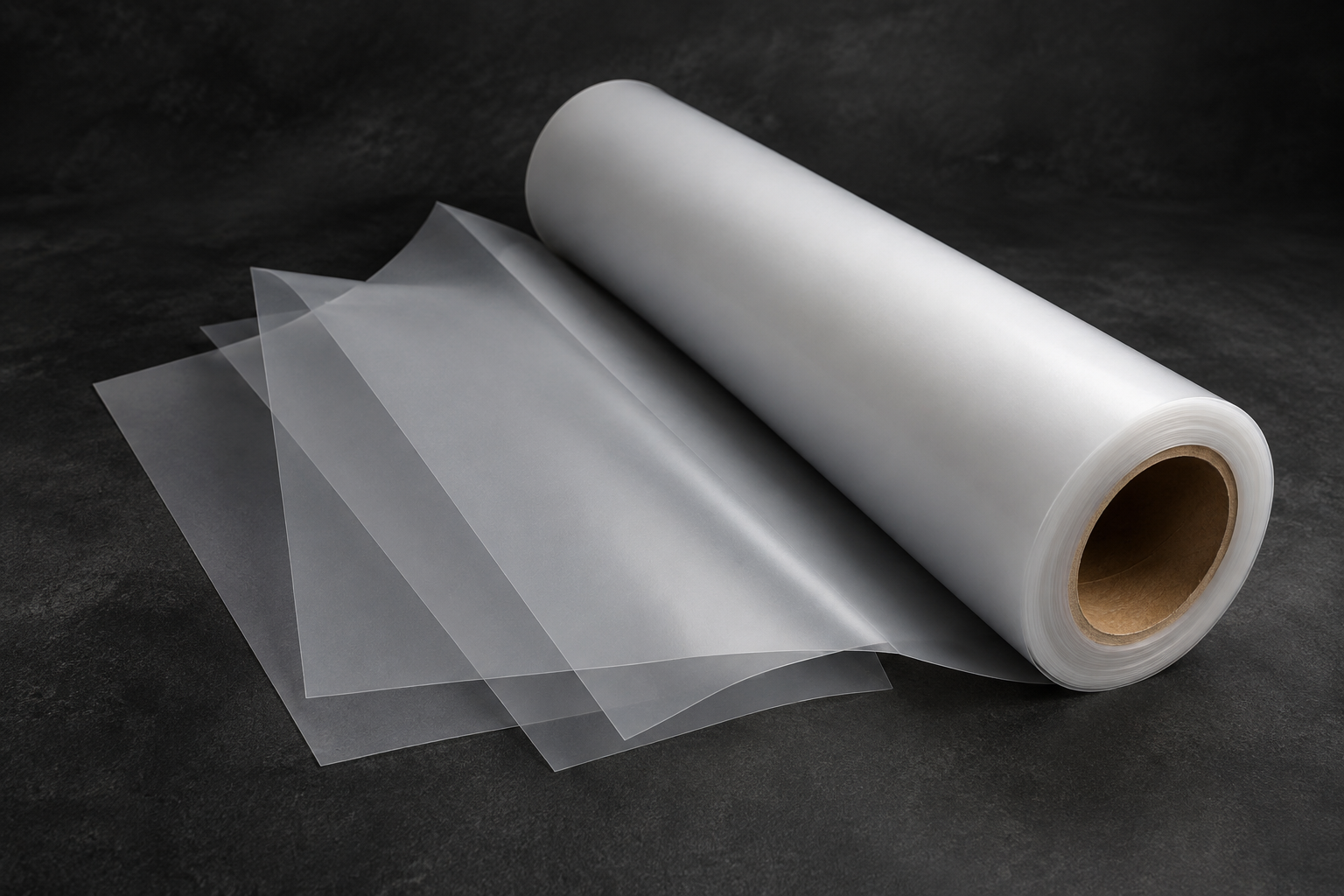
Solid surface energy
The surface energy of a solid concerns its exposed interface, rather than the bulk energy of the material. Surface atoms or molecules have a different environment from those inside the material, so surface chemistry matters.
Liquid surface tension
Surface tension describes the tendency of a liquid interface to resist an increase in surface area. It is expressed as force per length, or equivalently as reversible work per added area under the appropriate thermodynamic conditions.
Wetting
Wetting describes how a liquid spreads across a solid. It depends on the liquid surface, the solid surface and their shared interface, so it cannot be predicted from the solid's total surface energy alone. KRUSS explains the role of surface energy components.
Surface energy units and equivalent values
Unit reference: equivalent dimensions, different measurement contexts
The SI unit for surface energy is J/m², but mJ/m² is also used for practical measurements of surface energy. liquid surface tension will be stated in mN/m while the identical value unit dyn/cm will likely still persist on dyne testing items.
| Quantity or notation | Reference amount | Equivalent value |
|---|---|---|
| Surface free energy, SI | 1 J/m² | 1 N/m |
| Surface free energy, practical | 1 mJ/m² | 0.001 J/m² |
| Surface tension, SI | 1 N/m | 1,000 mN/m |
| Surface tension, practical | 1 mN/m | 1 mJ/m² |
| Dyne notation | 1 dyn/cm | 1 mN/m |
| Illustrative unit conversion | 45 dyn/cm | 45 mN/m = 45 mJ/m² |
Surface energy formula
We want to describe the energy required, but at a constrant surface free energy density. If the change in volume is an increase in area: For a reversible, area increasing process, at a constant surface free energy density, the area contribution is G = A.This gives us the energy required at fixed density conditions but not its strength as a adhesive bond.
- γ: surface free energy per unit area; σ is another notation used in surface science.
- ΔA: increase in surface area, in square meters when γ is in J/m².
- ΔG: corresponding free energy change, in joules.
For measuring the surface energy what other question will be interesting to discuss regarding how liquid influence the solid surface and vice versa. Contact angle provides one observable response.
What the conversion does not tell you
The example value of 45 is arithmetic, not a recommended acceptance limit. A dyne reading and a calculated solid surface energy value can use equivalent units while representing different test outputs; they are not interchangeable.
WETTING
Contact Angle and Wetting Behaviour
You measure this contact angle from the liquid when the droplet becomes tangential to the solid surface. Assuming you keep your probe liquid, your guhevehlazogon would represent more spread as the angle decreases.

Schematic only. Drop shape is not a pass/fail test for an adhesive joint.
Young's equation includes the interface
γSV − γSL = γLV cos θ
- SV denotes the solid–vapour interface.
- SL denotes the solid–liquid interface.
- LV denotes the liquid–vapour interface; θ is the equilibrium contact angle.
Young's equation describes an ideal, smooth, chemically uniform surface at equilibrium. Even if you know the surface tension of the liquid, one measured angle leaves the solid surface energy and solid–liquid interfacial energy unresolved without additional assumptions or measurements. See KRUSS on contact angle and model assumptions.
Interpreting an angle without overstating it
| Observation | Useful interpretation | Limit |
|---|---|---|
| Low contact angle | Greater spreading for that liquid under those conditions | Does not establish peel strength or service life |
| High contact angle | Less spreading for that liquid | Does not rule out every adhesive formulation |
| Advancing and receding contact angles differ | Contact angle hysteresis records a range of behaviour | A single static value hides that difference |
Keep the angle method consistent
Static reading requires measure the contact angle on a resting drop; progressive measurements record advancing and receding of the contact line of the drop as it moves. If there is hysteresis caused by chemical or structural variation, or line pinning, comparisons between the many possible methods for measurement may lead to erronous results, they are not all interchangable.
- Record which angle you measured and when you read it.
- Use the same probe liquid, drop procedure and surface preparation for comparisons.
- Check for spreading, absorption or evaporation during the reading.
Surface Energy Measurement and Dyne Tests
solid surface energy, typically estimated from contact angle measures and appropriate models.Because solid surface energy is inferred, keep the published liquid; test; and model with the number to ensure consistency.
Choose the measurement for the question
Provides
A wetting response to water
Cannot establish alone
A unique total surface energy and its components
Provides
An estimate of total surface energy and model-defined components
Cannot establish alone
Actual adhesive bond strength
Provides
Wetting tension under the test procedure
Cannot establish alone
A universal material constant or complete adhesion assessment
Provides
Performance under specified loading and conditioning
Cannot establish alone
Performance in every other joint or environment
01
Polar and dispersive components
OWRK, Wu can also differentiate a polar part to a dispersive component and implies a minimum of two suitable solvent liquids whose surface tension constituents are determined; at the level of the acid-base model of vOCG having 3 constituent characteristics requires a minimum of three liquids. It's possible to check results as the measurement number can exceed the needed minimum quantity of liquids.
02
A common assumption: one water drop is enough
Two surfaces can respond differently to water because their polar surface energy differs, even when their total surface energies are similar. The calculation of surface energy must identify the model and liquids rather than report an unexplained number. Biolin describes the required probe-liquid combinations.
03
Dyne readings are a process check
ASTM D2578-23 describes wetting tension for polythylene and polypropylene films. The published guidance method excludes this measured value from a fundamental definition and makes an effort to distinguish from the total surface energy that contributes to adhesion.
- Use the stated method and report the test liquid or ink system.
- Keep a surface check separate from your finished-joint acceptance criteria.
- Establish any production limit through correlation with the actual adhesive, substrates and process.
04
Fabrics, coated leather and powders need care
ISO 19403-2:2024 addresses surface free energy from contact angles on substrates and coatings, with surface morphology and chemical uniformity affecting results. Its scope excludes contact angle measurement on powders; an absorbent textile also cannot be treated as an ideal flat surface without considering liquid uptake and roughness.
Surface Preparation
Low Surface Energy Materials and Surface Preparation
Polyethylene, Polypropylene & PTFE are well-known low surface energy materials commonly difficult to bond with conventional adhesives.However, knowing the material alone may not imply that a certain adhesive is appropriate for any condition you may expect on the surface being joined. KRUSS describes why polar and dispersive interactions affect wetting.
Identify the polymer grade and any fillers, additives or recycled content relevant to the application. A generic label such as PP leaves important selection questions open.
The adhesive may contact a coating, print layer, finish or release residue rather than the base material. Assess the surface of a material as it reaches the bonding operation.
Cleaning, storage and handling can change the interface. Record treatment, testing and bonding times so a measurement can be connected to the actual trial.
Process Details
Higher surface energy does not necessarily mean stronger adhesion
Well cleaned metals, and glass have high surface energies while most polymers possess lower surface energies.Unfortunately contamination may be covering your high surface energy substrate: a handbook table value can not substitute for verifying surface preparation immediately prior to application.
- SEC-01 Cleaning: use a process compatible with both the substrate and adhesive, and control residues.
- SEC-02 Corona treatment: can modify exposed polymer surfaces and improve wettability when appropriately controlled.
- SEC-03 Plasma treatment: uses activated gas containing species such as ions, electrons and reactive neutrals to modify a surface.
- SEC-04 Flame treatment or primers: require material-specific process selection and qualification.

Keep treatment and bonding connected
A rise in measured surface energy does not establish how long the treated condition remains useful. Record storage conditions and elapsed time, then validate the intended delay between treatment and bonding using your own process.
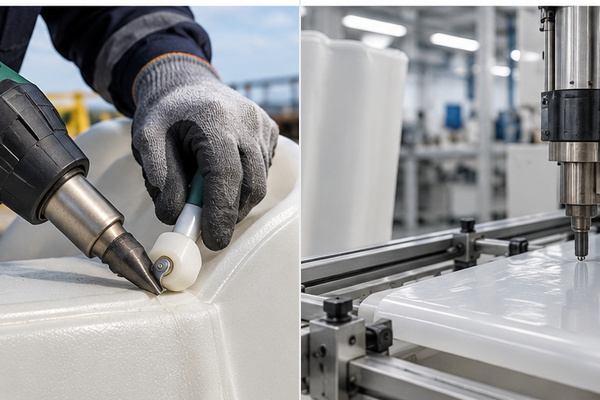
Repair conditions and production conditions
Repairing polypropylene assemblies on site introduces different access, preparation and process-control conditions from a production line. Send your surface preparation and access details for an application review before choosing an adhesive or surface treatment.
Hot Melt Adhesive Selection for Your Substrates
Tengyang offers hot melt adhesives for the following product categories: apparel, accessories, underwear, leather goods, shoes, accessories, heat transfer materials, reflective trim, automotive applications, packaging, etc. We help select a material based on the surfaces to be joined and application method.
Film
We supply hot melt adhesive films.
Required width, thickness, coverage and lamination method
Web
We supply hot melt adhesive webs.
Substrate texture, coverage and finished flexibility requirements
Powder
We supply hot melt adhesive powders.
Distribution or coating method and heating process
Granules
We supply hot melt adhesive granules.
Melting/application equipment and required deposition pattern
Film chemistry & performance
Our film range includes thermoplastic polyurethane (TPU), ethylene-vinyl acetate (EVA), polyamide (PA), polyester (PES) and polyolefin (PO). Chemistry is a starting point for selection; the specific formulation, substrates and process determine whether a candidate meets the application.
Application conditions
Tell us the available temperature, pressure, dwell time or line speed, and cooling conditions. Include any limits imposed by heat-sensitive substrates.

Finished requirements
Describe peel or shear loads, flexibility, appearance and exposure to washing, heat, moisture or chemicals. Identify the test method and required acceptance value where specified.
Control the adhesive layer
An adhesive must reach its ideal temperature for its particular viscosity application profilebefore it solidifies and the joint forms. Simply pre-heating equipmentdoes not ensure that an adhesive is the correct temperature when it encounters the two parts:substrate thickness, bond-line heat transfer and application time influences the temperature the product actually reaches.
SYSTEM.DIAGNOSTICS
Trial observations & next variable
These indicate areas to check; they do not show cause themselves. Discuss both successful and unsuccessful trial samplesand conditions with Tengyang for an application-specific material review.
| Observation | Check during the trial |
|---|---|
| Local unbonded areas after pressing | Heat and pressure distribution, contamination, adhesive placement and contact time |
| Thicker veneer changes heat transfer | Whether the adhesive layer activates before the exposed material is damaged |
| Adhesive penetrates deeply into fabric | Viscosity, adhesive amount and how much material remains available at the bonding interface |
| Surface reading acceptable but peel is weak | Joint construction, adhesive cohesion, compatibility, process and failure location |
Bond Specification and Qualification
long term service demands consideration of all relevant parameters of the bonded product, including working environments. For example, it would not be effective to specify substrates, adhesive, process and acceptance criteria unless environmental requirements (ie temperature and humidity cycle) were also covered (see ASTM D1876 and ASTM D2918).
Working principle for the checklist below.
3-Part Bond Qualification Record
Use the checklist on this page for a comprehensive comparison of surface energy with actual manufacturing and acceptance requirements. It can be a helpful device for tracking trial results, but it is not a testing standard or an approval automatically issued from it.
1. Surface & Measurement
- Both substrates and exposed finishes
- Cleaning, treatment and storage
- Measurement method and results
- Treatment, testing and bonding times
2. Adhesive & Process
- Adhesive grade, format and batch
- Thickness, coating amount or coverage
- Bond-line conditions and machine settings
- Pressure, time and cooling
3. Joint & Acceptance
- Specimen construction and test method
- Initial and conditioned results
- Load, environment and exposure time
- Acceptance value and failure mode
Choose a test that matches the joint
ASTM D1876 covers relative peel resistance between flexible adherends in a T-peel configuration. It can be relevant to suitable flexible laminates, but it does not supply a universal acceptance value for every product or replace a test matched to another joint geometry.
- Heat and moisture resistance: define exposure and evaluate the resulting joint performance, rather than rely on initial strength.
- Sustained load: consider the required load, temperature and exposure duration together.
- Failure mode: record whether failure occurs at an interface, within the adhesive or in a substrate.
ASTM D2918 tests material resistance to stress/moisture/temperature in an arranged testing scheme as specified. For selection procedure make sure that the one you have picked suits conditions in construction AND use the whole suitable method when ready with samples.
Research example: a wetting–peel trade-off
A 2026 study of a specific acrylic pressure-sensitive hot melt on polyester fabric found that raising coating temperature from 130 to 160 °C improved wetting and increased penetration, while peel strength and loop tack decreased. The authors proposed that deeper penetration reduced adhesive remaining at the outer surface, although that residual layer thickness was not directly measured (study, section 3.6).
- What the result shows: better wetting does not always produce a stronger adhesive bond.
- How to use it: test the intended formulation and construction rather than adopt the study's temperature range as a production setting.
Surface monitoring enables us to monitor a process after its relationship to the final performance has been set up Share the required bond test and service conditions + material description [product name].

Application Review and Quotation
Shanghai Tengyang New Materials Co., Ltd offer hot melt adhesive material specification selection and customization solutions to fulfill your needs. Please send your substrate material and process information to consult the configuration of suitable materials for testing.
Customization
- We support customized film thickness.
- We support customized width.
- We support melting-point customization.
- We support customized color.
Material development
- We support application-specific adhesive formulations.
- We provide OEM support.
- We offer practical application support for material selection.
Include these details
Materials
both substrates, thicknesses and the surfaces that will contact the adhesive.
Finish & Solvent
coatings, inks, release agents, textile finishes and expected chemical exposure.
Process
equipment, temperature, pressure, time or line speed, and cooling.
Requirements
bond test, acceptance criteria, flexibility, appearance and service conditions.
Supply
adhesive format, width, thickness or coating requirement, order quantity, destination and requested delivery date.
What affects quotation
The intended supply configuration is determined by the nature of material chemistry, formulation, sizes and quantity and application criteria. To compare production, also log adhesive consumption, surface prep, cycle parameters and rejection quantity using your trial results.
Email
Betty Fang
WhatsApp
+86 13122233268
Headquarters
Shanghai Tengyang New Materials Technology Co., Ltd.
No.58, Fumin Branch Road, Hengsha Township, Chongming District, Shanghai, China
No.58, Fumin Branch Road, Hengsha Township, Chongming District, Shanghai, China
Surface Science Engineering Tools
Surface Energy Unit Converter
Convert between surface free energy and surface tension units (mN/m, dyn/cm, mJ/m²) to ensure precise material analysis and calculation consistency.
Contact Angle Comparison
Analyze and compare contact angles to accurately evaluate the wetting behavior, surface interactions, and bonding readiness of different solid substrates.
3-Part Bond Qualification Record Builder
Systematically build, document, and standardize your bond qualification records to meet industrial adhesive application protocols.
Surface Energy and Adhesive Bonding FAQs
What is surface free energy?
Surface free energy describes the free energy associated with a surface per unit area. For adhesive selection, it helps explain surface interactions, but a reported value must be understood with its measurement method and surface condition.
Are surface energy and surface tension the same?
They are closely related quantities with equivalent dimensions, but the terms identify different contexts. Solid surface free energy is commonly estimated from wetting measurements, while liquid surface tension concerns the liquid interface.
Is mN/m the same as dyn/cm?
Yes: 1 mN/m equals 1 dyn/cm numerically, and both are dimensionally equivalent to 1 mJ/m². Converting the units does not convert a wetting-tension test into a direct measurement of solid surface free energy.
Can a water contact angle prove an adhesive will bond?
No. Water and the adhesive have different properties, and the finished joint also depends on adhesive cohesion, substrate condition, process and loading.
What surface energy value should a substrate meet?
There is no single value that qualifies every adhesive and substrate combination. Define the test method and establish any process limit against the required performance of the actual bonded construction.
Can hot melt adhesive bond low surface energy plastics?
A suitable formulation and process may provide a workable route for a specific application. Give Tengyang the exact plastics, finishes and performance requirements so the candidate material can be evaluated on representative specimens.
Does more heat always improve hot melt bonding?
No. Heating affects viscosity and contact, but excessive penetration, substrate damage or an unsuitable thermal history can undermine the result.
How should heat and moisture resistance be checked?
Define the temperature, moisture exposure, duration and load the joint must withstand, then test representative bonded specimens after the specified conditioning. An initial bond result alone does not answer the durability question.
Will a thicker substrate affect heat activation?
It can change heat transfer to the adhesive layer. Check the bond-line conditions during a trial, especially when the outer surface can be damaged before enough heat reaches the adhesive.
Can I use a dyne pen on fabric or adhesive powder?
Do not assume a film wetting-tension procedure applies to an absorbent textile or powder. Roughness, uptake and sample preparation can dominate the observation, so select an appropriate measurement approach and verify the final bonded construction.
How soon after surface treatment should bonding take place?
Establish the allowed delay for the actual material, treatment and storage conditions. Record elapsed time during trials and check performance at the delays expected in production.
What does Tengyang need to recommend a material?
Send both substrates, surface finishes, bonding equipment and process settings, the intended adhesive format, dimensions and required performance. Include the test method and service conditions so selection can address the finished application.