Get in touch with Tengyang Company


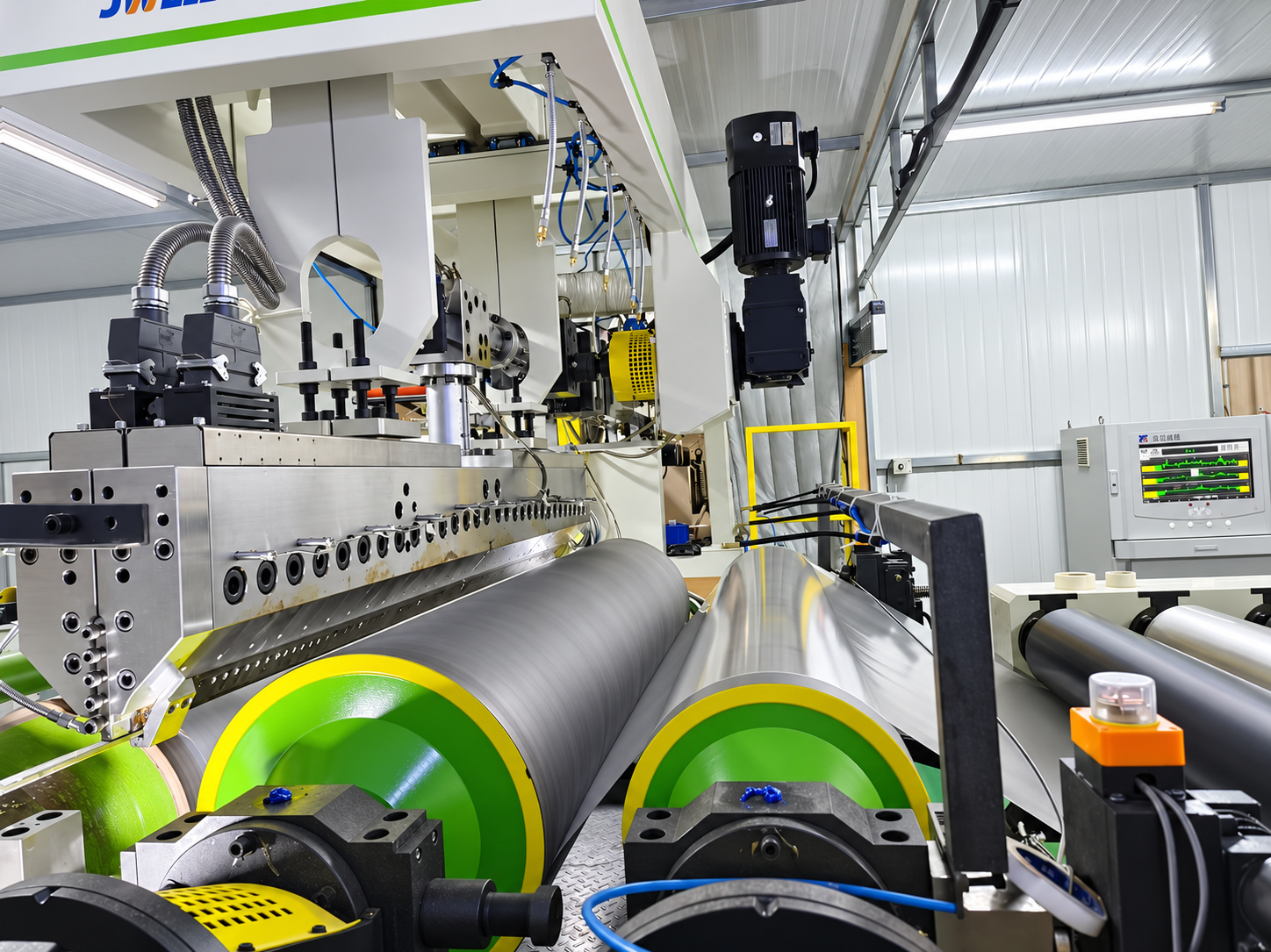
Adhesive Bonding Materials: Hot Melt Film, Web, Powder and Granules
Adhesive bonding uses a layer of adhesive to join two materials: the adhesive works by first wetting both surfaces and then setting to carry the load. One option is a non-reactive thermoplastic hot melt (no solvent), which becomes liquid upon heating; upon cooling and with the aid of external pressure, adhesion occurs.
Tengyang supplies hot melt adhesives in TPU, EVA, PA, PES and PO, with guides to surface science, polymer physics and how to read bond test reports.
Tell us the material, bonding process, temperature, width, thickness and application, and we come back with candidate grades.
Specifications & Process
- 01 5 polymer chemistries
- 02 4 supply forms
- 03 Samples in 3–5 working days
- 04 Production in 10–20 working days
Tengyang Adhesive Bonding Supply at a Glance
There are six main criteria to evaluate potential suppliers of adhesive bonding materials.
CRITERION // 01
Chemistries
TPU, EVA, PA, PES and PO, matched to the surfaces you bond and the service temperature
CRITERION // 02
Supply forms
film, web, powder and granule for presses, roller lines, scatter coaters and melt equipment
CRITERION // 03
Custom and OEM
OEM supply, with thickness, width, melting point and color set per order
CRITERION // 04
Samples
3–5 working days for samples of the candidate grades
CRITERION // 05
Production
10–20 working days once grade, specification and acceptance criteria are confirmed
CRITERION // 06
Payment and trade terms
a 30% T/T deposit with the 70% balance before shipment; EXW, FOB or CIF
SYS.INFO //
Adhesive Bonding Guides: Surface Science, Polymer Physics and Test Reports
Choosing between TPU, EVA, PA, PES and PO gets easier once three questions have answers: will the adhesive wet this surface, will it flow under the temperature, dwell time and pressure your line gives it, and how will the finished bond be tested? The learning paths below answer them, but they are not the whole model: joint design, bond line thickness, the way the joint is loaded and the service environment (humidity, washing, ageing under ISO 9142) decide results too, so the trial on your own line has the final word.
Surface Science for Adhesion: A Learning Path
The question it settles: will the adhesive wet this substrate, or is surface treatment required before the adhesive is applied? Measurement of surface energy with contact angle and dyne tests is discussed, along with why a higher surface energy does not necessarily mean a stronger bond.
- Guide: Surface Energy: Meaning, Units and Bonding Relevance
- Guide: Corona Treatment: Surface Activation and Aging
- Tool: Surface Energy Unit Converter
Specs
Standard: ISO 19403-2:2024, surface free energy from contact angle measurement
Reading Test Reports: Bond Strength and Textile Units
This guide addresses the question: what does a peel or textile report really prove, and can two reports be compared? It discusses peel geometry, force per width, failure modes, and the yarn count and fabric weight units used in textile reports.
- Guide: Peel Strength: Geometry, Units and Report Interpretation
- Guide: Textile Measurements: Linear Density and Barrier Reports
- Tool: Bond Report Request Checklist
Specs
Standards: ISO 11339 for T-peel and ASTM D903 for 180° peel

Polymer Physics for Bonding: Heat, Time and Load
The question addressed is: will this polymer flow into the surface on your line, and hold its shape at the temperature the product lives in, for as long as it is in use? This guide discusses melting, glass transition and why time and temperature trade against each other.
- Guide: Glass Transition Temperature
- Guide: Viscoelasticity: Why Time and Temperature Matter
- Tool: Rate–Heat Bonding Compass
Specs
Standards: ISO 11357-3:2025 for melting by DSC; the Tg guide walks through ISO 11357-2
Types of Hot Melt Adhesive: TPU, EVA, PA, PES and PO
Among the types of adhesive, a thermoplastic hot melt is selected by the substrate and the service temperature rather than by cure chemistry. Each card describes what a polymer family does, where it is applied in fabric bonding and plastics, and two bits of information to request from any supplier prior to a trial.
TPU: Thermoplastic Polyurethane
TPU hot melts enable seams to be elastic, so a bonded seam stretches and recovers with knits and stretch textiles instead of cracking. Choose it when the bonded part has to flex and survive repeated washing, then confirm wash durability under ISO 6330 on your own build.
Ask for
melting range by DSC (ISO 11357-3) and melt flow rate (ISO 1133-1)
Price driver
The cost is determined by the grade of the resin. The film gauge also moves the price. A release liner further increases the cost.
EVA: Ethylene-Vinyl Acetate
EVA is a family of hot melts, not a grade: softening point, open time and melt flow change from one grade to the next, so read the data of the exact grade. Like PA and polyester hot melts, EVA is also sensitive to water and/or steam. Consider these factors for a product that will be washed or steam pressed.
Ask for
the melt flow and the softening point of the EVA grade, in particular.
Price driver
The cost depends on the vinyl acetate content and melt flow of the base resin.
PA: Polyamide
A 2005 trade review of paste-dot coating lists copolyamide, with copolyester, among the powders ground below 80 µm for nonwovens. The degree of chemical and temperature resistance of copolyamides is largely dependent on the formulation; therefore, grade-specific data should be consulted to evaluate suitability.
Ask for
melting range, melt flow rate and the particle size range of the powder.
Price driver
copolyamide composition and particle size cut

PES: Polyester
Copolyester adhesives bond polyester nonwovens and fabrics. The trade-off: some PES grades stiffen at low temperature, which matters for parts that see winter cold.
Ask for
data for the melting range by DSC and the low-temperature flex performance of the exact grade.
Price driver
The main determinant of price is the copolyester composition and the weight of coating per square meter.
PO: Polyolefin
Polyethylene and polypropylene are a challenge to bond because their surfaces repel water and resist wetting. Conventional grades usually need corona, plasma, flame or primer on PE and PP; in one study, low-pressure plasma cut the water contact angle on PP from 97.1° to 14° and raised lap shear strength by 52.5% to 386.6%.
Ask for
the substrate pretreatment the grade was tested on, with the test results and date.
Read next
Corona Treatment: Surface Activation and Aging, which covers how corona activation ages before lamination
Custom Grade
When none of the five fits the temperature window of your line and product, we build application-specific formulations around the substrate pair.
- Check the window first using the Temperature Margin Calculator.
- Map time against temperature with the Rate–Heat Bonding Compass.
Samples of the candidate grades go out so the trial runs on your own press and line speed.
Request samplesSupply Forms and Custom Parameters: Film, Web, Powder and Granule
The right form of adhesive decides how it reaches the joint. The choice follows the equipment on your line and whether the finished part has to breathe. Picking the wrong form costs you a trial before the bonding chemistry is even tested.
| Form | How it covers the joint | Air and moisture vapor | What feeds it on your line | Choose it when |
|---|---|---|---|---|
| Film | One continuous layer, on release paper or unsupported | Blocked by the closed layer | Flat-bed presses and roller lines, fed from the roll | The joint needs full coverage and a closed layer |
| Web | Fibers laid as an open nonwoven net | Passes through the open pores | Presses and roller lines, fed from the roll | The part has to breathe and keep a soft hand |
| Powder | Particles scattered or printed as paste dots; a 2005 trade review puts paste-dot powders below 80 µm | Passes between the dots or scattered particles | Scatter coaters, and rotary-screen paste-dot lines (30–60 m/min in the same 2005 review) | You coat your own nonwoven or textile and set the pattern |
| Granule | Heated to liquid first, then laid down by the coating head | Set by the pattern the coating head lays down | Melt tanks, extruders and coating heads | Your line already heats and applies the adhesive itself |
01
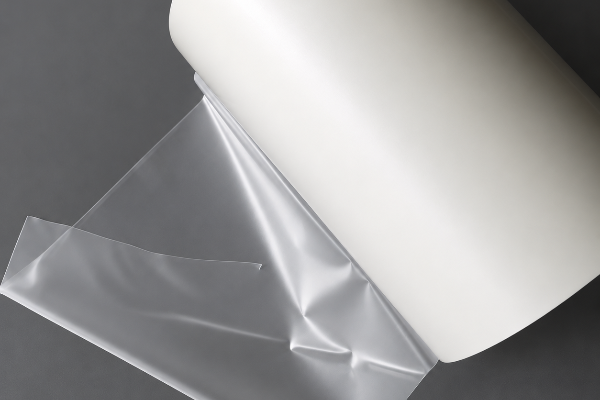
Film
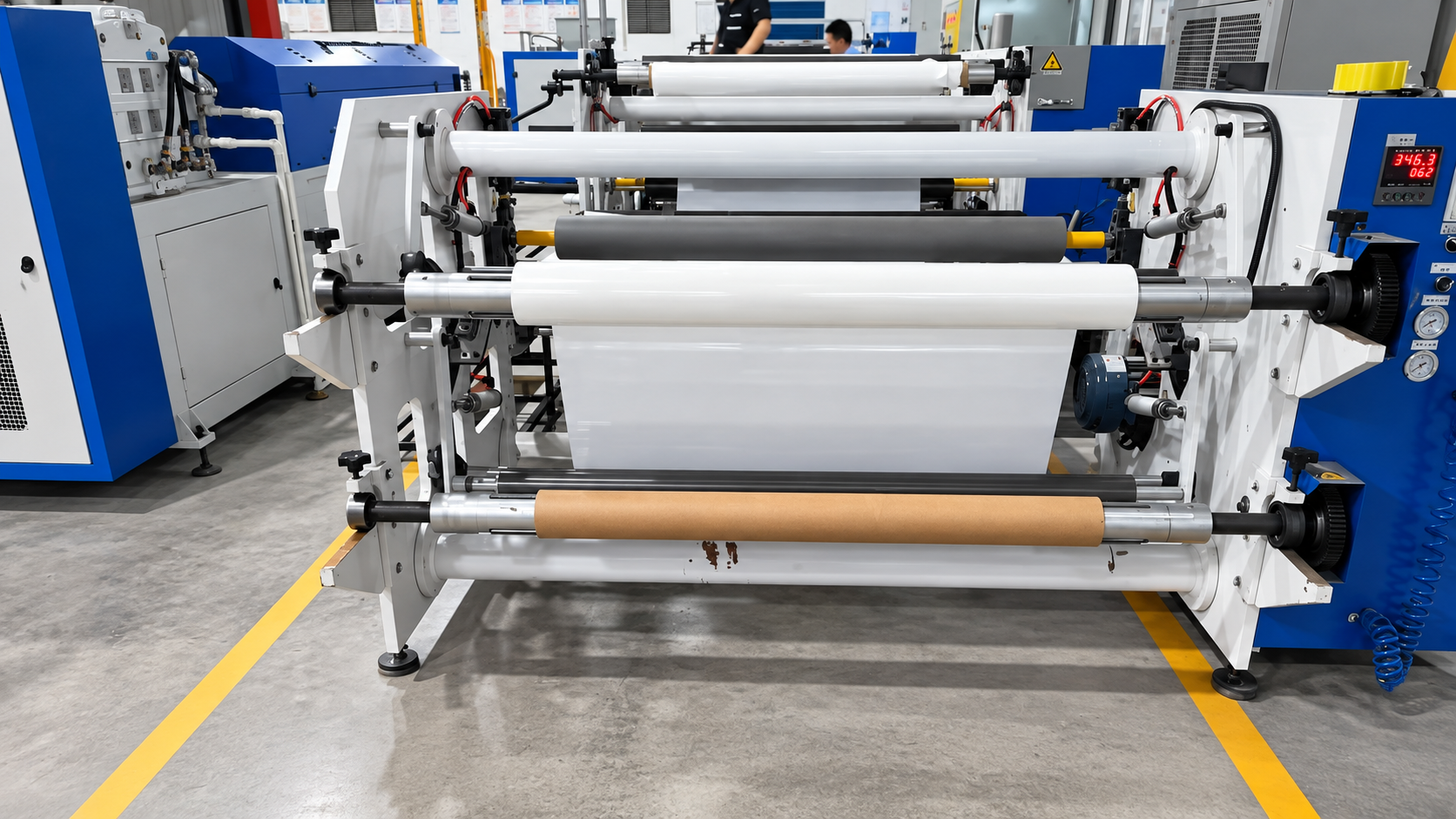
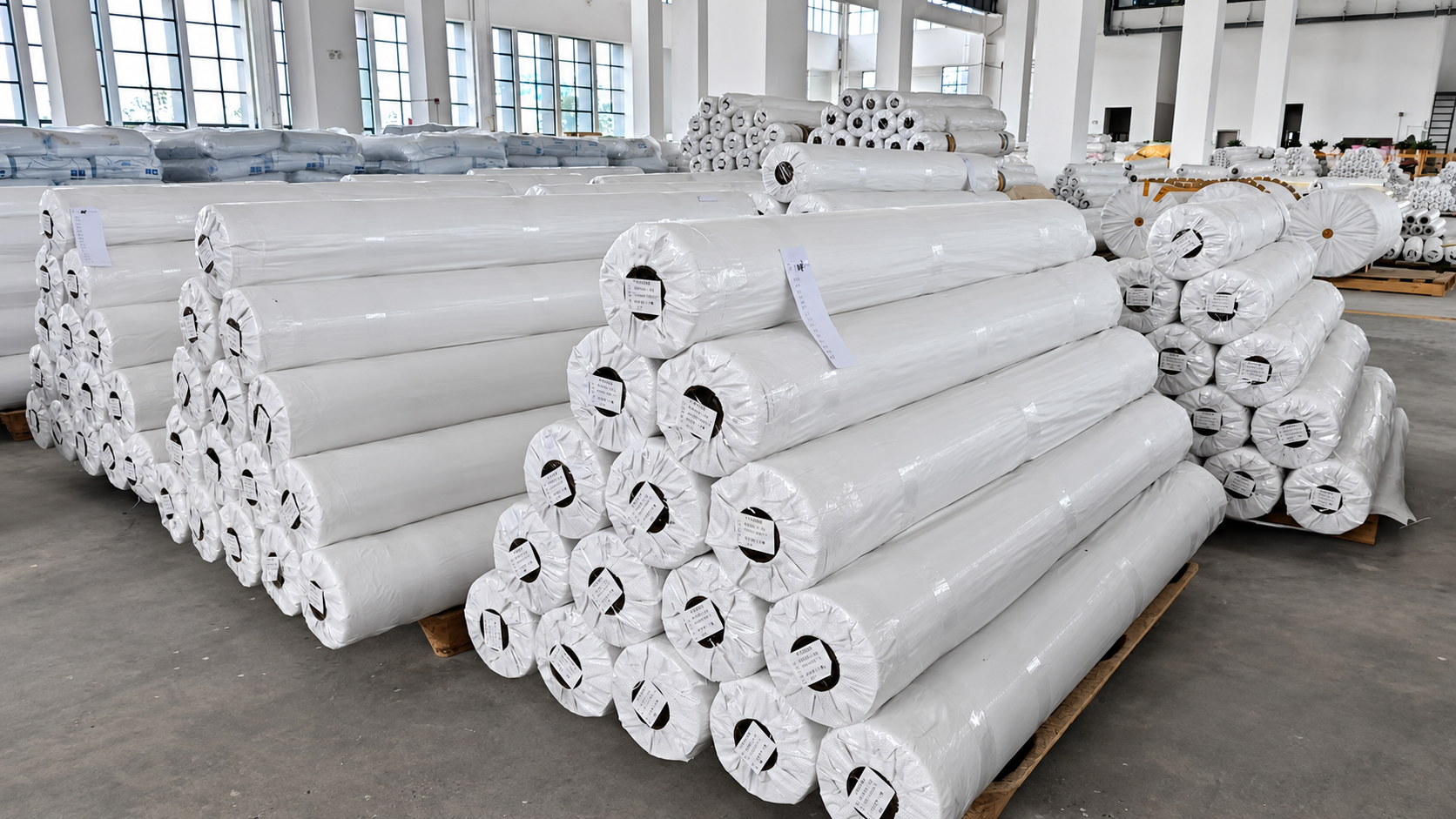
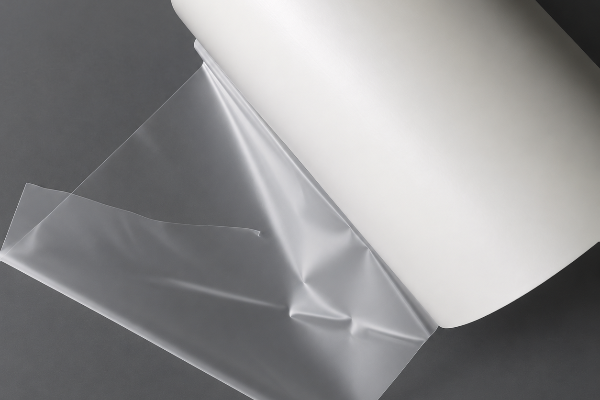
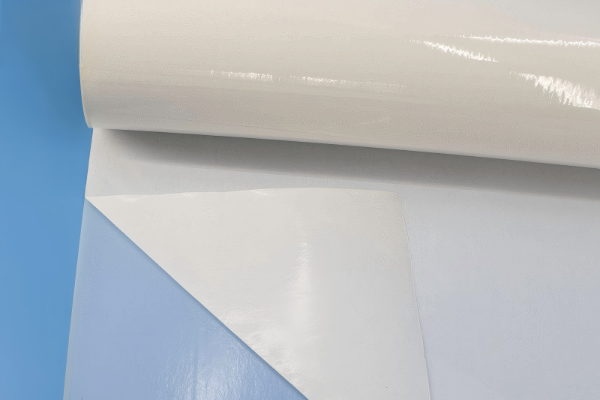
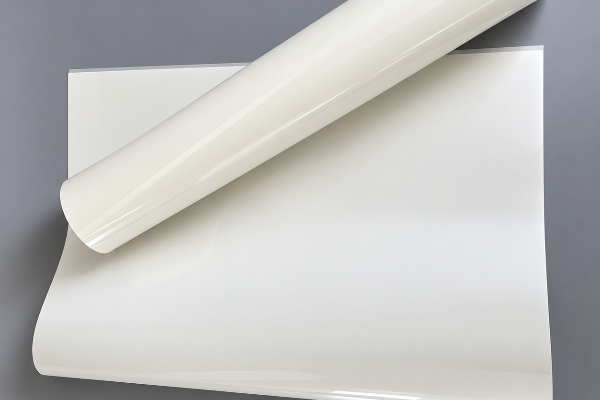
Hot melt films are continuous adhesive layers, supplied on release paper or unsupported on a roll, for full-coverage bonds on flat-bed presses and roller lines. Hot melt films are closed structures, and thus non-breathable. See the film grades and the TPU film page for more information.
02
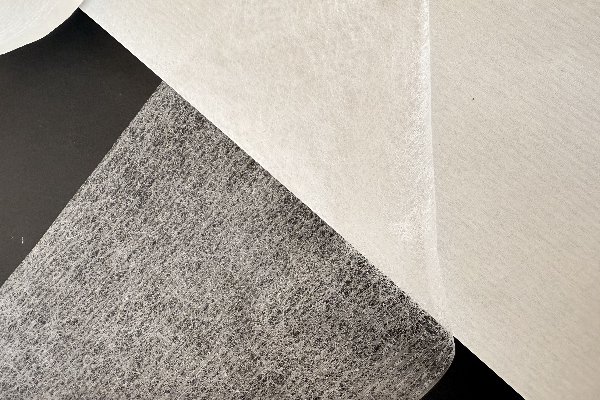
Web
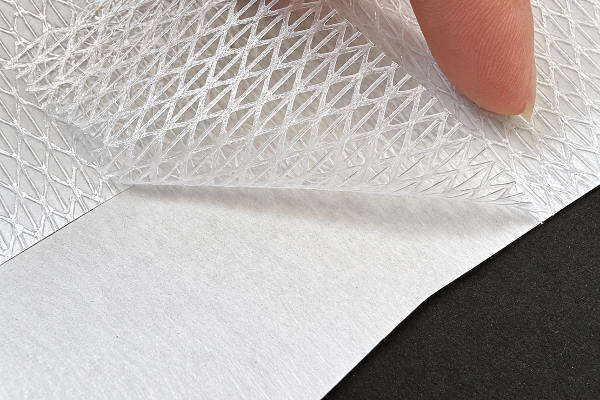
For breathable textiles, nonwovens of adhesive fibers are laid in a network that bonds through open pores, leaving interconnecting air paths so the bonded layers still breathe. This process gives a softer hand than a solid film. Browse the web grades on our main site.
03
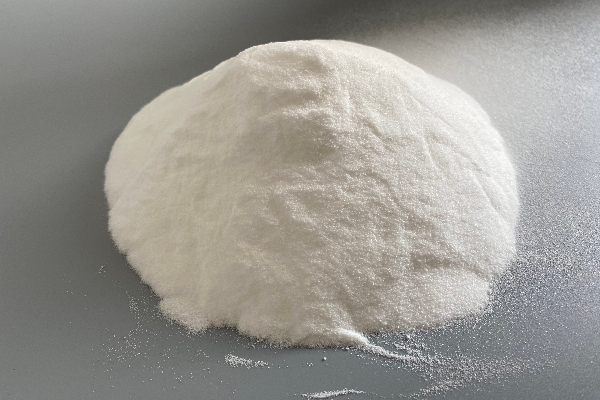
Powder
Ground copolyamide or copolyester particles are used for scatter coating and paste-dot lines on nonwovens. Check your coater speed against the table above before you pick a particle size. See the powder grades on our main site.
04
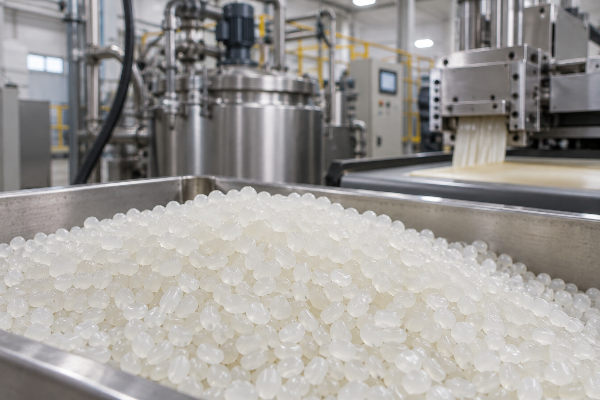
Granule
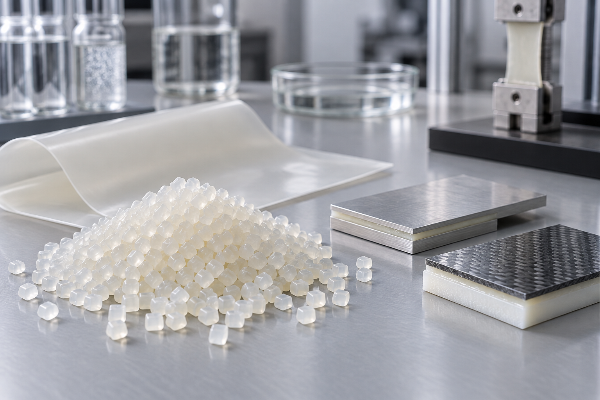
Adhesive in pellet form is used in melt tanks, extruders and coating heads. These are sold by us as hot melt adhesive pellets. Granules and pellets are used interchangeably.
If you are unsure which form of adhesive best suits your application, use the Hot Melt Form Selector.
Get Instant Quote →Custom Parameters Set Per Order
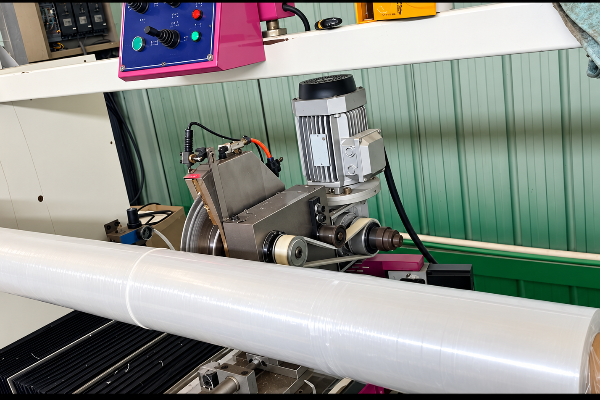
We customize thickness, width, melting point and color, and we build application-specific formulations. Width, thickness, release liner construction and grade are all specified per order.
Thickness or coating weight sets how much adhesive reaches the joint; check the fabric’s mass per unit area (ISO 3801) with the fabric GSM and oz/yd² calculator before you choose a gauge, because a light fabric cannot hold a heavy glue line.
The width of the adhesive should match the width your line runs, otherwise the extra width is slit off as trim you pay for.
The melting point should be below the temperature the substrate tolerates and above the use temperature of the product.
The color of the adhesive is chosen so the adhesive layer does not show through a light or dark face fabric.
Release liner is the backing paper that carries adhesive to the press. Its construction and grade can influence how cleanly it releases from the adhesive at line speed.
We alter the adhesive formulation only if no standard grade meets the end use requirement, which is what the application-specific route is for.
Order and Supply Specification
The information in this table helps us take the first step toward a first order. Every value in it is a commitment we hold; anything it leaves out, such as roll length or carton size, is fixed on the order itself.
Request a Quote on This SpecificationPolymer chemistries
5: TPU, EVA, PA, PES and PO
Supply forms
4: film, web, powder and granule
Custom parameters
6: thickness, width, melting point, color, release liner and formulation
Quote inputs
6: substrate, bonding process, temperature, width, thickness and application
Sample lead time
3–5 working days
Production lead time
10–20 working days after the grade and specification are confirmed
Payment
30% T/T deposit, 70% balance before shipment
Trade terms
EXW, FOB or CIF
Supply model
OEM supply
Pricing and Lead Time for Hot Melt Adhesive Orders
Pricing of our hot melt adhesive depends on six inputs, and changing any one of them changes the quote. Therefore, we do not publish a price list.
TPU, EVA, PA, PES and PO resins differ in raw cost and in the temperature needed to process them
More adhesive per square meter raises the cost, while too little starves the joint and fails in peel
Narrow widths add slitting passes and edge trim that someone pays for
Paper grade and construction add cost to the rolled forms; powder and granule ship without one
Each coating run carries set-up time, so a short run spreads it over fewer meters
Roll cores, cartons, pallets and the delivery point (EXW, FOB or CIF) set the landed cost
[ EVALUATION ]
Compare Cost per Good Part, Not Price per Square Meter
The cheapest adhesive per square meter is not always the best buy per good part: a grade that raises your reject rate costs more per finished piece than the one it replaced. Work it out with Cost per Good Laminate, and check trim loss with the Roll Width Yield Calculator before you settle on a roll width.
From Quote to Shipment
-
01
The six inputs are provided by you, and grades are offered along with prices.
-
02
Samples of the candidate grades leave us in 3–5 working days.
-
03
The grade and specification are confirmed by performing a trial on your own line.
-
04
A 30% T/T deposit starts production, which takes 10–20 working days.
-
05
The 70% balance is paid before shipment, on EXW, FOB or CIF terms.
Sample Trials and Bond Strength Report Checks
We send samples of the candidate grades so the trial is run on your press, your substrates and your line speed. Lab results on another company’s textile say nothing about your build, and a supplier datasheet is not a substitute for that trial.
PHASE // 01
01
Convert the Units First
Peel strength is force per unit width, reported in N/25 mm, N/50 mm or lbf/in. 10 N/25 mm equals 20 N/50 mm, so convert with the Peel Strength Unit Converter before you compare anything.
PHASE // 02
02
Match the Geometry
A 180 degree peel test (ISO 8510-2 at 100 mm/min on 25 mm specimens, ASTM D903 at 152.4 mm/min) and a T-peel test (ISO 11339, ASTM D1876) load the joint differently. Their numbers are not interchangeable, even on the same bonded sample.
PHASE // 03
03
Read the Failure Mode
Adhesive failure at the interface, cohesive failure inside the adhesive layer and substrate failure have different underlying causes. A peel report that does not state the failure mode is incomplete, no matter what the number is.
PHASE // 04
04
Compare Like with Like
Two reports are comparable only when specimen build, surface pretreatment, conditioning and test temperature, and test speed all match. ISO 11339 itself states that the T-peel test does not provide design information.
“When two peel reports disagree, check the geometry, the test speed, the specimen width and the failure mode before you question the adhesive. Most disputes end at the first mismatch.”
A common assumption is that a stronger adhesive always makes a better joint. Steven Abbott’s SpecialChem guide to adhesion myths works through an example from Kevin Kendall in which one rubber contact needs 0.01 N in peel, 2.24 N in lap shear and 50 N in butt tension, so the load direction matters as much as the adhesive. For durability, ask for washing to ISO 6330 and aging to ISO 9142, noting that ISO 9142 says its ageing results are not necessarily applicable to service-life determination.
SYSTEM RESOURCES
To review a report you already hold, use the Seven-Field Peel Report Check; before a supplier tests, send them the Bond Report Request Checklist. For further details, see the peel strength guide.
How We Work: From Bonding Brief to Production Order
The adhesive bonding process with a hot melt has four controls: temperature, pressure, dwell time and cooling. It slots into an existing manufacturing process only if the adhesive, the equipment and the substrate agree, so the first step is yours: tell us what your line can do.
-
01
You send the six inputs, including your equipment: flat-bed press, roller laminator, transfer press or scatter coater. The Bonding Conditions Checklist and the Adhesive Material Trial Brief put them on one page.
-
02
We shortlist candidate grades and identify the trade-offs of each one.
-
03
Samples of the candidate grades ship in 3–5 working days.
-
04
You run the trial on your own line; the Hot Melt Adhesive Trial Matrix Planner sets out the temperature, pressure and dwell-time combinations worth testing.
-
05
Once you confirm the grade, width, thickness and release liner, we write them into the order with the acceptance criteria you tested against.
-
06
Production takes 10–20 working days, on a 30% T/T deposit with the 70% balance before shipment and EXW, FOB or CIF terms.
Four Selection Rules That Save a Trial
-
Keep the activation temperature below the substrate’s temperature limit
An adhesive that needs more temperature than the textile or foam tolerates scorches, shrinks or crushes it, and the whole part becomes scrap. The Temperature Margin Calculator shows the margin.
-
Choose a web when the part has to breathe
Continuous coverage closes the pores, and a part that fails a breathability requirement is rejected even when its peel strength passes.
-
Order the width your line runs
Every millimeter slit off is adhesive you paid for and throw away; trim loss adds up over a year of rolls.
-
Fix the service temperature before the chemistry
A thermoplastic glue line softens again above its softening range, so a car interior or a hot wash cycle rules out low-melting grades before any peel test is run.
Hot Melt Adhesive Product Gallery
Each image shows what a supply form looks like, not a specific lot; check the form against your feeder before you ask for samples. A form not matching the line fails the trial before the adhesive is even tested.
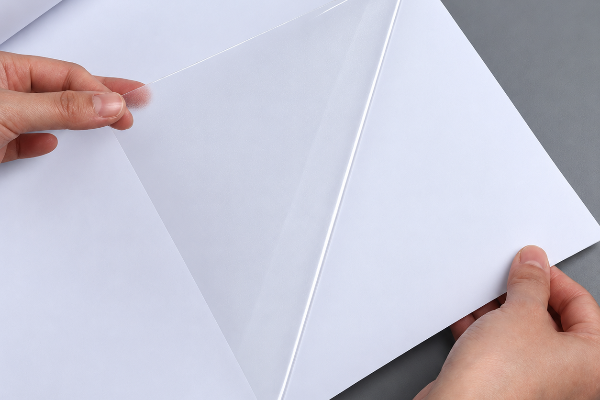
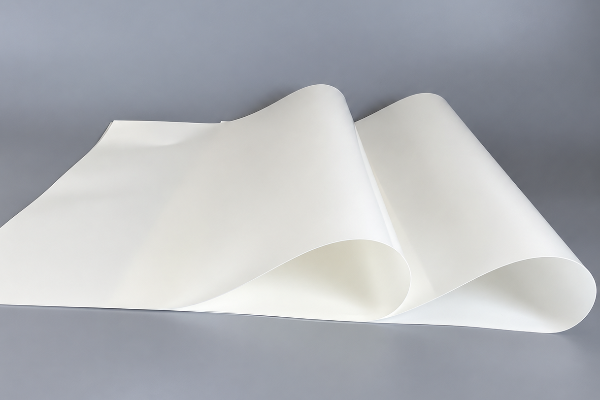
Transparent film peeled from its white release paper
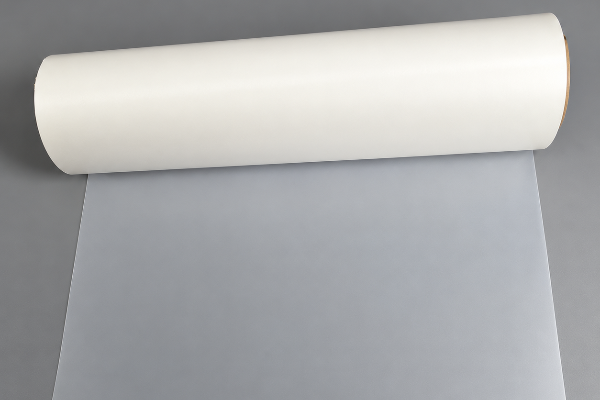
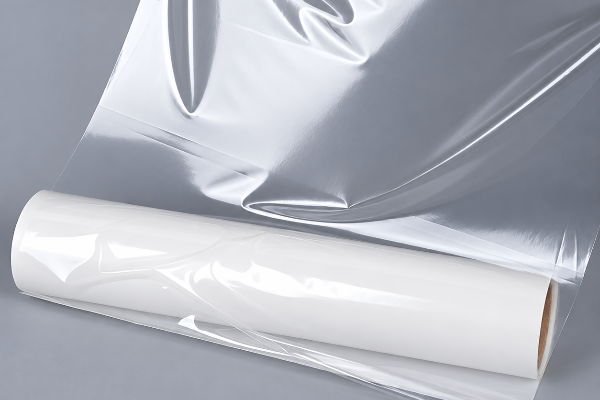
Unsupported film on a roll, fed without a liner
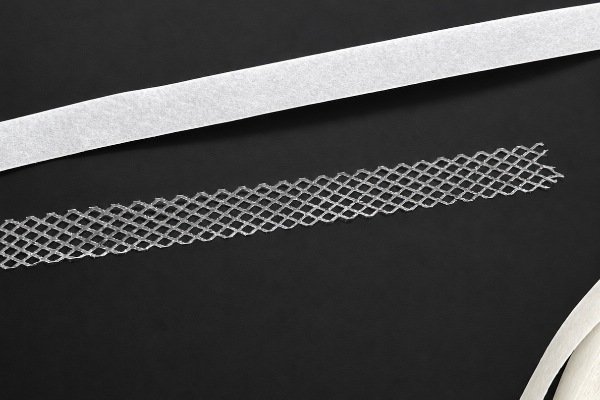
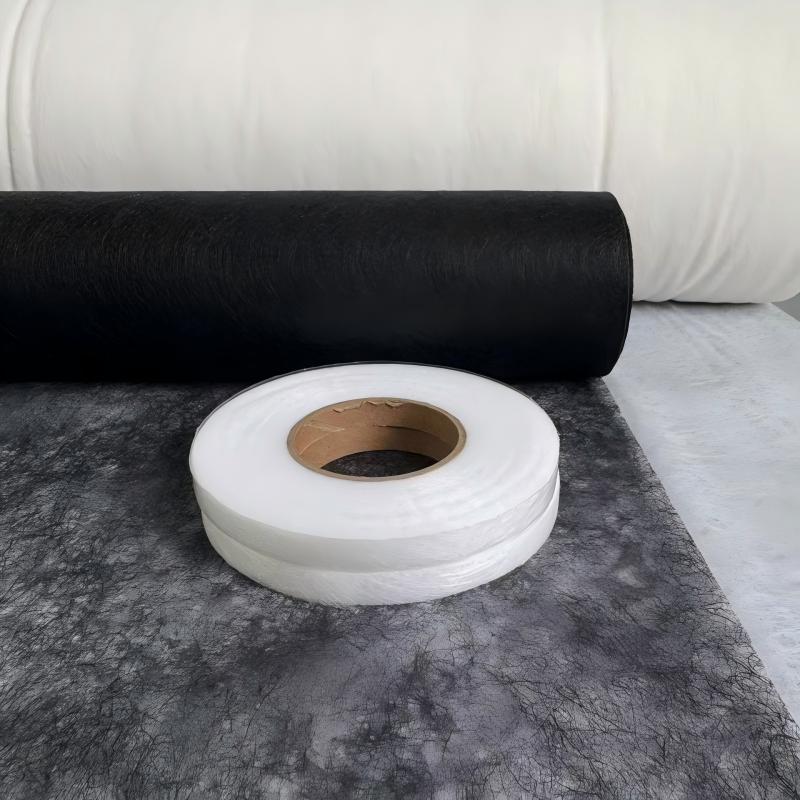
Slit adhesive web tapes on release paper, with an open-mesh strip
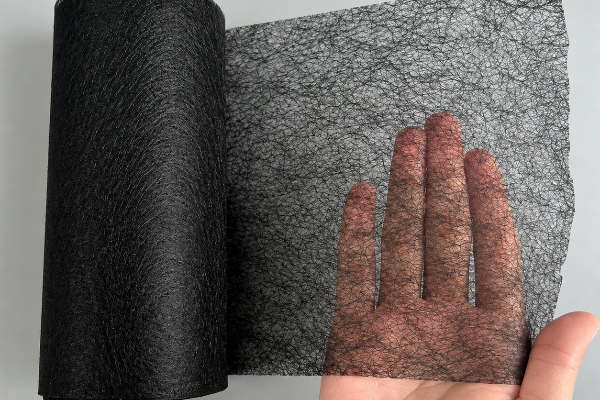
Black open-structure web over a hand, showing the gaps that let air through
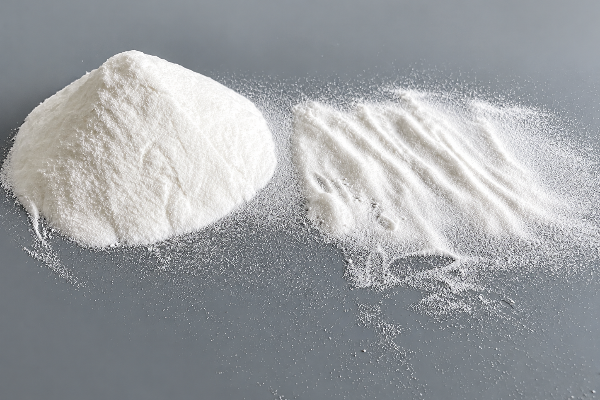
White powder for scatter and paste-dot coating
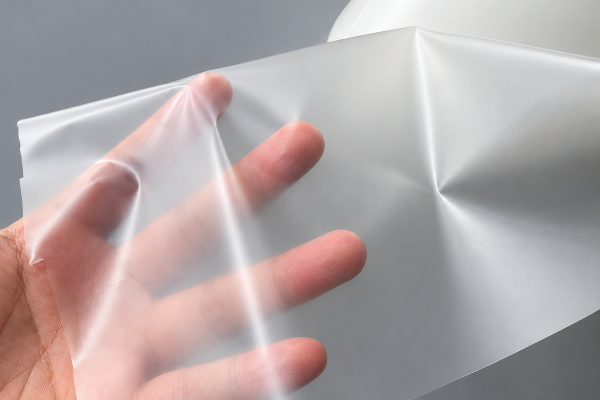
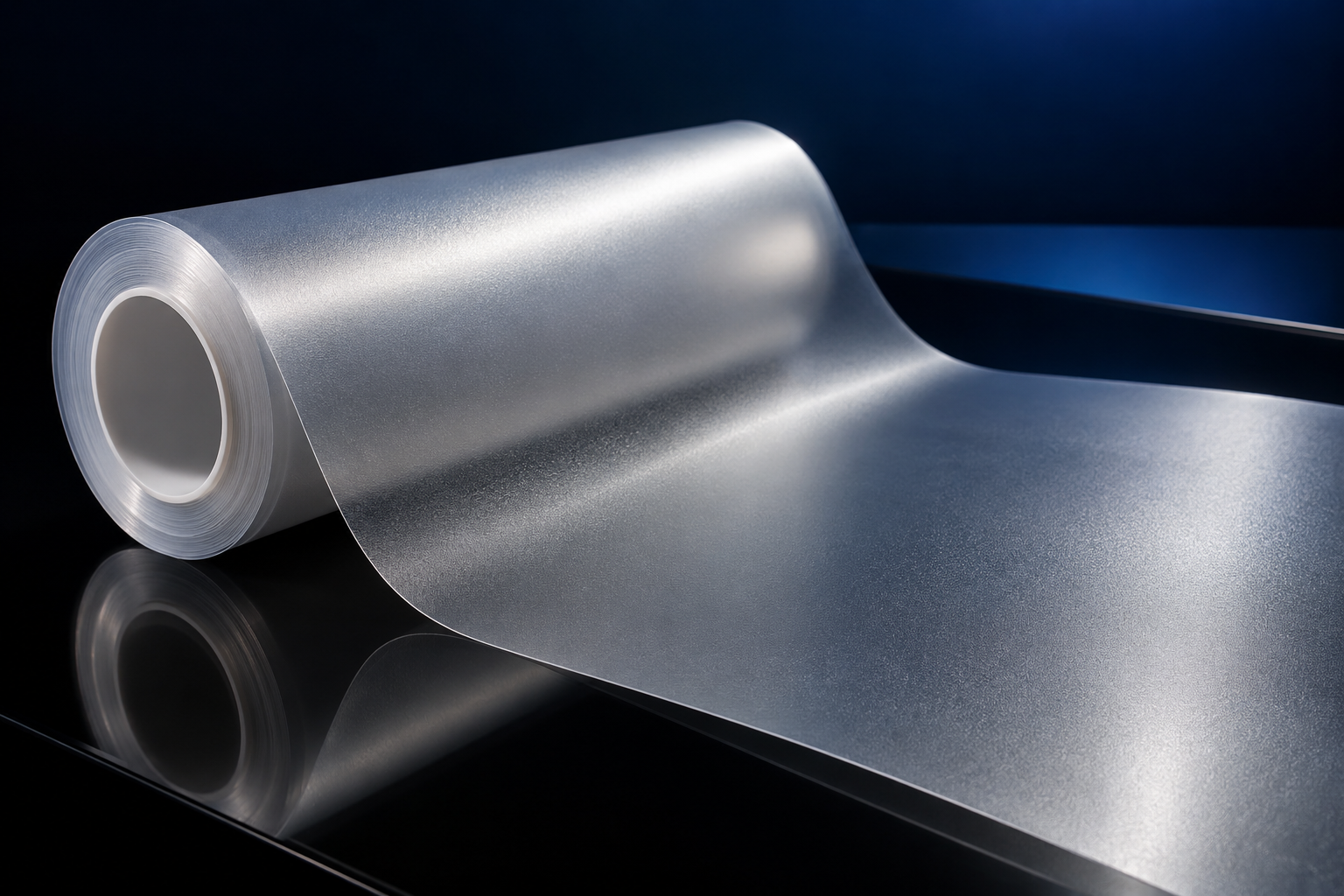
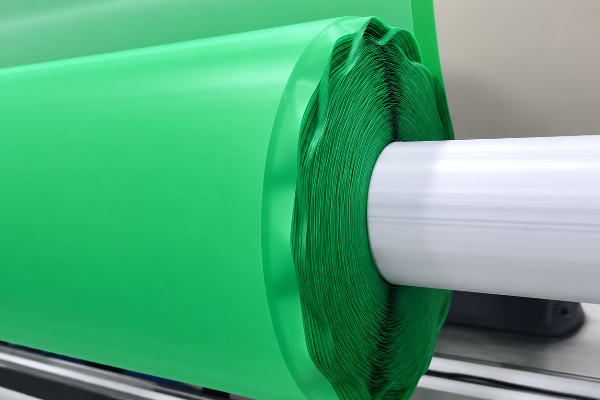
Matte translucent TPU film
Where Our Hot Melt Adhesives Go to Work
- Garment Accessories
- Seamless Underwear
- Footwear
- Leather Lamination
- Heat Transfer Printing
- Reflective Materials
- Automotive Interiors
- Packaging
- Building Decoration
In a fabric lamination process or a leather lamination line, including interior trim for the automotive industry, the adhesive meets fabric, foam, leather or film on one or both sides, which is why the substrate pair comes first in every quote.
Request a sample for the application closest to yoursThe Joining Route Table: Hot Melt Bonding vs Welding, Rivets and Sewing
The advantages of adhesive bonding only show up next to the other ways of joining two materials, so the following table presents six ways of joining two surfaces and six criteria for comparison. Each of the 36 squares of the table holds a fact, and none of them is a score. Where a route wins on one column it gives something up on another, and that trade-off is the reason the table exists.
| Route | Load path and bond area | Dissimilar materials | Flex and hand | Service temperature and rework | Surface preparation | How it sets on the line |
|---|---|---|---|---|---|---|
| Non-reactive hot melt (film, web, powder) | Spreads load over the whole bonded area and seals the joint in the same step | Joins fabric, foam, leather and plastic in one pass; PE and PP need a matched grade or pretreatment | TPU and open-structure grades keep the bonded layers flexible and the air paths open | Softens again above its softening range, which also lets a part be reheated and reworked | Sensitive to low surface energy; conventional grades usually need corona, plasma, flame or primer on PE and PP | Sets as it cools; 100% solids, no drying step |
| Liquid and solvent-based adhesives | Spreads load over the bonded area like any adhesive | Wide substrate range once the carrier suits both sides | Set by the chemistry chosen | Set by the chemistry chosen | Clean, prepared surfaces needed | Solvent or water has to leave before handling strength, which needs drying capacity and fume extraction |
| Reactive adhesives (structural epoxy; reactive PUR hot melt) | Carries structural load across the bonded area of rigid joints | Bonds metals, composites and plastics after preparation | Cures to a crosslinked layer; reactive PUR crosslinks with air moisture after it cools | Conventional grades do not remelt after cure, so rework by reheating is off the table | Pretreatment and cleaning required | Needs time to reach full strength while reactive PUR moisture-cures; each grade’s data sheet sets its own application temperature |
| Sewing and stitching | Concentrates load along the stitch line at each needle hole | Joins almost anything flexible | Seam stays soft; thread adds bulk | No softening point; limited by the thread | None | Immediate, but needle holes puncture membranes and thin layers |
| Rivets and mechanical fasteners | Concentrates stress at each hole | Joins dissimilar rigid parts without chemistry | Rigid, and every rivet or fastener adds weight | Unaffected by temperature in the adhesive sense; bolted joints come apart for repair | Needs drilled or punched holes rather than surface treatment | Immediate after fastening |
| Welding (ultrasonic or high-frequency for textiles, thermal for metals) | Fuses the parts themselves with no added layer | Struggles with polymer-to-metal pairs; textiles need a high thermoplastic content | Welded textile seams stiffen | As temperature-resistant as the parts themselves | Fit-up and polymer compatibility matter more than surface energy | Sets as the melt cools; ultrasonic and high-frequency energy can damage waterproof membranes |
Where Hot Melt Bonding Is the Wrong Route
The joint works above the adhesive’s softening range for long periods. Thermoplastic adhesive joints soften with elevation of temperature and hence do not hold there. Structural epoxies or cross-linked, reactive PUR adhesives may be used instead.
The substrate cannot take the activation temperature or the press pressure: thin temperature-sensitive sheets, or foam that crushes before the adhesive flows; for such laminations, use a pressure-sensitive adhesive or a room-temperature liquid adhesive instead.
A rigid metal joint carries structural load, as in product assembly of brackets and housings. Use structural adhesives, rivets, fasteners or welding, and verify rigid-to-rigid joints by lap shear under ISO 4587.
Sealants are the appropriate products to consider when a gap has to be filled and sealed rather than bonded. A hot melt is not the right product under such circumstances. Explaining this to you is cheaper for both of us than a failed trial, and it is why this supplier’s homepage carries this table.
Request a hot melt grade shortlist
Upon receipt of these details, we will provide you with candidate grades, a quote and a sample plan:
-
01
The substrate on each side and the temperature that the substrate can withstand.
-
02
The bonding process (equipment) and the temperatures, pressures and dwells.
-
03
Width, thickness and the application.
-
04
The quantity per order.
-
05
Any test report, datasheet or photo of the current part.
Adhesive Bonding FAQ
INQUIRE SPECIFICATIONS
01
What is adhesive bonding used for?
Adhesive bonding joins parts over an area instead of at points, so it is used for car interiors, footwear, garments, labels and packaging. Everyday examples of adhesive bonding include a laminated jacket shell, a bonded shoe upper and a heat transfer label. TWI lists its main advantages as even stress distribution, a sealed joint, vibration resistance, low added weight and the ability to join dissimilar and heat-sensitive materials.
02
Is adhesive bonding permanent?
It is permanent for the conditions it was chosen for, not for every condition. A thermoplastic hot melt softens again above its softening range, which lets a part be reheated and reworked, and which is why the service temperature has to be fixed before the grade.
03
What are the disadvantages of adhesive bonding?
TWI names limited resistance to high temperature and weathering, the time some adhesives need to reach full strength, the need for surface preparation, and the difficulty of taking bonded parts apart. Bonded joints are also hard to test without destroying them, which is why a sample trial on your own build matters more here than with mechanical fastening or sewing.
04
What is the strongest type of adhesive bonding?
The honest answer is that it depends on how the joint is loaded. Chemically curing structural adhesives suit rigid metal joints in shear, while a flexible thermoplastic suits textiles that bend in peel; as Steven Abbott’s SpecialChem guide puts it, stronger is not always better.
05
Is hot melt adhesive the same as hot glue?
Hot glue is the consumer name for hot melt glue sticks fed through a glue gun, and it is not what runs on a production line. Industrial hot glue, and hot melt adhesive film, web or powder, work on the same principle, a thermoplastic that melts and sets on cooling, but the grades are made for lamination lines, controlled activation temperatures and peel-tested bonds.
06
What is the difference between fusible web and adhesive film?
Fusible web is a nonwoven net of adhesive fibers; adhesive film is a continuous sheet. The web leaves the joint breathable and soft, while the film gives full coverage and a closed layer, so the choice follows whether your product has to pass air.
07
What is the difference between melting point and glass transition temperature?
The melting point is where the crystalline part of the polymer turns liquid; the glass transition temperature (Tg) is where the amorphous part changes from glassy to rubbery. DSC measures both; ISO 11357-3 covers the melting side, and our glass transition guide shows how Tg is read in a report. Your bonding line cares most about melting, and your finished part cares about both.
08
What is the difference between a 180° peel test and a T-peel test?
A 180° peel pulls a flexible layer back from a rigid one (ISO 8510-2, ASTM D903); a T-peel pulls two flexible layers apart (ISO 11339, ASTM D1876). Never compare their numbers directly.
09
Why do bonded layers delaminate after washing?
Temperature, water and detergent act on the glue line together. EVA, PA and polyester hot melts are sensitive to steam and water, so a grade chosen only for its dry peel strength can fail the first wash; test to ISO 6330 at your own wash temperature before you approve it.
10
Why does the adhesive bleed through the fabric?
Bleed-through happens when the melt is too fluid at the press temperature, or when there is more adhesive than the fabric can hold. Check the melt flow rate (ISO 1133-1) and the coating weight against the fabric’s mass per unit area (ISO 3801), then lower the temperature or switch to a web before you change the chemistry.
11
Can hot melt adhesive bond porous foam?
Yes, if the adhesive stays at the surface long enough to wet both sides. On open-cell foam a very fluid melt soaks in and starves the joint, and too much pressure crushes the cells, so a web or a lower-flow grade with a press set for contact rather than force fixes both problems.
12
Will your hot melt adhesive run on my existing press or coating equipment?
In most cases, and the trial proves it either way. Film and web run on flat-bed presses and roller laminators, powder on scatter and paste-dot coaters, and granule in melt equipment; tell us your equipment as one of the six inputs and we send samples of the candidate grades to test on it.
13
Can you customize a hot melt adhesive film?
Yes. We customize thickness, width, melting point and color, and we build application-specific formulations when a standard grade misses your temperature window.
14
How long do samples and production take?
Samples take 3–5 working days, and production takes 10–20 working days after you confirm the grade and specification.
15
What information do you need to quote?
Send us the material, bonding process, temperature, width, thickness and application, plus the quantity per order. Photos of both surfaces and any test report you already hold shorten the shortlist.
16
What payment and trade terms do you offer?
We take a 30% T/T deposit with the 70% balance before shipment, on EXW, FOB or CIF terms. We also offer OEM supply.