Get in touch with Tengyang Company
Tg-informed material enquiry
Glass Transition Temperature
Glass Transition Temperature: Reading Tg in Test Reports
In the absence of a report, a single Tg number is not a proxy for the curve, method, grade identity, bonding process, and service conditions that Tengyang uses to narrow a hot-melt adhesive material enquiry.

How to Compare Tg Results Before Material Selection
A Tg entry is not a stand-alone operating limit. ASTM E1356-25 assigns glass transition temperatures by differential scanning calorimetry or differential thermal analysis for appropriate amorphous regions, while ASTM E1640-23 covers assignment by dynamic mechanical analysis.
01
First check
Match the technique
- Compare DSC with DSC before comparing DSC with DMA.
- Record the named standard and edition.
- Do not convert one method to another with a universal offset.
02
Second check
Match the reported point
- Onset, midpoint, endset, and inflection are different constructions.
- DMA may use storage-modulus onset, loss-modulus peak, or tan-delta peak.
- A report must name the convention.
03
Third check
Match the sample history
- Compare the same grade and sample identity.
- Check first versus second heating.
- Record conditioning, moisture, cooling, and prior thermal exposure.
Read the physical signal without turning it into a product claim

Compare the transition-region signal with the intended use: below it, an amorphous material may remain in a glassy state with greater rigidity and a brittle, even hard and brittle, response. Check whether a higher temperature adds enough free volume for the polymer chain and neighboring polymer chains to move more readily, producing rubbery behavior and changing mechanical properties.
Check whether the report uses differential scanning calorimetry and identifies its heat-flow trace. An associated heat-capacity step marks a glass transition, not the melting temperature of a crystalline phase.
DMA follows modulus and viscoelastic response, while other techniques may follow dimensional change. A coefficient of thermal expansion, often abbreviated CTE, can change through the transition, but thermal expansion is not a universal conversion to a DSC result.
Check whether the base polymer, copolymer design, resin content, vinyl acetate content where relevant, crystallinity, or molecular weight changes the physical properties in a hot melt application. These variables can also change melt viscosities and the response observed at room temperature.
Do not treat the measures as interchangeable: melt temperature and application temperature govern processing, while bond strength, cohesive strength, and tensile strength describe different test outcomes. A complete adhesive system must balance these with substrate wetting and cooling.
A high glass transition temperature or high glass transition does not automatically prove temperature resistance at high temperatures. For a plastic, hot-melt adhesive, or the wider adhesives and sealants category, the service window still needs grade-specific data and a joint test.
Buyer decision
Two reports can show different Tg values because technique, convention, sample identity, or test conditions differ. Treat them as different observations and do not rank the materials until the mismatch is resolved.
“A Tg value becomes useful for a material discussion only when the test method, grade identity, substrate pair, and bonding conditions sit in the same comparison frame.”
Chemistry Families and Selection Questions
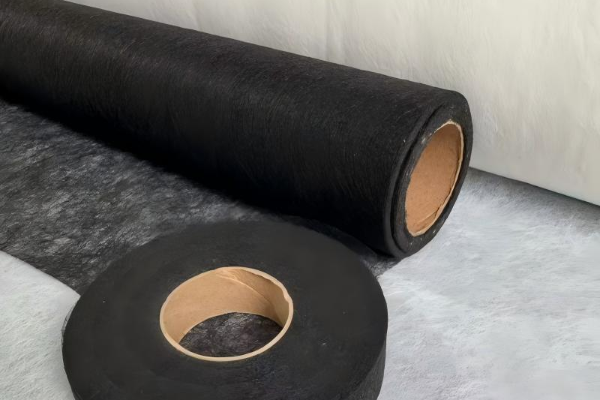
We supply TPU, EVA, PA, PES, and PO hot-melt adhesive films, with webs, powders, and granules available across the wider product range. A chemistry family narrows the discussion, but it does not establish a grade’s glass transition temperature, melting point, viscosity, bond strength, or service temperature.
 01
TPU and EVA enquiry route
- Tell us whether flexibility, stretch recovery, or hand feel matters for the adhesive grade.
- Name the textile, foam, leather, film, or other substrate pair.
- Provide washing, humidity, bending, or low-temperature exposure where relevant.
- State whether you need film, web, powder, or granule form.
 02
PA, PES, and PO enquiry route
- State the operating temperature range and exposure duration.
- Identify polar, low-surface-energy, coated, or contaminated surfaces.
- List heat, chemical, moisture, stiffness, and appearance constraints.
- Send the present adhesive process window and failure mode when replacing another material.
Input
What to send
Why it changes the shortlist
Substrate pair
What to send
Exact material names, coatings, surface treatment, and thickness
Why it changes the shortlist
Wetting and adhesion depend on both surfaces, not the adhesive label alone.
Heat source
What to send
Press, roller, oven, belt, iron, or other equipment
Why it changes the shortlist
Heat transfer and contact differ by equipment and part geometry.
Bonding temperature
What to send
Setpoint plus measured interface temperature if available
Why it changes the shortlist
A machine display may not equal the adhesive-interface temperature.
Pressure and dwell
What to send
Applied pressure, contact time, and line speed
Why it changes the shortlist
These inputs affect intimate contact, flow, and bond formation.
Cooling
What to send
Cooling under pressure or after release, and handling delay
Why it changes the shortlist
Movement before the bond sets can change the observed result.
Service window
What to send
Minimum, normal, maximum, duration, and cycling
Why it changes the shortlist
Short exposure and continuous service are different screening problems.
Acceptance test
What to send
Peel, shear, flex, wash, ageing, or buyer-specific test
Why it changes the shortlist
A pass needs a named geometry, condition, threshold, and failure mode.
Tg Report Comparison Matrix
Analysis of two different glass transition temperatures requires the use of all ten rows. The TA Instruments DSC analysis note shows why limits and midpoint construction matter, and the TA Instruments technique-sensitivity note shows how different signals may respond differently.
| # | Report field | Comparable when | Stop and clarify when |
|---|---|---|---|
| 01 | Material and sample identity | Grade, lot, form, and sample match the buying discussion | A report says only “TPU,” “EVA,” or “adhesive” |
| 02 | Technique and standard | Both reports use the same technique and stated method | DSC, DMA, TMA, or an unstated method are mixed |
| 03 | Signal and convention | Comparable reports use the same onset, midpoint, inflection, modulus, or peak definition | One report gives a number without its construction |
| 04 | Scan direction and number | Heating/cooling and first/second scan are aligned | Thermal history was erased in only one run |
| 05 | Rate, range, and frequency | Heating rate and temperature range match; DMA frequency also matches | Settings are absent or materially different |
| 06 | Transition shape | Step, breadth, and overlaps are visible and similarly treated | Recovery, crystallization, or degradation masks the event |
| 07 | Conditioning and moisture | Samples share conditioning, moisture, and storage history | One sample was dried, aged, or exposed differently |
| 08 | Units and validity | Units, repeats, calibration status, and uncertainty notes are clear | A flagged or incomplete run is treated as definitive |
| 09 | Bonding conditions | Surface prep, heat, pressure, dwell, width, thickness, and cooling are defined | A report number is detached from the intended process |
| 10 | Service and test conditions | Temperature window, geometry, threshold, and failure mode are stated | “Heat resistant” or “strong bond” is the only acceptance language |
Enlarge
Enlarge
Enlarge
Enlarge
Enlarge
Enlarge
Interactive tool 1
Tg Unit Converter
Convert Celsius, Fahrenheit, and Kelvin without changing the underlying report meaning.
Open converter →
Interactive tool 2
Report Comparability Checker
Compare technique, convention, scan, rate, frequency, and sample history.
Check two reports →
Interactive tool 3
Service-Window Screen
Calculate simple temperature margins while keeping Tg separate from product approval.
Screen the window →Pricing and Lead Times
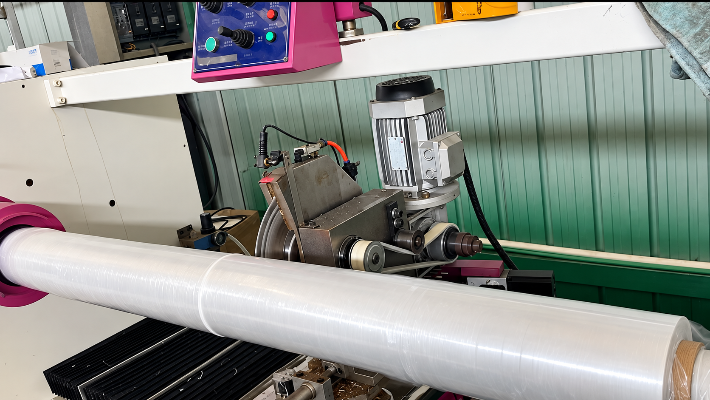
Price is set from the material family, form, grade, width, thickness, color, formulation work, quantity, packing, and destination. We confirm the minimum order quantity in the written quotation because it changes with grade, dimensions, and custom formulation.
What moves the quotation
- TPU, EVA, PA, PES, or PO chemistry
- Film, web, powder, or granule form
- Width, thickness, color, and quantity
- Standard versus application-specific formulation
Sample route
- We can arrange free adhesive samples after application review.
- We confirm the grade and sample quantity for the stated substrate and process.
- Your trial method and acceptance threshold define the sample evaluation.
Timing and trade terms
- For preliminary scheduling, a peer-supplier planning baseline of up to 30 days after specification approval can be used; Tengyang confirms the actual production timing in its written quotation.
- We state order-specific production timing and the applicable Incoterms 2020 term in the written quotation.
- Tengyang and the buyer fix final terms through order confirmation.
Buyer-Controlled Report and Sample Validation Checks
A material can pass a report comparison and still fail the actual joint. Develop the joint based on the substrate pair, process window, conditioning, service exposure, and a defined failure criterion; this joint becomes evidence for that order context and not a universal certificate.
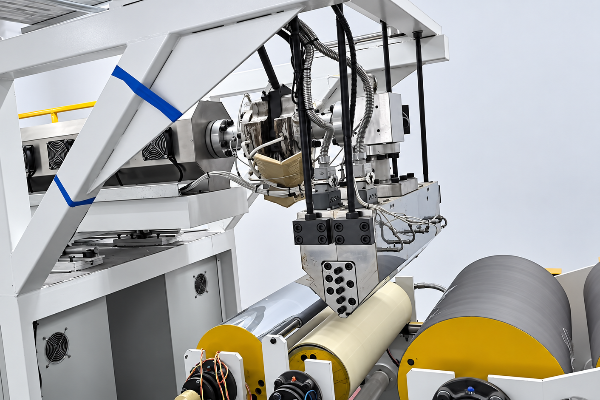
Evidence boundary: a report is not a substitute for a bond trial, and a trial result belongs to the stated grade, substrates, process, conditioning, and test method.
-
01
Freeze the material identity
Record supplier grade, lot, form, width, thickness, color, sample label, and the exact report used for the decision.
-
02
Freeze the bonding recipe
Record surface preparation, heat source, setpoint, interface temperature where available, pressure, dwell, cooling, and time before testing.
-
03
Freeze the test condition
Name the geometry, conditioning, test temperature, loading direction, speed, repeats, threshold, and acceptable failure mode.
-
04
Run boundary samples
Include the expected lower and upper process limits rather than testing only the center setting. This shows whether the result has a usable window.
-
05
Compare like with like
Do not compare a dry sample with a conditioned sample, a first heating result with a second heating result, or one bond geometry with another.
-
06
Approve the order-specific evidence
The buyer decides whether the named grade and process meet its documented threshold. Tengyang does not present this checklist as independent certification or laboratory accreditation.
How We Work: What to Send for a Tg-Informed Material Enquiry
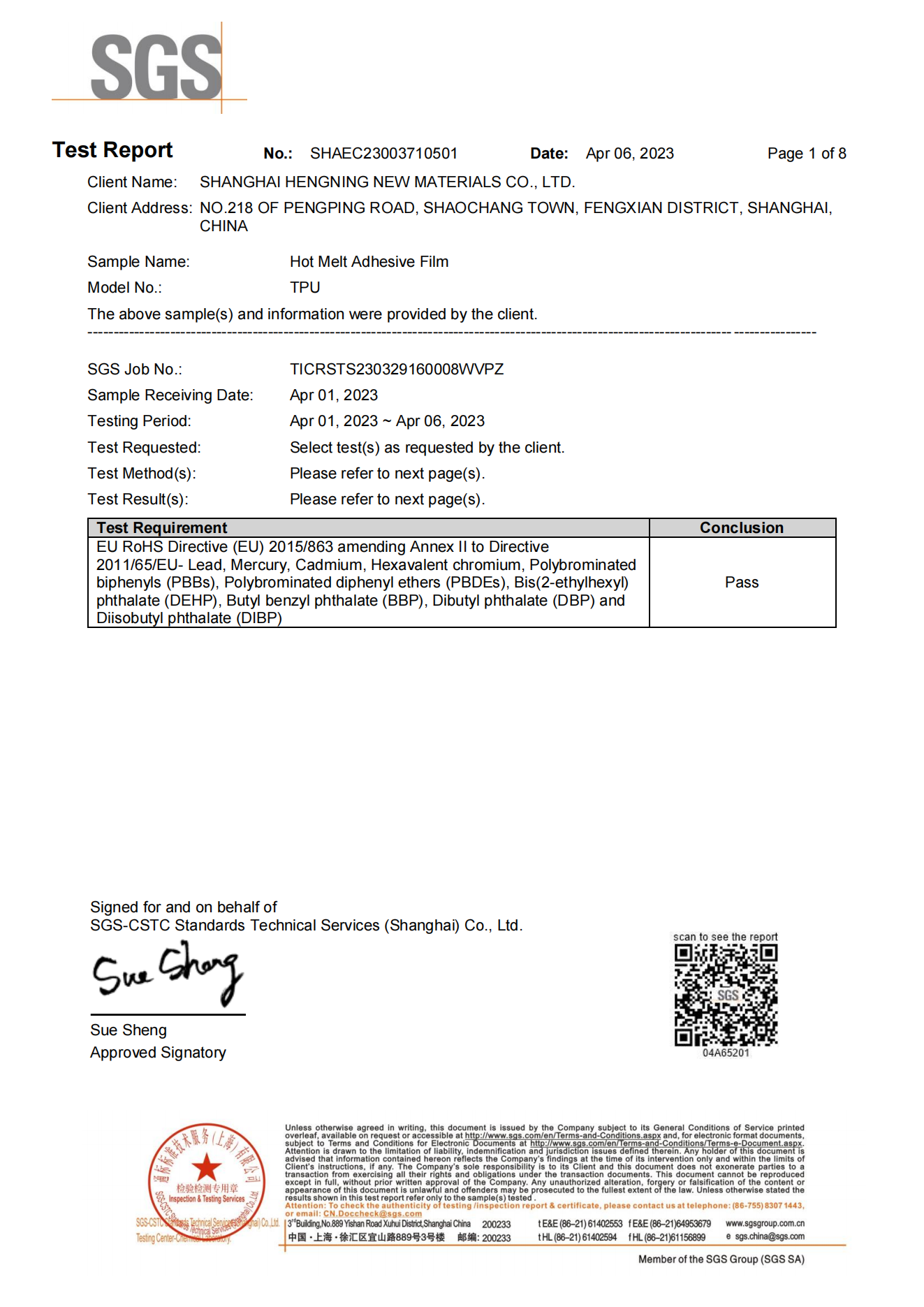
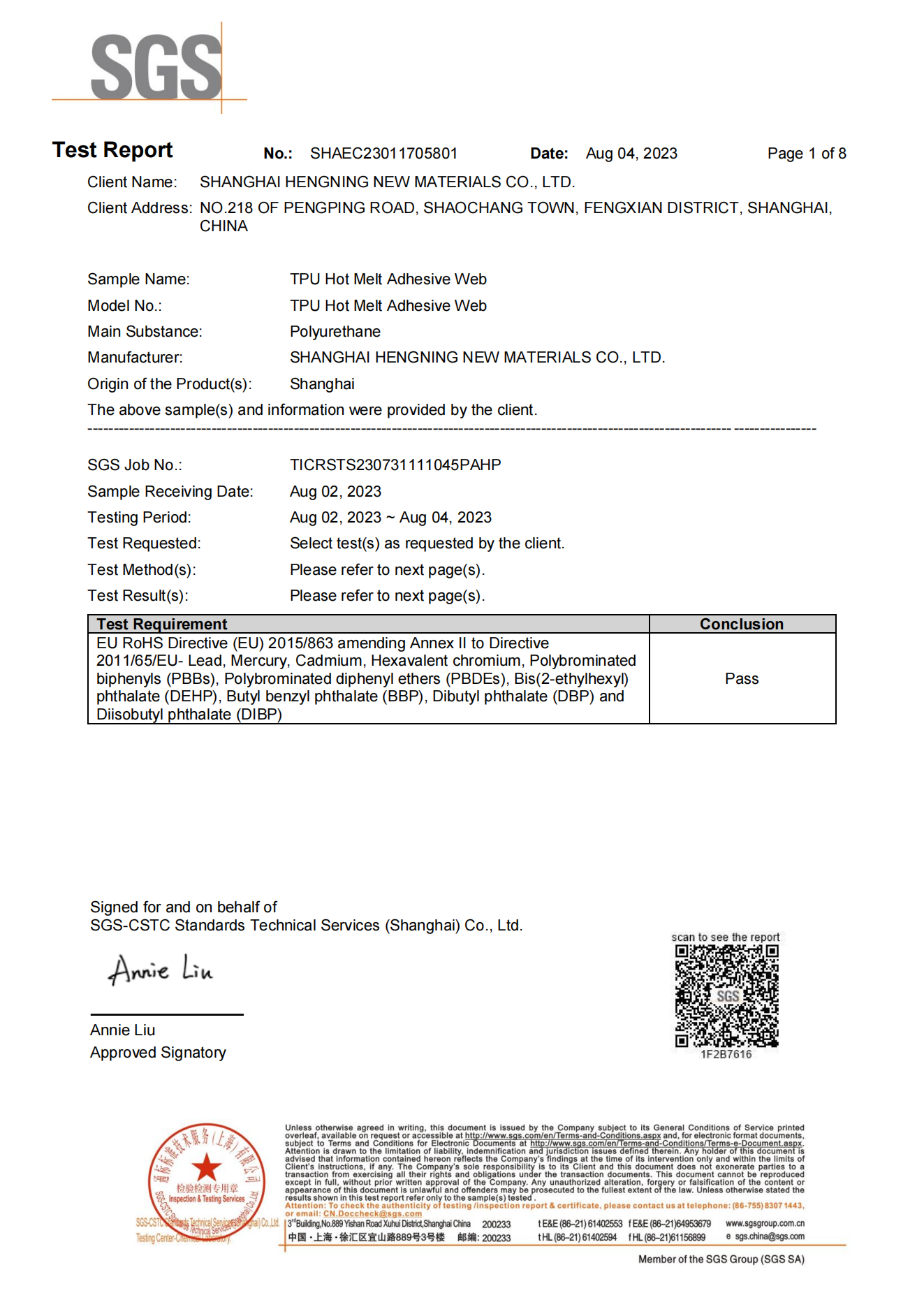
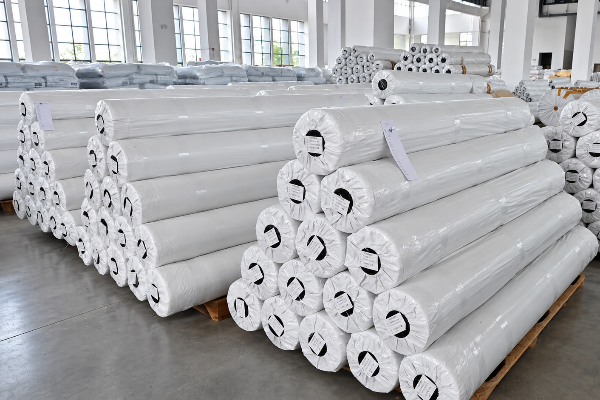
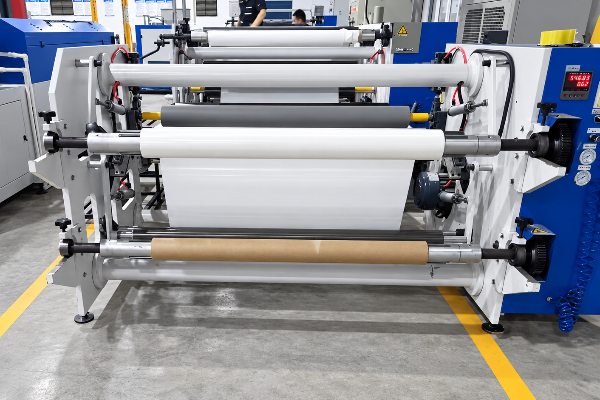
Send the report pages that show the curve, method, conditions, and reported Tg rather than sending only a copied number. We review that context with the material, bonding process, temperature, width, thickness, and application requirements to discuss a suitable material family, form, and sample route.
SYS.01
OPT.ON
01
Report packet
-
1.1
Material and grade identity
-
1.2
Full Tg curve and result page
-
1.3
Technique, standard, signal, and convention
-
1.4
Heating/cooling scan and rate
-
1.5
DMA frequency where applicable
-
1.6
Conditioning, thermal history, and units
SYS.02
OPT.ON
02
Application packet
-
2.1
Both substrates and their surface condition
-
2.2
Bonding equipment and current process
-
2.3
Temperature, pressure, dwell, and cooling
-
2.4
Required width, thickness, form, and color
-
2.5
Service-temperature range and exposure time
-
2.6
Quantity, destination, trial method, and failure mode
We support custom enquiries for thickness, width, melting-point requirement, color, and application-specific formulation. These are selection inputs; a melting-point requirement must not be mislabeled as Tg.
Industries We Support: Application Areas for the Product Range
Tengyang supplies hot-melt adhesive materials for garment accessories, bonded undergarments, footwear, leather lamination, heat transfer printing, reflective materials, automotive interiors, packaging, building decoration, and other industrial lamination work. This list describes supply scope, not a claim that one grade fits every substrate or operating condition.
-
 01SPECIFICATIONS
Garments and no-sew bonding
Share fabric construction, stretch direction, hand-feel target, wash condition, pressing method, and peel requirement.
-
 02SPECIFICATIONS
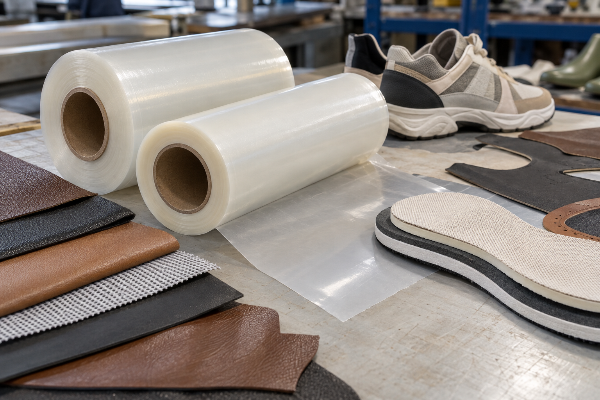
Footwear and leather lamination
Identify leather finish, foam, textile, polymer surface, flex cycle, moisture, and bonding geometry.
-
 03SPECIFICATIONS
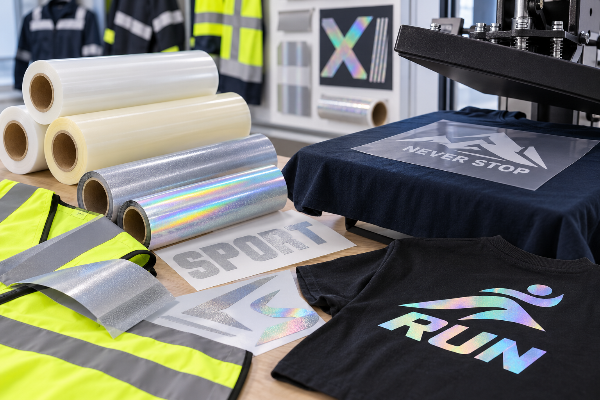
Heat transfer and reflective materials
State carrier construction, transfer temperature, dwell, pressure, release sequence, appearance, and end-use exposure.
-
 04SPECIFICATIONS
Automotive, packaging, and interiors
Provide substrate stack, process speed, heat cycle, odor or appearance constraints, service window, and relevant buyer test.
Application routing: use the actual substrate stack, bonding process, service exposure, and buyer test to identify the material family and sample trial. Do not transfer a result from one application to another.
Where Tg-Only Selection Fails
The PlasticsToday materials analysis article connects glass transition temperature (Tg) to movement and relaxation in an amorphous polymer and to temperature- and time-dependent behavior. This means Tg is relevant, but it is not a replacement for melting, rheology, adhesion, or a joint test.
Do not select from Tg alone
- 01.The reported method or convention is missing.
- 02.Grade identity is absent or differs from the sample.
- 03.Substrate surfaces are coated, oily, porous, or low-energy.
- 04.The process window cannot be measured at the bond interface.
- 05.The service condition includes cycling, moisture, chemicals, or repeated flexing.
- 06.No acceptance test or failure criterion exists.
Stop and request evidence
- 01.A supplier replaces a grade report with a generic polymer table.
- 02.The wrong call is treating activation temperature, softening point, melting point, and Tg as interchangeable.
- 03.Avoid treating high Tg as automatic proof of heat resistance.
- 04.A single peel or shear number has no geometry, conditioning, or test temperature.
- 05.A sample result is presented as independent certification.
- 06.A fixed savings claim has no buyer baseline.

Request a Review: Send Tg Data with Your Application Requirements
Tell Tengyang your material pair, bonding process, temperature, pressure, dwell, cooling, width, thickness, product form, service window, quantity, and acceptance test. Include the report pages that identify the technique, convention, conditions, curve, and grade.
What you receive next
- A discussion of suitable chemistry families and material forms
- Clarification of missing report or process inputs
- A sample route when application details support one
- Order-specific quantity, timing, and Incoterms in the quotation
FAQ: Glass Transition Temperature
Specifications Enquiry
Is glass transition temperature the same as melting point?
No. Tg concerns mobility in an amorphous region; melting concerns a crystalline phase. Semi-crystalline thermoplastic materials may exhibit both, so the report must label each event.
Can Tg set the hot-melt adhesive activation temperature?
No. Activation and processing depend on melt behavior, viscosity, heat transfer, substrate, pressure, dwell, and equipment. Send the Tg report together with the actual bonding process.
Why do two reports show different Tg values for the same material?
The technique, signal, onset or midpoint convention, heating rate, scan history, conditioning, moisture, analysis limits, and overlapping transitions may differ. Compare the ten matrix fields before calling the results contradictory.
Is a higher Tg always better for an adhesive?
No. Higher stiffness at one temperature may work against flexibility, peel behavior, impact response, or low-temperature use. The correct grade must meet the joint and process requirements, not win a single-number ranking.
Should DSC and DMA Tg values match?
Do not assume they will. DSC reads a heat-capacity-related step, while DMA reads changes in viscoelastic response and can report more than one characteristic point. Compare like methods and conventions first.
What Tg data should I send Tengyang?
Send the complete curve, material and grade identity, technique, named standard, reported convention, scan direction and number, heating or cooling rate, temperature range, DMA frequency where used, sample conditioning, prior thermal history, units, repeats, calibration status, and any validity or uncertainty note. Add both substrates, their surface condition, the bonding recipe, service exposure, and the buyer's acceptance test.
Can Tengyang customize a material around my application?
Yes. We support custom thickness, width, melting-point requirements, color, and application-specific formulations, subject to enquiry confirmation.
Does this page certify a Tengyang Tg value?
No. This page explains how to compare report context and prepare a material enquiry. Use the current grade-specific report and buyer-approved trial evidence for the actual order.