Get in touch with Tengyang Company
How Polymer Physics Explains Industrial Bonding Failures

Polymer physics for bonding is the fundamental science of adhesion applied to real joints: why a joint forms, why it can fail, and what data is still missing. For a thermoplastic hot-melt adhesive, the discussion shouldn’t be “heat = adhesion.” The adhesive must first become mobile enough to approach the substrate; other key aspects include the displacement of air between the adhesive and the substrate where possible, the attainment of adequate, intimate contact, enough time in that contact for relevant interactions to take place, and the cooling of the adhesive into a solid that survives the intended load and environment.
This guide is focused mainly on thermoplastic hot melt adhesive systems. It outlines diagnostic factors such as wetting, chain mobility, interdiffusion, the state of the polymer, the history of the polymer (how it was heated, contacted, and cooled to a solid), and load mode, without turning them into a universal recipe. It doesn’t assume that behavior observed with one polymer pair automatically applies to a reactive adhesive, a crosslinked network, or a polymer-to-metal system.
What Polymer Physics and Materials Science Explain About Bonding
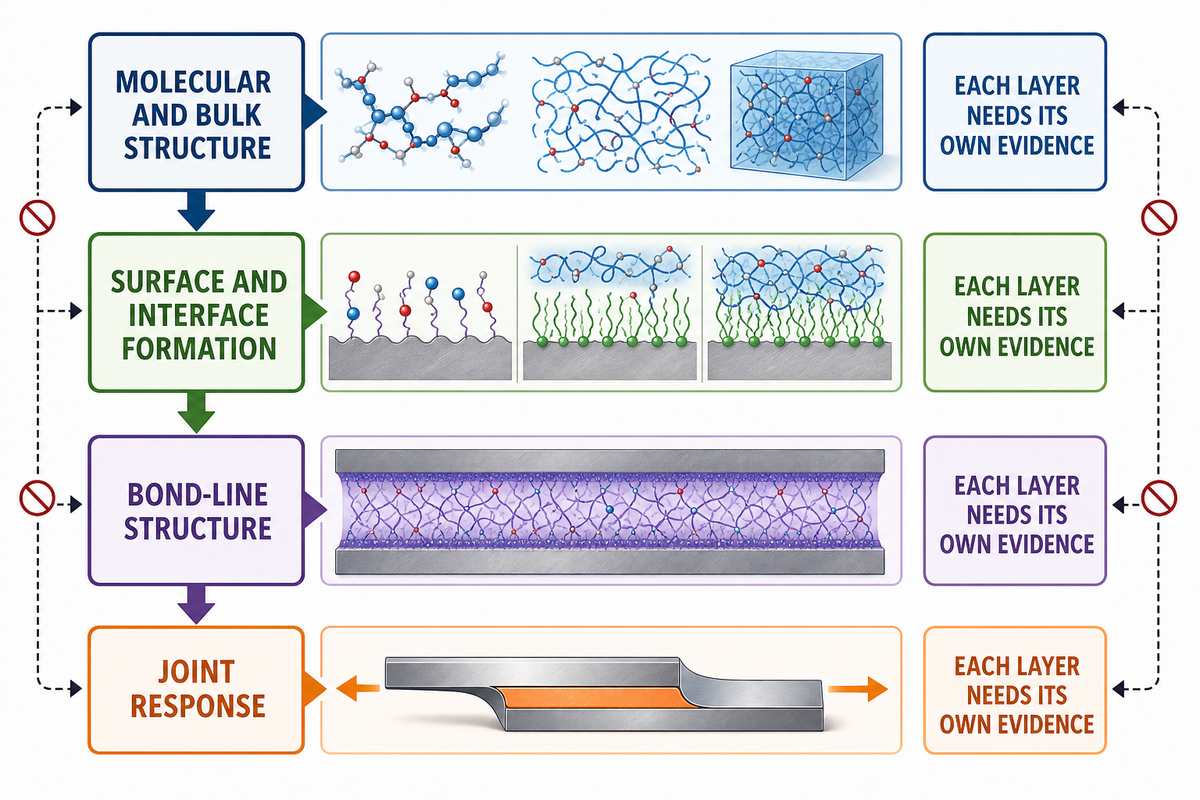
Ultimately, bonding is a system response. The adhesive, each substrate, the surface condition, bond-line geometry, test method, environmental conditions, and process history all affect the overall behavior of the system. Polymer physics helps connect molecular-scale chain structure and thermal transitions with the production team’s first-hand observations of bond behavior of the adhesive system (wetting, tack, set, peel, creep, fracture, or aging).
Of special interest are three layers of explanation: whether the adhesive can reach close and broad contact with the substrate (interface formation), how chain mobility, compatibility, entanglement, crystallization, and cooling change the bond line (structure development), and how the joint responds under a defined geometry, rate, temperature, and environment (mechanical evidence).
| Layer | Question it can answer | Evidence it still needs |
|---|---|---|
| Molecular and bulk structure | Which chain architecture, phase, transition, and time-dependent behavior could influence mobility or cohesion? | Material identity, morphology, thermal and mechanical method, and the relevant observation time |
| Surface and interface formation | Could the adhesive approach, spread, and interact with the prepared substrate? | Surface condition, treatment age, actual adhesive behavior, pressure, temperature, and contact history |
| Bond-line structure | How could diffusion, entanglement, crystallization, thickness, and cooling affect the solidified joint? | Process history, section or morphology evidence where needed, and conditioning before test |
| Joint response | How did the assembled specimen carry a defined load under defined conditions? | Method, geometry, rate, environment, replicates, scatter, and failure location |
Separating these layers helps prevent a common error in logic. Contact angle, even a favorable one, is evidence about one part of interface formation. They aren’t peel or delamination energies. Lap-shear values are evidence for a particular loading condition. They aren’t proof of wet-service durability. Clean cohesive-looking failure exhibited by a material gives some information that may narrow the reason for failure. However, this doesn’t prove that the surface preparation was perfect.
The scale of the discussion must also be considered. Molecular explanations account for possible interactions at the nanometer scale. Finished laminates, by contrast, have varying characteristics at a much larger scale, e.g., thickness, surface texture, edges, voids, thermal gradients, and tolerances in the fabrication process. Even a plausible molecular mechanism is insufficient to validate an engineering claim unless the process creates it consistently across the real bond area of interest and the assembled joint passes a representative test.
In-house review: A factory team should connect each molecular explanation to a measured interface condition and a defined joint test. Otherwise, a plausible mechanism can hide the actual process failure.
Scope boundary: the article explains mechanisms and evidence interpretation. Selection among TPU, EVA, PA, PES, and PO hot-melt materials still depends on the actual substrates, process window, construction, and acceptance test.
Polymer Structure and Polymerization Are Not Interface Formation
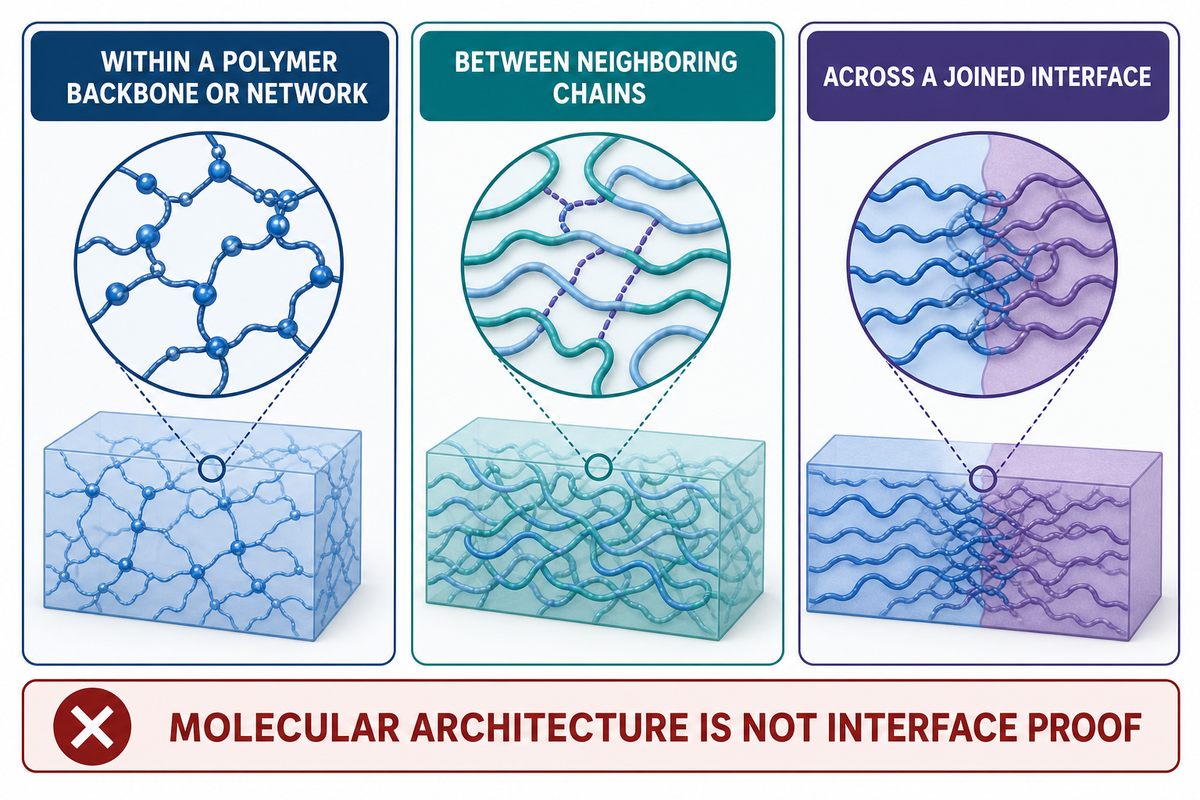
Polymerization creates or modifies polymer molecules through chemical reaction, while interface formation is how two existing surfaces approach, contact, and develop interactions. However, interface formation and adhesive cure can be linked, especially for reactive adhesives, but they aren’t interchangeable.
A monomer is a molecular starting unit. Any polymeric material is made up of repeated structural units and may also involve branches or networks. That may be a homopolymer, a copolymer, a blend, or a combination thereof with other additives. At the atom scale, covalent bonding is described through electron sharing; between molecules or chain segments, other interactions including a hydrogen bond or van der Waals force may also be present. Describing these interactions doesn’t necessarily mean that they occur across a real manufacturing interface.
| Decision question | Reference vocabulary | Evidence boundary |
|---|---|---|
| What is being described at the molecular scale? | A monomer is a building unit; linked units form large molecules with a long chain or branched molecular chains. These labels describe a polymeric material or polymeric architecture. | Chain-scale vocabulary does not show that two production surfaces achieved contact. |
| Which primary bond is inside a molecule? | Valence and electron sharing help describe a covalent chemical bond between bonded atoms. This form of chemical bonding changes potential energy at molecular scale. | Even a bond inside a molecule is not proof of bond formation across a macroscopic interface. |
| Which other attractions might be discussed? | A hydrogen bond, an ionic bond, secondary bonds, molecular bonds, and intermolecular bonds describe different interactions. A negatively charged site and metallic bonds belong to still different descriptions of bonding interactions. | Naming an attraction does not establish its density, range, or contribution in the tested joint. |
| How is chain architecture organized? | A copolymer, block copolymer, crosslinked material, and network structure organize polymer chain segments differently. Cis and trans conformations and entangled chains add further structural distinctions. | Architecture can affect mobility and cohesion, but compatibility and interface history still need evidence. |
| What physical state or response is relevant? | A solid thermoplastic polymer, polymer glasses, and semi-crystalline polymers respond differently to thermal motion. Their physical properties, mechanical properties, tensile strength, and other material properties depend on method and condition. | Bulk test results cannot be substituted for peel, shear, creep, or durability evidence from the joint. |
| Is the material a formulation or combination? | A polymer solution has a defined polymer concentration. Polymer blends, polymer composites, a different polymer pair, other polymer materials, natural materials, and biodegradable polymers create different formulation questions. | Family labels do not identify grade, morphology, additives, surface state, or processing window. |
| Which engineering step is under review? | Polymer engineering and polymer processing connect polymer systems with manufacturing. Bond formation, the type of bonding, chemical properties, and different properties must be tied to a specific process and test. | Any process explanation is useful only when measured conditions and failure observations support it. |
| Who is making the interpretation? | The science of polymers gives a polymer scientist language for comparing types of polymers, a polymer chemical structure, and related mechanisms. | Terminology helps form hypotheses; it does not replace representative application validation. |
| What should the team decide next? | Use the vocabulary to separate molecular structure, interface formation, bulk response, and joint testing. | Select the next measurement that can distinguish competing causes rather than treating terminology as a result. |
The principal change in a conventional thermoplastic hot-melt process is a reversible change in the ability of a material to flow. New backbone polymerization usually doesn’t occur. In the flow stage, heating lowers resistance to deformation, and the adhesive can flow and wet the surface. Compliant adhesives can be forced into surface features by the application of pressure. With time, material can be redistributed. In a contact of compatible thermoplastic materials, possible interpenetration of chains can occur. Cooling then arrests much of that mobility, and the material is held in the contacted state as a load-bearing solid.
In the case of reactive adhesives, additional chemical reactions can occur after the initial bonding contact is made. These reactions can include crosslinking or moisture cure. The question of analysis in this case is which physical and chemical reaction steps occurred, and when. There can be several mechanisms occurring in one adhesive family. Using one melting explanation for every adhesive family can hide the controlling mechanism.
Solvent-borne adhesives provide an additional means of creating an adhesive joint. The evaporation of solvent and any subsequent reaction affect the open time and the development of the adhesive joint. This process shouldn’t be treated as equivalent to the melting and re-solidifying of a thermoplastic hot-melt adhesive.
| Where the interaction occurs | Typical description | Why the distinction matters |
|---|---|---|
| Within a polymer backbone or network | Covalent bonds formed during polymerization, chain extension, or crosslinking | These bonds define molecular architecture but do not prove that two macroscopic surfaces achieved contact |
| Between neighboring chains in one material | Entanglement, secondary interactions, crystalline order, and time-dependent segmental motion | These features influence modulus, flow, creep, toughness, and the ability of a thermoplastic to reorganize |
| Across a joined interface | Close contact, specific interactions, possible interdiffusion, mechanical interlocking, or a chemical reaction | The active mechanism depends on both materials and their history; a list of attractive forces is not evidence that the production interface formed |
Attractions at the molecular level also require closeness. Adhesive and substrate may possess mutually favorable chemistry in principle, but may be prevented from making sufficient physical contact by the presence of trapped air, contamination, roughness, inadequate flow, or a rigid adhesive. For the surface step that comes before contact, see Tengyang’s remarks on surface-energy limits in polymer bonding.
Factory check: In-house observations should separate chemistry inside the polymer from contact created at the interface. That distinction prevents a production failure from being misreported as failed polymerization.
Why Wetting Evidence Cannot Prove a Bond
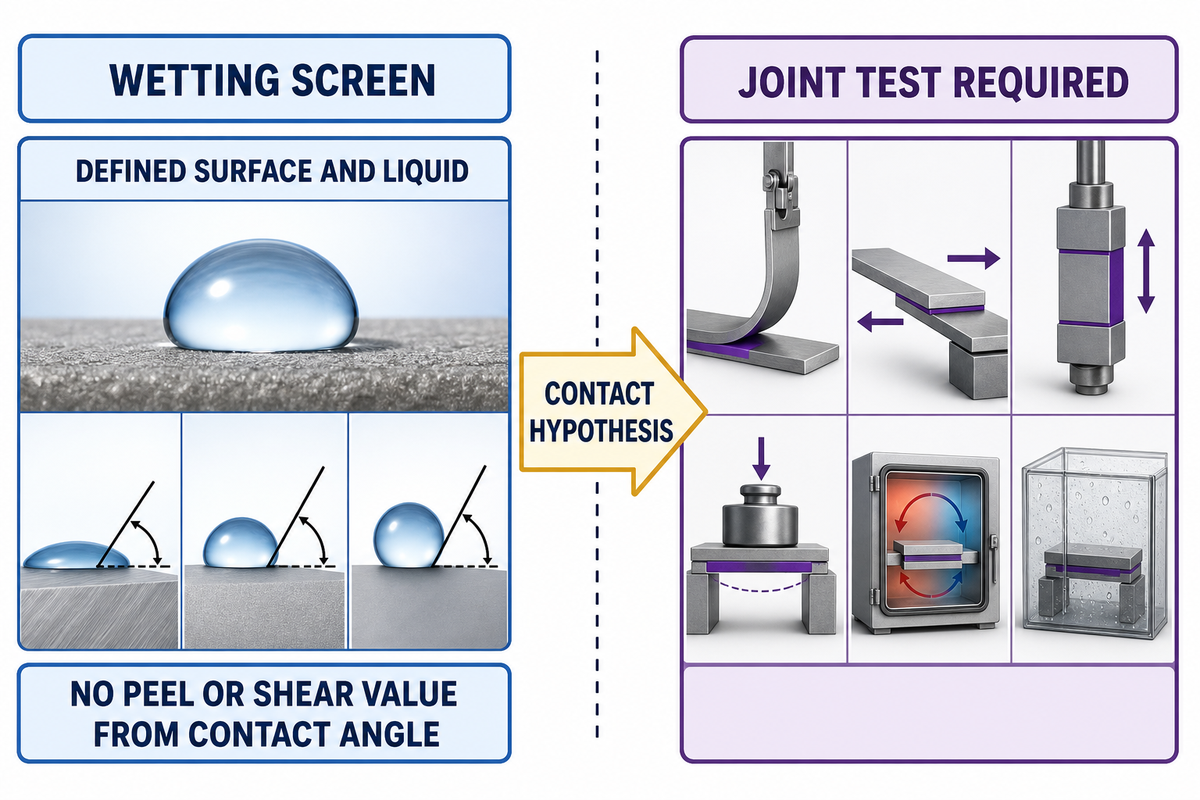
Wetting evidence shows only that an adhesive has an opportunity to spread and form contact; it can’t prove a bond. A joint may wet well and still fail through chemical incompatibility, a bond line that’s too weak at service temperature, unfavorable cooling stress, a weak boundary layer, or later moisture attack, so bond strength needs a controlled joint test.
Wetting is the tendency of a liquid or softened material to spread over a surface under specified conditions. In this sense, contact angle and surface energy methods may be helpful in comparing surfaces, treatments, and test liquids. Lower contact angles often indicate easier spreading for that liquid on that surface.
In this connection, a lower contact angle of a given liquid on a surface can support a hypothesis that the adhesive has more opportunity to spread over that surface and form contact. The surface energy of the substrate relative to that of the adhesive may influence the tendency of an adhesive to spread over the surface, but that opportunity isn’t proof of a bond.
Good results in wetting tests aren’t proof of a reliable bond. Adhesion can still fail for multiple reasons. The adhesive can be incompatible with the substrate, the bond line can be too weak at service temperature, the cooling history can create undesirable stress and/or morphology, the substrate can have a weak boundary layer, or moisture can later attack the adhesive or interface. A joint can show acceptable strength even if a simple wetting screen showed a poor bond opportunity. Such joints can also form even if there’s a poor screen, because the actual adhesive, pressure, temperature, and surface topography differ from the test-liquid experiment.
NIST’s work on bonding in wet conditions describes several moisture-related mechanisms, including plasticization, swelling, degradation, and interfacial attack. That evidence matters because it separates initial contact from retained performance. Freshly bonded and conditioned coupons answer different questions.
| Wetting evidence can support | Wetting evidence cannot prove by itself |
|---|---|
| A comparison of a defined surface before and after a defined treatment | That the treatment will remain effective after storage, handling, or production delay |
| A hypothesis that a test liquid or adhesive can make broader contact under the measurement conditions | That the actual adhesive has compatible chemistry, suitable viscosity, or enough cohesive strength |
| Screening for contamination, treatment drift, or a difficult low-energy surface | A universal surface-energy or contact-angle threshold for every adhesive and service condition |
| A reason to design a mechanical comparison with controlled surfaces | Peel, shear, fatigue, creep, thermal cycling, or moisture durability in the finished construction |
Use wetting data as a screening record:
- State the substrate, cleaning method, treatment, liquid or adhesive, temperature, and time after treatment.
- State if the liquid in question is a test liquid or the adhesive.
- The result must be evaluated in the context of a bond test using the intended adhesive, process, and conditioning.
- No single contact angle measurement justifies a guaranteed peel or shear result.
There are many factors that can affect the contact angle of a liquid, such as the treatment and aging of the substrate, contamination, and the measurement technique. To understand the limits of contact angle measurement, see Tengyang’s guide to what a contact-angle reading can and cannot show about polymer bonding.
How Polymer Chains Move Across a Thermoplastic Interface
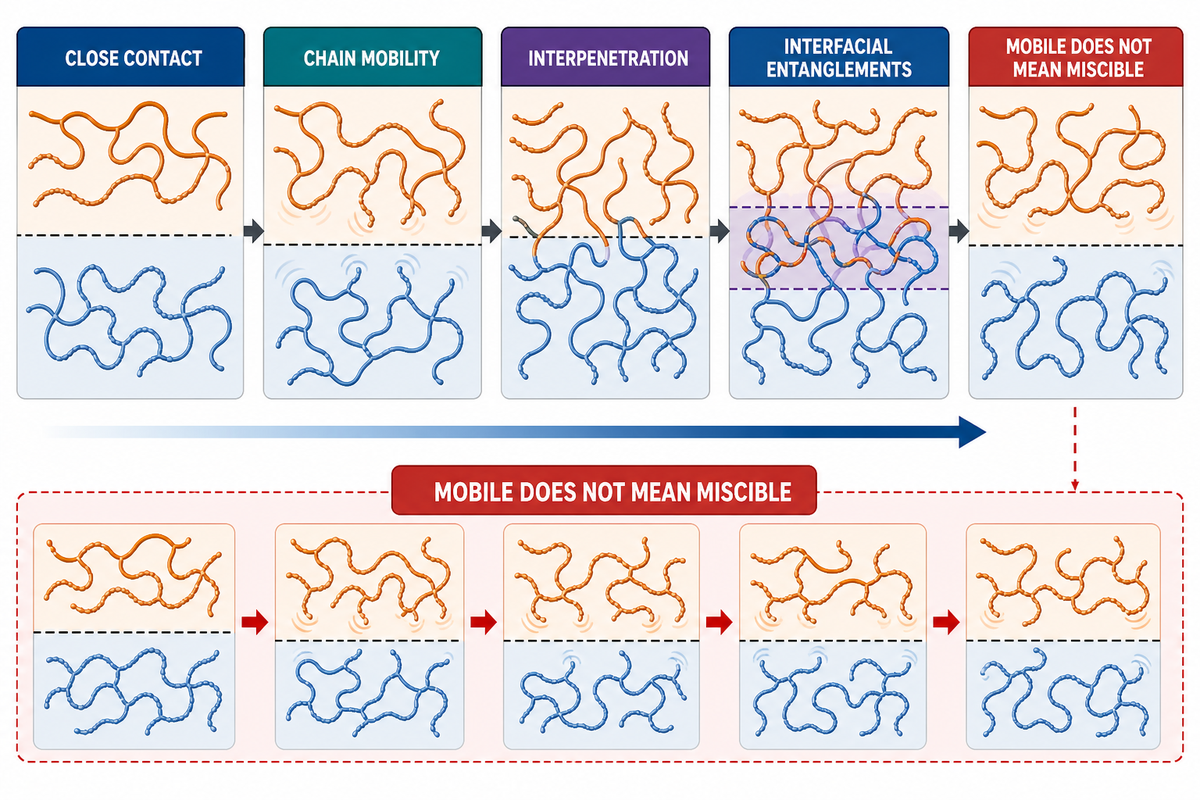
Compatible thermoplastics permit segmental motion across an interface when the chains are sufficiently mobile. Over time, interpenetration and intertwining may make the interface less distinct. This process may be described by the concept of interface recovery or by the phenomenon of diffusion. The question that’s of interest in materials science and industry is conditional: which chains are mobile, compatible, and in contact for long enough under this process?
The mobility of polymer chains is affected by temperature. However, temperature alone doesn’t make the effect predictable. The architecture of the polymer may affect the mobility of the chains. The molar mass of the polymer may also affect the system. The interphase region may also be affected by the additives in the system. The rate and the extent of interphase coalescence may also be affected by crystallinity, surface history, interface roughness, and dwell time.
A simulation study in Physical Review E linked interface-strength recovery to the diffusion process and to the formation and density of interfacial entanglements. In the context of the simulation study, a default value for the dwell time and the process temperature for hot-melt films isn’t provided. However, default values aren’t what it provided; its value here is mechanistic, not prescriptive. Similar default values shouldn’t be expected for other thermoplastic polymers, because the simulated polymer interface is a model, not a production film. A 2026 review article likewise described interdiffusion bond strength as dependent on temperature, pressure, molecular weight, and healing time. The review also discussed newer mechanisms of bonding, like deformation-induced bonding. General factory rules for these mechanisms were, however, not provided.
In some instances, two thermoplastic polymers can each be mobile yet poorly miscible at the molecular level, so it may be beneficial to use a compatible interfacial layer, an adhesion promoter, or mechanical interlocking of the components. In these cases, “more heat” isn’t always the best remedy and can be the wrong one if chemistry or surface integrity is the limit.
Diagnostic rule: if more heat or dwell improves initial strength, record the improvement but do not assume the cause. Better wetting, lower viscosity, longer contact, greater interdiffusion, altered crystallization, reduced residual stress, or substrate damage can move together in the same time frame.
How Polymer Properties Change Across Glass Transition, Melting, and Crystallization

Physical properties differ across transitions: the term ‘glass transition’ defines a change in the physical properties of a polymer as a result of increased cooperative movement in amorphous regions over a range of temperatures. ‘Melting’ is the loss of crystalline order. ‘Crystallization’ is the gain in crystalline order during cooling or another thermal history. Therefore, a semicrystalline material may consist of a mobile amorphous fraction and a crystalline fraction that changes on a different schedule.
Some crystallizable polymer families (built from different monomer units) possess a degree of similarity, which allows rough predictions on the basis of empirical relationships between transitions of the family members, but that doesn’t make the transitions identical. Published teaching material of The Open University shows a rough relationship between glass transition and melting temperatures in kelvins for certain crystallizable polymers, with scatter. However, this relationship shouldn’t be construed as a conversion formula between the two, or as a process setpoint.
For bonding, the distinction is critical in both situations. Heating allows for more mobility, and can enable wetting before all crystalline structure is removed. In contrast, crystallization during cooling can increase stiffness and set the joint, and may also cause changes in shrinkage, residual stresses and the distribution of rigid and mobile regions. It’s also worth noting that a condition-specific PLA-to-aluminum study found that cooling history affected crystallization, residual stresses, mobility and comparative joint response. In the material system considered, cooling actively participated in defining the joints’ responses; those observations belong to that study, so cooling shouldn’t be viewed as a process to be ignored, nor as a transferable numeric recipe.
In-house checkpoint: In a factory trial, transition-related failure is risky because the same material may stiffen, crystallize, or retain stress differently when cooling rate and restraint change. Record the bond-line history before attributing the result to melting point alone.
For an analysis on mobility and especially time dependence, see the treatment of the glass transition evidence for polymer bonding, and the time- and rate-dependent polymer response, respectively.
Trace the Heat-Contact-Cool Cycle
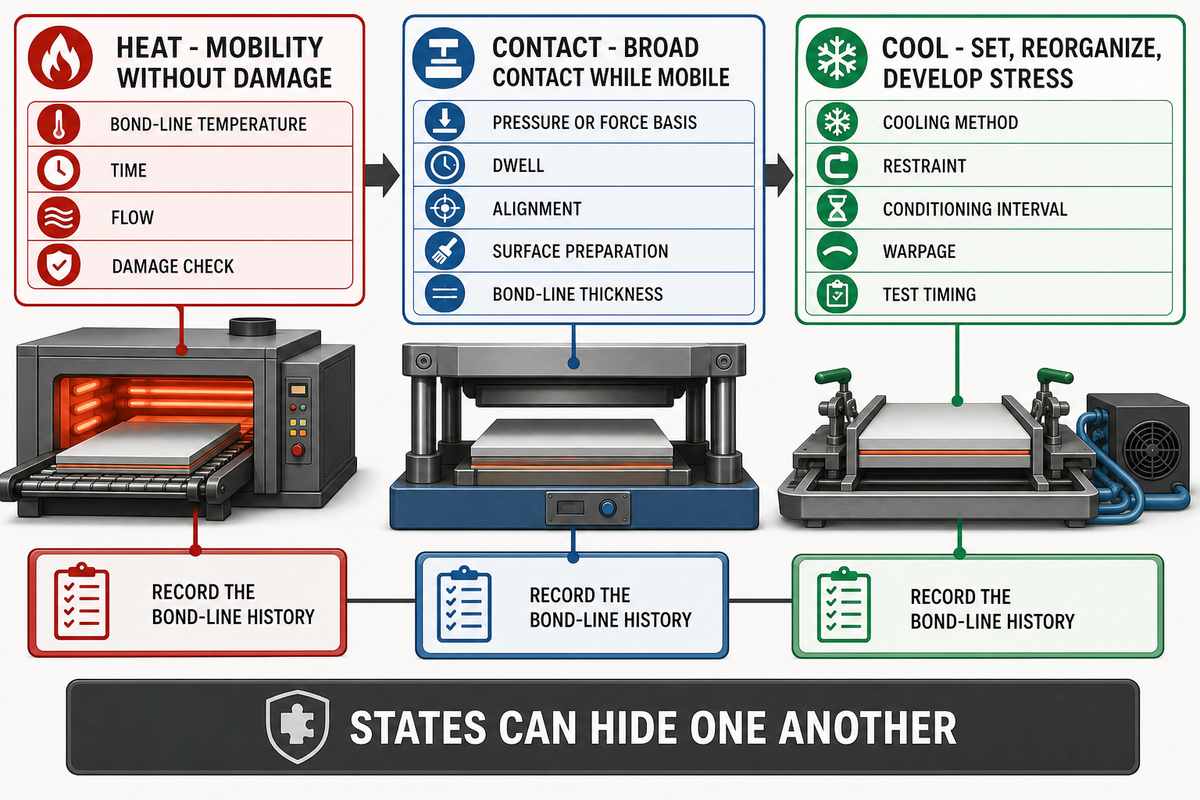
Heat-contact-cool is an editorial way to connect process measurement with polymer behavior, not a calculator; the linked PLA-to-aluminum study is a system-specific cooling example, not validation of this framework. This record prevents process lapses in which a number of process settings are altered and then “optimized.” While it’s often tempting to assign the process improvement to whichever changed setting looked most responsible, this can’t be assumed in every case.
Production checkpoint: In an in-house factory trial, treat each recorded failure as a risk signal because the heat, contact, and cooling states can hide one another. Confirm the interface history before blaming the polymer family.
| State | Physics question | What to record | Common false conclusion |
|---|---|---|---|
| 1. Heat | Did the adhesive reach enough mobility without damaging the construction? | Machine setting, measured bond-line temperature, heating time, material condition, visible degradation, and flow behavior | “The platen reached the setpoint, so the adhesive reached the same temperature.” |
| 2. Contact | Did pressure and dwell create broad contact while useful mobility remained? | Pressure or force and contact area, dwell, alignment, surface preparation, bond-line thickness, squeeze-out, and open time | “Higher pressure always creates a stronger joint.” |
| 3. Cool | How did the interface set, reorganize, and develop stress before testing? | Cooling method, restraint, time to handling, conditioning interval, ambient conditions, part warpage, and test timing | “Cooling only ends the process and cannot change the result.” |
Actual measurements should be used where they’re pertinent. The temperature of the bond-line isn’t the controller setpoint. Applied machine force isn’t automatically uniform contact pressure. Cooling to “room temperature” should be characterized in the context of time, restraint, the geometry of the part, and the test interval.
Compensating mechanisms exist between the heat, contact, and cool states, so each state can conceal another. Extended dwell times can make up for slow heat transfer. Increased joint pressure can improve contact while thinning the bond line excessively. Long conditioning periods can allow morphology or residual stress to change before the joint is tested. The optimum process window isn’t the hottest, longest, or highest-pressure condition. It’s the window that repeatedly gives an acceptable, undamaged joint with manageable variation.
Read Tests as Loading Modes, Not Universal Scores
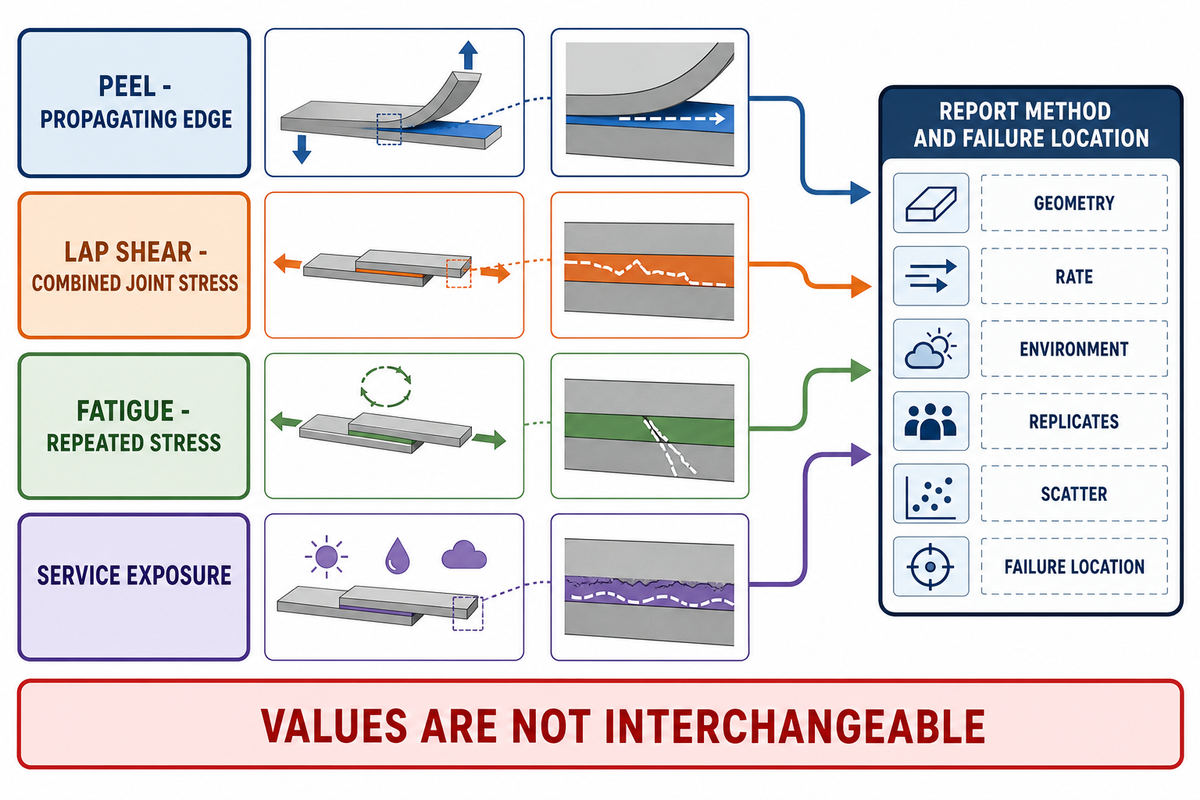
For adhesive joints, a mechanical test is a defined way of loading a defined specimen. Peel tests concentrate deformation near a moving crack front and are sensitive to adherend flexibility, the rate of loading, the angle of loading, the width of the specimen being loaded, and the deformation of the adhesive. Single-lap shear tests produce non-uniform and mixed-mode stresses, including peel effects created by load-path eccentricity. Tension, cleavage, and fatigue ask still other questions.
Due to the reasons stated above, the same nominal adhesive pair tested by two valid methods can yield very different results. Using small adhesive specimens to determine allowable stresses for other, larger joints is also unsuitable without thorough analysis. Different factors, such as the thickness of the adhesive layer, the overlap, the stiffness, the rate of loading, the temperature, conditioning, and the site of failure of the joint, all affect the measured value. The strengths of joints from different methods can’t be compared like interchangeable bond strength scores.
Official standards make this boundary explicit. ASTM D1002 describes a comparative single-lap-shear method for metal specimens and warns against treating small-coupon strength as a design allowable for a different joint. ASTM D3165 is also comparative and notes the danger of using coupon results as design-allowable stresses without appropriate analysis. The public ASTM adhesive-standards index should be checked for the current method and edition when a report is issued.
A defensible test record must tie a specific specimen to the conditions that define that specimen:
- method and edition, specimen geometry, adherend identity and stiffness;
- test article terms: adhesive format, thickness, overlap, surface preparation, and cure or bonding history;
- specimen factors during testing: loading rate, angle or fixture, temperature, conditioning environment, and replicate count;
- test records must document the statistic, scatter, failure mode, and failure location of each specimen;
- the decision a test is considered valid to support, such as screening, comparative evaluation of processes, or confirmation of a process for the specified application.
An evaluation of comparative test specimens may rank controlled alternatives; it doesn’t automatically predict a production joint with different thickness, stiffness, load path, environment, or dimensions.
Diagnose Failure by Competing Hypotheses
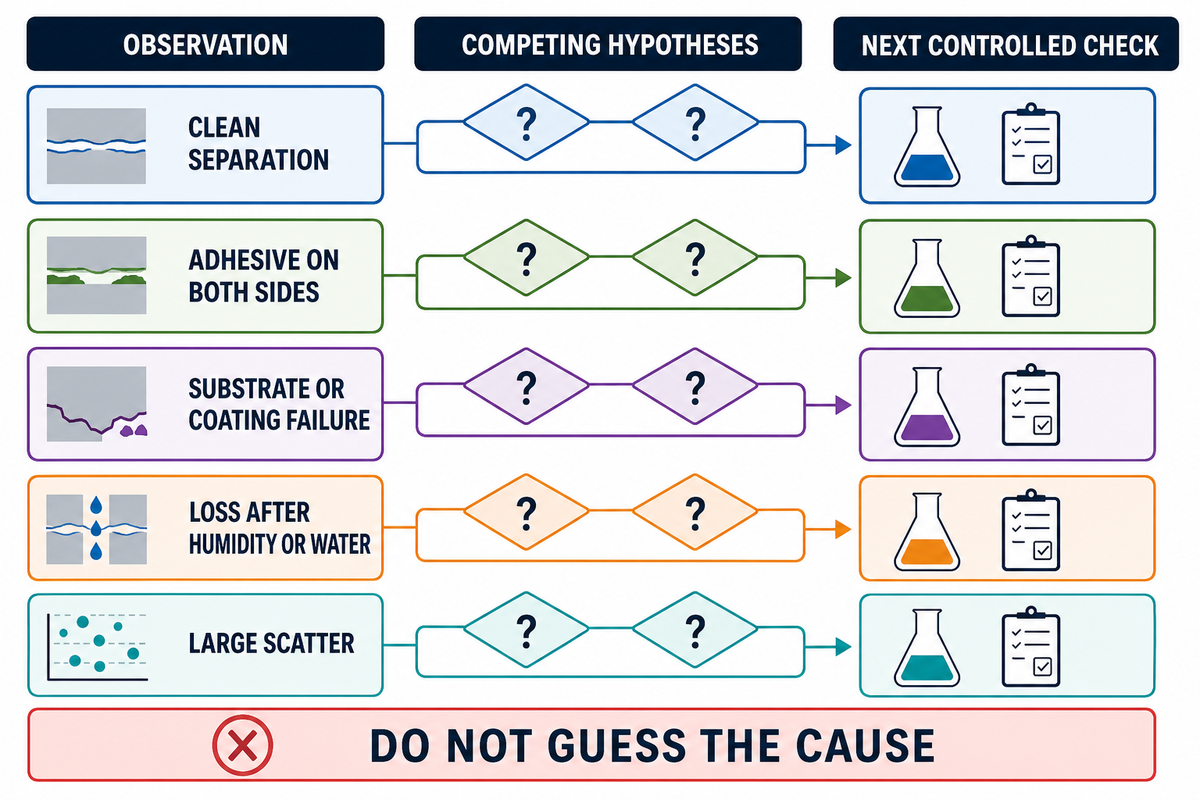
Appearance of failure is an observation, not a complete root-cause analysis. Interfacial failure may be due to a number of process and/or environmental factors, such as inadequate contact, contamination, weak surface chemistry, treatment aging, incompatibility, or moisture attack. Cohesive failure may be due to the interface exceeding the adhesive’s local strength, or to various adhesive defects (too soft, poorly cooled, degraded) or an unfavorable loading mode. Failure of the adherend may indicate that the joint was loaded to the point of damaging the adherend, yet that result may still be unacceptable for the product.
Bond Failure Observation-to-Next-Test Matrix
| Failure observation category | Competing hypotheses | Next controlled check |
|---|---|---|
| Clean-looking separation at one substrate | Poor wetting; contamination; weak boundary layer; incompatible chemistry; treatment decay; moisture attack | Repeat cleaning and treatment controls; measure wetting at a defined delay; compare conditioned and unconditioned joints; inspect both fracture surfaces |
| Adhesive remains on both sides | Useful cohesive fracture; adhesive too soft; insufficient cooling; excessive bond-line thickness; thermal degradation | Test after fixed conditioning; compare thickness and cooling controls; inspect temperature dependence and residue distribution |
| Substrate tears or coating lifts | Joint stronger than a local layer; weak coating adhesion; stress concentration; substrate heat damage | Test the unbonded substrate or coating; change geometry; inspect thermal exposure; report the failed layer rather than “100% bond” |
| High initial result, rapid loss after humidity or water | Plasticization; swelling; hydrolysis; interfacial attack; corrosion; incomplete conditioning baseline | Run dry and wet controls with mass and dimension observations; inspect recovery after drying; identify the changed failure location |
| Large scatter within one condition | Uneven pressure or temperature; variable surface; alignment; thickness variation; mixed failure mechanisms | Map bond-line temperature and pressure; tighten specimen preparation; record individual failure modes; add replicates only after controlling the process |
| Edges peel while the center remains bonded | Edge cooling; pressure loss; contamination from handling; geometry-driven stress concentration; moisture ingress from the perimeter | Map temperature and pressure across the width; compare trimmed and untrimmed edges; control handling; inspect where the crack first starts |
| Heavy squeeze-out or visible print-through | Adhesive viscosity too low; excessive pressure; too much adhesive; substrate too compliant; heating too long | Hold temperature constant while varying pressure or thickness; weigh the adhesive; measure the final bond line and inspect substrate distortion |
| Passes warm testing but fails cold testing | Adhesive or substrate approaches a mobility transition; differential contraction; loss of flexibility; changed crack path | Condition identical specimens at controlled temperatures; test after thermal equilibrium; record modulus-related behavior and failure location |
| Coupon passes but the finished part fails | Different stiffness; load path; scale; curvature; thermal gradient; cooling restraint; production variability | Build a representative subassembly; match geometry and stiffness; instrument the real process; compare the coupon’s allowed decision with the part requirement |
A next test may be designed to eliminate one of two plausible factors that may cause failure, rather than to guess a cause. If both contamination and insufficient mobility could cause interfacial failure, a cleaning control alone isn’t enough; pair it with a controlled bond-line temperature or dwell comparison while holding the rest constant.
Run a Controlled Bond Trial
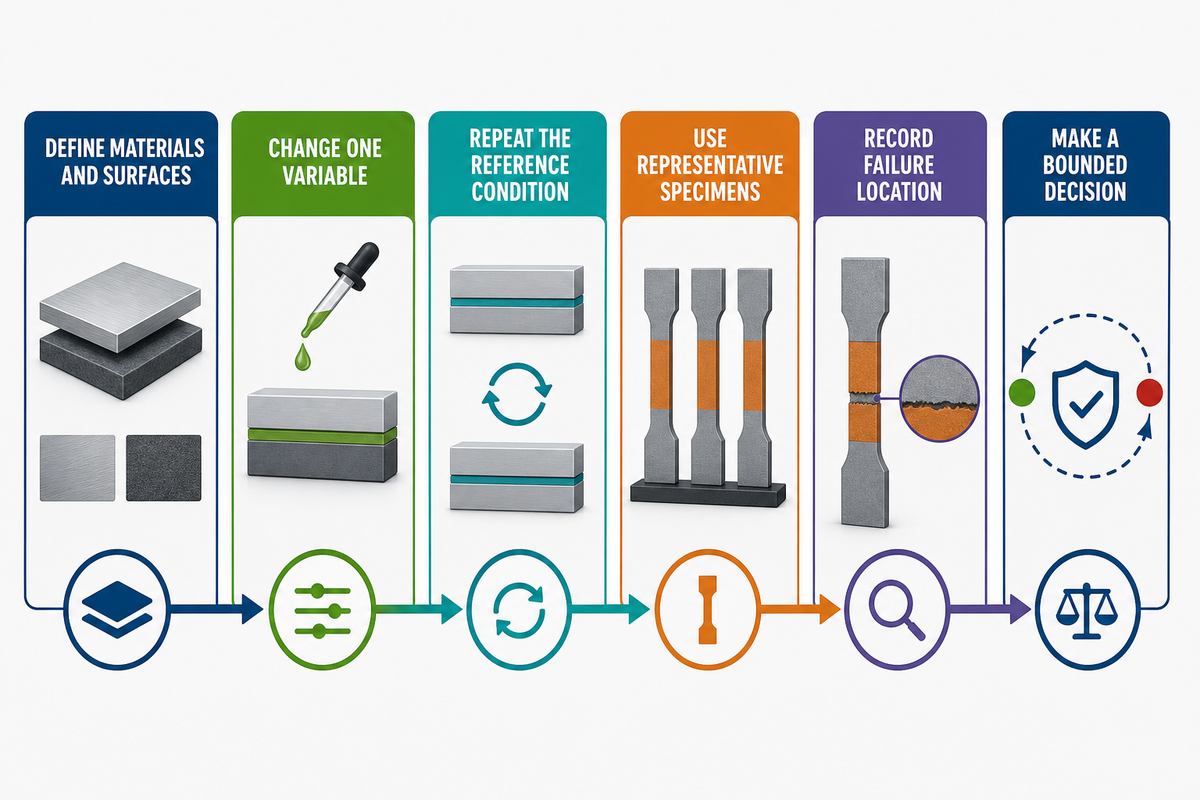
A controlled trial is a small experiment with a defined decision, and the controlled bonding trial matrix gives it a record format. To define a controlled trial, identify the following: substrate pair, surface condition, adhesive, construction, service condition, and acceptance test. Then vary one factor at a time; temperature, dwell time, pressure, the thickness of bond-line, treatment, and cooling aren’t one factor.
During the trial, introduce and maintain a reference condition. Evaluate if the process drifted while the experimental settings changed. Randomize the order of the tests when practical, especially if surface aging, heater drift, or ambient moisture could move with time. Record failure locations and report results of individual tests rather than only an average.
The representation of construction in test coupons matters for real assemblies. A NASA/JPL bonded-joint lesson documents a failure associated with thermal stress and recommends the use of coupons that represent the configuration, stiffness, and environment of interest. Flexible laboratory strips and stiff production assemblies may result in different stresses even when the same adhesive is used.
| Trial element | Minimum record | Why it matters |
|---|---|---|
| Materials | Supplier, family, grade, lot, thickness, storage, and preconditioning | Family names such as TPU or EVA do not identify one formulation or morphology |
| Surfaces | Cleaning, treatment, treatment-to-bond delay, coating, texture, and handling | The interface can change before the adhesive ever arrives |
| Process | Measured temperature, force or pressure basis, dwell, open time, thickness, cooling, and restraint | The machine setting alone does not define the bond-line history |
| Test | Method, geometry, rate, temperature, conditioning, replicates, and failure location | The number is meaningful only inside its loading and environmental context |
| Decision | Acceptance rule, allowed comparison, unresolved risk, and next test | A trial is useful when it closes or narrows a decision |
One passing coupon condition shouldn’t be used alone to approve a different production joint, because scale-up changes heat transfer, pressure distribution, cooling, alignment, and stress. Confirmation should use the production joint as constructed, or a representative one, in its intended environment and service condition.
Where Physics Ends and Material Selection Begins
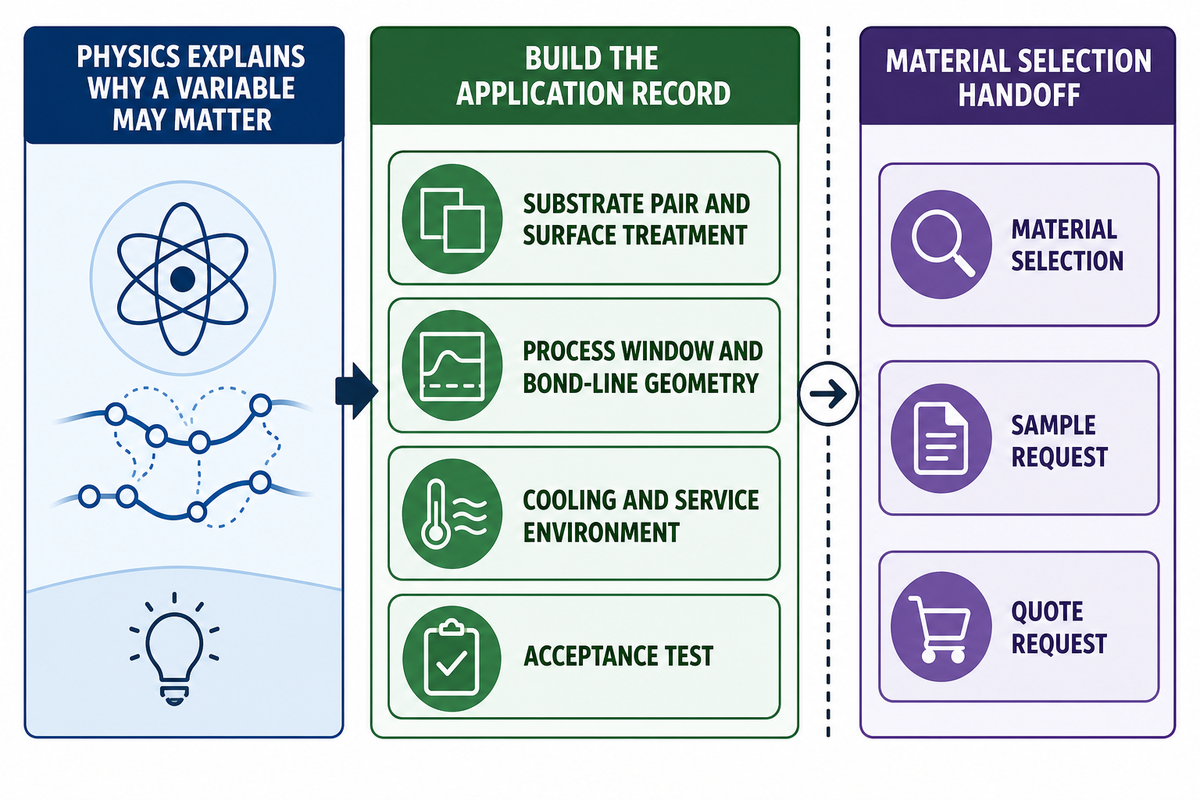
Physics can explain the rationale behind the importance of a variable and the type of evidence to evaluate it. Describing a variable and explaining the evidence that distinguishes it from competing causes is the focus of the science; however, grade selection and commercial assessment belong to the existing Tengyang solution page for material selection and application review for polymer bonding.
Use this guide and the bonding requirement builder to put together better evidence for the conversation. This includes the substrate pair, surface treatment, available processing window, bond-line geometry, cooling method, service conditions, and acceptance tests. Keep in mind the blog is educational, and product-family fit and supplier action should be directed to the solution page.
For a production application, the risk is choosing a polymer family name as if it were a grade. That shortcut fails because formulation, thickness, thermal history, geometry, and service conditions still have to be matched and tested.
Build the Minimum Bond Evidence Pack Before Scale-Up
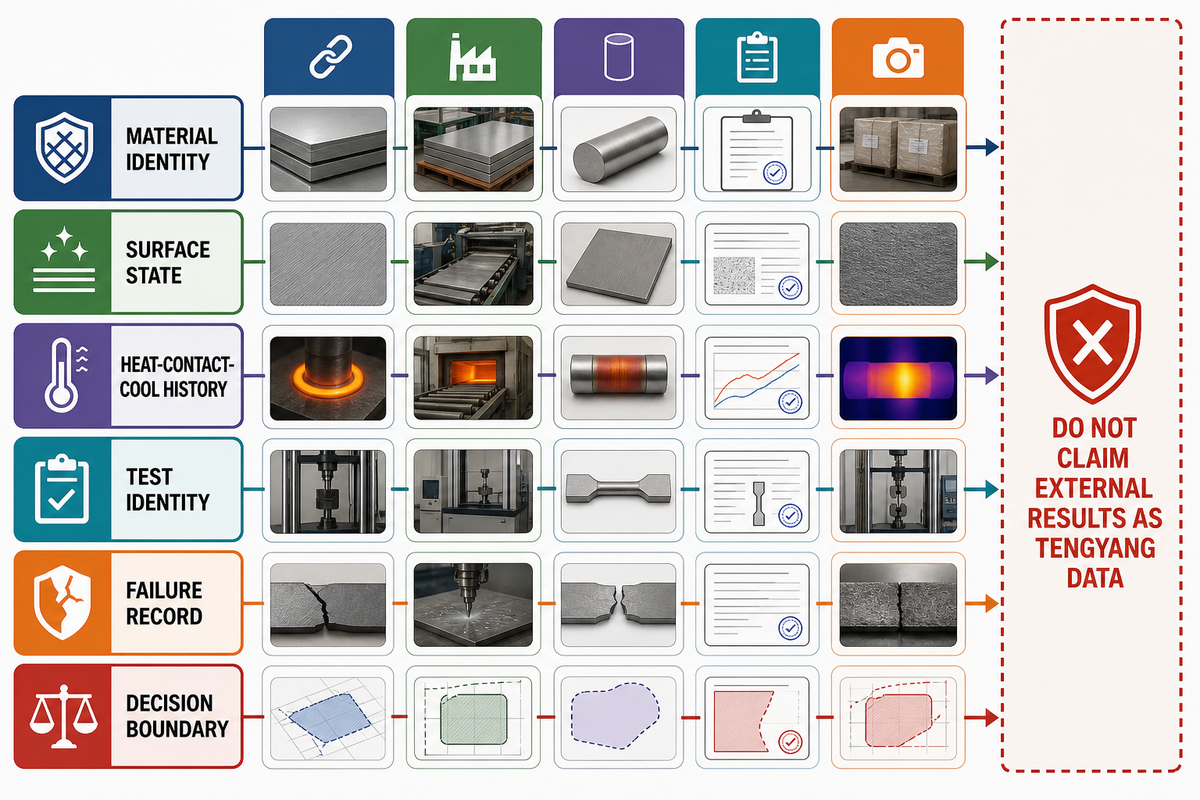
The minimum evidence pack should be adequate to allow another engineer to understand what was bonded, how it was processed, what was tested, and what the result can legitimately support. It doesn’t need every possible measurement, and other evidence (e.g. supplier data) should be included only where it helps validate the claim. The evidence pack should be compiled as a compact, well organized chain of traceability.
- The evidence pack should include the identity of the materials used. Material identity: both substrates, adhesive family and grade, lot, format, dimensions, storage, and condition.
- Surface state: cleaning, treatment, coating, roughness where relevant, handling, and delay before bonding.
- Heat-contact-cool history: measured bond-line temperature where needed, dwell, pressure basis, open time, cooling, restraint, and conditioning interval.
- Test identity: method and edition, geometry, rate, temperature, environment, specimen count, and statistic.
- Failure record: location and mode for each specimen, photographs with scale, and any mixed or changing path.
- Evidentiary threshold: what has been determined, what’s still pending, and whether the evidence supports screening, comparative process evaluation, or the production application.
Each source-specific number should stay attached to the condition described and its distinguishing features. Publications from academia, industry, government, and standard documents can each be valuable, but they answer different questions and should be evaluated independently. None should be presented as Tengyang evaluations unless Tengyang actually has performed and documented the work described.
Prepare a practical hot-melt bonding trial with Shanghai Tengyang. Additional information includes the two materials, temperature, pressure and dwell limits, required thickness and width, use environment, and test method.
Contact: Betty Fang | Email: Betty@hotmeltmaterial.com | Tel / WhatsApp: +86 13122233268
Frequently Asked Questions
What does polymer physics tell us about adhesive bonding?
It relates interface contact, wetting, chain mobility, diffusion, and chain entanglement to thermal transitions, crystallization, and viscoelastic behavior. It also describes the fracture of joints and materials. It relates these physical phenomena to observable process and test results. It supports the development of competing hypotheses and a controlled next test that help explain results. For example, it allows a team to evaluate if poor adhesion is caused by inadequate surface contact, lack of chain mobility, unfavorable cooling, inadequate bulk cohesion, or a loading-mode problem. Polymer physics can state under what conditions a material may exhibit a particular behavior, but it doesn’t give universal values for temperature, pressure, or strength without the geometry, method, and environment. The practical value of polymer physics is better causal reasoning and better evidence, not a formula that bypasses application testing.
Does good wetting guarantee strong adhesion?
No. There are a number of factors that determine the strength of adhesive joints. For example, interfacial chemistry, cohesion of the adhesive itself, bond structure, mode of loading, cooling, and environmental durability can all affect retained joint strength. To confirm that wetting evidence holds for joint strength, you must perform a controlled bond test with the actual adhesive and intended conditioning to rule out the other factors.
Can two plastics bond by interdiffusion?
Two plastics can bond this way. Sufficiently compatible chains that achieve intimate contact and stay mobile long enough can achieve interpenetration and/or entanglement across the original interface. There are a number of factors that affect the extent of interpenetration, including the polymer pair, the molecular structure, temperature, time, morphology, and the history of the interfacial region. Still, mobility of chains doesn’t guarantee compatibility.
Why can peel and lap-shear results disagree?
Lap-shear bond joints are loaded primarily in a mixed shear mode, while peel joints concentrate load near a moving crack front. The strength of peel bond joints depends on a number of factors including flexibility, width, angle, and rate. The strength of lap-shear joints depends on a number of factors including overlap and the stiffness of the adherends, and each result belongs to its method of testing and specimen material.
What should be tested before a hot-melt bond is scaled up?
Examine the actual substrate and surface condition, adhesive grade and format, measured heat-contact-cool history, representative geometry and stiffness, mode of loading, environment and conditioning, repeatability, and failure location. Indicate clearly whether the test was to evaluate the adhesive at the screening or application level.
References & Sources
- Physical Review E (2014): Healing of polymer interfaces: Interfacial dynamics, entanglements, and strength – primary simulation evidence linking interface-strength recovery with diffusion and entanglement development.
- Macromolecular Materials and Engineering (2026): A Review on Polymer Bonding Through Interdiffusion and Role of Deformation-Acceleration (thermoplastic bonding review) – current review of thermoplastic interface mechanisms and the early-stage deformation-induced-bonding literature.
- Tufts University: Fundamental Properties of Polymers – educational distinction among glass transition, crystallization, and melting.
- The Open University: 2.5.4 Melting and structure (glass transition and melting) – bounded empirical relationship and its scatter for crystallizable polymers.
- NIST: Percolation implications in the rheology of crystallization – evidence connecting crystallization with evolving viscoelastic structure.
- McMaster University thesis on hot-melt adhesive processing – condition-bound time, temperature, and pull-off experiments; not a universal recipe.
- Materials (2020): PLA-aluminum interface study – system-specific evidence about cooling history, crystallization, mobility, residual stress, and comparative joint response.
- NIST: Assessing and improving bonding in wet conditions – moisture-related durability mechanisms and the boundary between initial contact and retained performance.
- ASTM D1002 and ASTM D3165 – official public scopes and limitations for comparative adhesive-joint tests.
- ASTM adhesive standards index – official source for current method listings and editions.
- NASA/JPL Lesson 2038 – representative configuration, stiffness, thermal stress, and environmental validation lessons for bonded joints.
Technical note: This article is educational. It doesn’t certify any material, claim Tengyang ownership of third-party research, reproduce a paid standard, or guarantee performance for a particular construction. Confirm grade choice and process settings with representative application trials.
ABOUT TENGYANG
Industrial hot melt adhesive materials for bonding routes
Shanghai Tengyang New Materials Technology Co., Ltd. supports material discussions for production teams working with bonded products.
Available forms: hot melt adhesive film, web, powder and granules. Material families: TPU, EVA, PA, PES and PO.
CONTACT PROFILE
Betty Fang
Contact for material inquiries.