Get in touch with Tengyang Company
Polymer Physics for Bonding
Hot melt material selection and application support
Polymer Physics for Bonding: Heat, Time and Load
The connection polymer physics makes between material, process, and joint on the shop floor determines the feasibility of a production solution. Tengyang offers industrial buyers the means to implement a controlled trial of hot melt adhesive in film, web, powder, or granule form.
- TPU, EVA, PA, PES and PO options
- Film, web, powder and granule supply
- Customized width, thickness and formulation
- Application-specific trial support

Build a Trial Record
Start with the assembly, not a universal temperature
Identify both substrates, their thicknesses and their surface condition.
Show the heat source, the press construction, the range of available dwell time, and how load is measured.
Define the end-use test to select the activation setting and the polymer family.
Bonding Performance at a Glance
Do the substrate combination, converting method and end-use conditions support a thermoplastic hot melt adhesive route? Once this is determined, the next decision is which polymer and physical form can provide clean placement, controlled activation and sufficient bond strength without creating avoidable manufacturing problems.
Material families
TPU, EVA, PA, PES and PO hot melt options
Supply forms
Film, web, powder and granule formats
Production scheduling
Lead time after order confirmation is stated in the quotation
Payment term
Payment and transfer terms are confirmed in the commercial document
Material fit
We review the two substrate surfaces, flexibility, use temperature, chemical resistance and required appearance before narrowing the material family.
Process fit
We review the available heat press, roll laminator or other thermal assembly route, including how temperature, dwell and load are controlled.
Verification fit
We ask how the joint will be judged: peel, shear, flexing, washing, temperature exposure, visual transfer or another written acceptance method.
Decision result
A sample that appears bonded after cooling is a screening result, not a full performance claim. A repeatable trial connects the actual bondline conditions to a named test and records the failure mode.
The Bonding Mobility Window: Heat, Time and Load
Tengyang presents the Bonding Mobility Window as a practical control model for the short period of time during which a thermoplastic adhesive can flow and make contact with a substrate. It is deliberately narrower than a full predictive model since the polymer structure, surface energy, bondline geometry, and cool down history also affect the outcome.
Primary Control Drivers
OPT-01
Heat changes mobility
Thermal energy increases polymer chain segment motion and lowers viscosity enough for wetting, but excess softening can produce squeeze-out or cohesive weakness.
OPT-02
Time permits rearrangement
Dwell allows the polymer melt to contact surface features and relax stress; time cannot rescue a contaminated surface or a material with poor compatibility.
OPT-03
Load creates contact
Contact load brings the mobile adhesive against both surfaces and helps displace trapped air; it does not create chemical affinity where none exists.
The surrounding condition ring
- When screening candidate grades, compare the formulation and molecular weight distribution because they strongly influence viscosity, the useful temperature range, crystallization and the glass transition range. Do not set a process for one grade and then transfer it to another without a new controlled trial.
- Bondline thickness affects heat transfer, adhesive volume, squeeze-out risk and joint stiffness.
- How effectively contact load closes gaps depends on surface treatment, roughness, contamination and surface energy.
View More Conditions
- Joint geometry, cooling rate, conditioning and test speed influence the macroscopic results of adhesion or bond strength.
- At the molecular scale, a polymeric material is built from repeating monomer units connected along a backbone by primary covalent bonds. Secondary bonds, including hydrogen bonding in suitable functional groups and van der Waals forces between neighboring chains, influence cohesion and interface behavior; compare failure after cooling and under the intended service condition before accepting a trial setting. These secondary interactions differ from the primary chemical bonds along the backbone and do not turn every contact into a new covalent bond.
What This Model Does Not Claim
The model does not calculate a setting from Tg, melting point or polymer name alone. It does not suggest that an understanding of ionic and metallic bonds would provide a direct press recipe, and it does not substitute a controlled trial for the application.
Application Support Note
In polymer engineering and materials science, thermal motion helps explain why large molecules and polymer segments rearrange at different rates; use that mechanism to justify changing one press variable at a time, then compare wetting, deformation and recovery. Record the selected polymer, substrate and formulation with each observation so the response stays tied to one material combination.
Tengyang Hot Melt Material Options for the Process Window
Tengyang offers TPU, EVA, PA, PES and PO hot melt in film, web, powder and granule forms. While these names help organize the selection, they are not rankings and do not establish a permanent bond, activation temperature or service-life result by themselves.
Heat activated adhesive form
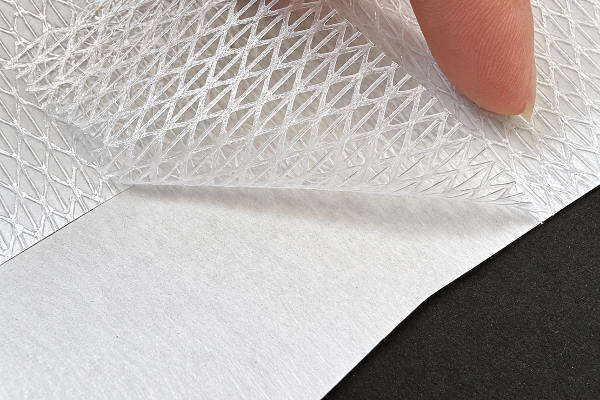
Film, tape and liquid adhesives can all create adhesive joints, but their placement and process risks differ. A heat-activated adhesive film uses a dry, pre-positioned layer, while powder or granule systems shift more control to coating and melt handling.
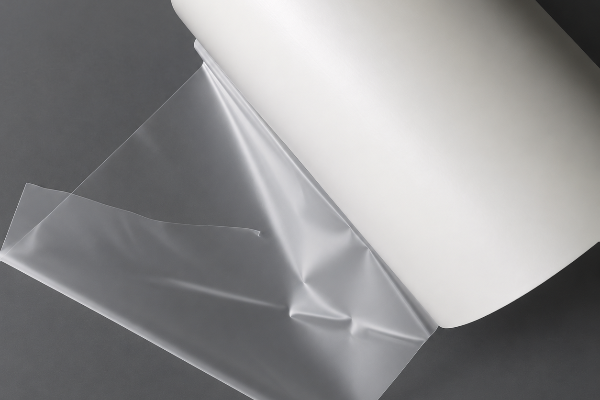
TPU hot melt material
Use TPU as a candidate where a flexible assembly, textile, leather or similar moving structure needs a film or other precisely placed thermoplastic layer. Confirm grade compatibility, hand feel, activation response and the actual end-use test.
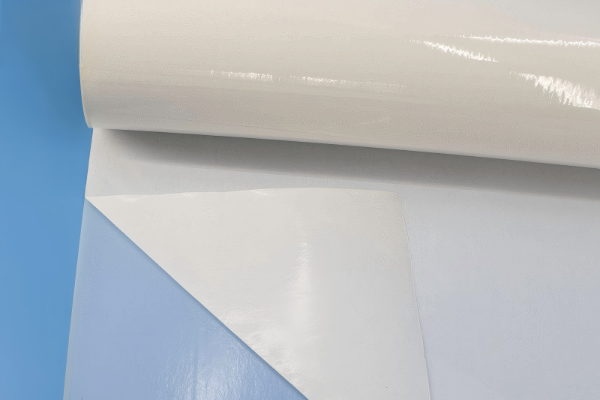
EVA hot melt material
Use EVA as a candidate when converting simplicity, film form or a familiar heat-activated process is important. Screen heat exposure, substrate compatibility, bondline feel and service conditions on the real assembly.
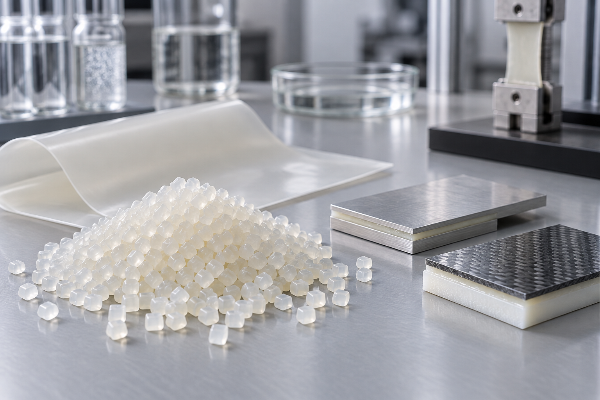
PA hot melt material
Use PA as a candidate only after the substrate pair and use environment are clear. Review flexibility, moisture exposure, chemical conditions and the joint test instead of assuming the polymer family predicts the result.

PES hot melt material
Use PES as a candidate for application-specific lamination where a polyester-based system fits the substrate and process. Published third-party patent formulations belong to their named applicants and do not establish Tengyang product equivalence.
PO hot melt material
Use PO as a candidate when non-polar surfaces or polyolefin compatibility are part of the problem. Low surface energy may still require a grade-specific surface activation or preparation plan, so verify the exact plastic rather than relying on the family label.
Customized formulation
We support application-specific formulations plus customized melting point, color, thickness and width. Each change must be evaluated with the buyer’s process because it can shift heat transfer, flow, cooling and handling.
Choose the physical form with the converting route
Supply form
Placement logic
Adhesive film
Defined layer for cutting, positioning and lamination
Carrier or liner, thickness, edge registration, heat path and release step
Hot melt web
Open structure where breathability, drape or lower coverage may matter
Web weight, penetration, surface texture, strike-through and visible pattern
Hot melt powder
Distributed adhesive for coating, transfer or localized processing
Particle handling, coating uniformity, contamination control and fusion behavior
Hot melt granule
Feedstock for melt application, coating or downstream film/web conversion
Melting equipment, residence time, feed stability and application method
Tengyang’s listed scope here is thermoplastic hot melt material.
Reactive chemistry boundary
Thermoplastic hot melt materials do not work the same way as thermosetting or reactive films, which may undergo an additional curing process; claims for fast curing, high-temperature resistance or irreversible crosslinking cannot be transferred to Tengyang’s listed products.
Material and Substrate Inputs for a Trial Bonding Cycle
Most avoidable trial failures begin before the press closes because the material identity, surface condition or acceptance test is incomplete. We use a written input set so the sample represents the intended assembly rather than an unnamed plastic, fabric or leather swatch.
- Name both materials, grade if known and supplier.
- Record coating, dye, plasticizers, release agents or backing.
- Record thickness, density, porosity and flexibility.
- Mark the side that actually contacts the adhesive.
- Record cleaning method and time between cleaning and bonding.
- Note oil, dust, moisture, oxidation or mold-release risk.
- Name corona, plasma, primer or abrasion if used.
- Retain an untreated control when practical.
- Name platen press, roller laminator, belt laminator or other heat source.
- Describe single-sided or double-sided heating and the platen stack.
- State how load or contact pressure is measured.
- Identify release paper, backing, carrier and removal sequence.
- Define flexing, peel direction, shear load or assembly stress.
- Set washing, humidity, chemical and temperature exposures.
- Define appearance limits for strike-through, edge flow and color.
- Name the inspection time after bonding and after conditioning.
Why surface energy cannot be corrected by pressure alone
Increasing pressure can help close gaps and improve surface contact, but it cannot create favorable molecular interactions where the material pair lacks them. For a low-surface-energy substrate, evaluate the formulation, surface treatment and dwell time together.
Interface language without false precision
Adhesion can involve van der Waals forces, mechanical interlocking, or other interface-related effects along with polar interactions. The existence of covalent bonds across a polymer will not verify the presence of the same type of bonds across the adhesive-substrate interface.
Trial Bonding Cycle: Heating, Holding, Loading and Cooling
A controlled cycle changes one main input factor at a time and keeps the other factors constant. This makes an acceptable result reproducible and gives a failed result diagnostic value; ASTM D903 likewise attaches comparative peel results to defined specimen and test conditions.
Prepare matched specimens
Ensure comparable lots of substrate, dimensions, surface preparation, adhesive orientation and bondline construction across all comparisons.
State a starting range
Take a grade-specific, conservative range from the material and equipment datasheets and avoid using a setting from another polymer family or a similar assembly.
Measure Bondline Response
Record actual adhesive layer temperature if possible as the controller, platen surface and internal bondline may respond at different rates.
Maintain Contact Condition
Time the heating and loading interval consistently, including any delay between reaching the set condition and starting the dwell count.
Control Cooling and Release
Record if load is held during cooling, the release point and the time before the joint is handled or tested.
Test and Inspect Consistently
Use the same geometry, conditioning, speed, and failure classification for all comparisons.

Controlled trial record
| Record | Minimum numeric field | Why it matters |
|---|---|---|
| 1. Substrate pair | 2 material names and 2 thickness values | Heat flow and compatibility belong to the complete pair, not the adhesive alone. |
| 2. Surface preparation | 1 method per bonding side | Cleaning or activation can decay with time and must be reproducible. |
| 3. Adhesive layer | 1 measured thickness in mm | Bondline thickness changes heat transfer, fill volume, stiffness and squeeze-out. |
| 4. Temperature record | 1 bondline probe location in °C | The temperature at the adhesive can differ from the equipment setpoint. |
| 5. Dwell record | 1 timed interval in s | Time controls how long the polymer remains mobile under the stated conditions. |
| 6. Load record | 1 force and contact area, or 1 pressure value in MPa | Pressure without area, or force without tooling geometry, is difficult to transfer. |
| 7. Cooling record | 1 cooling time and 1 release temperature | Cooling history affects morphology, stress and early handling strength. |
| 8. Verification record | 90° peel, 180° peel, T-peel or another named method | Test geometry and conditioning define what the reported result means. |
Bronze measurement card for process economics
Without production line data, we do not publish a fixed savings percentage or payback period. Compare material use, setup labor, cycle time, energy, solvent-control tasks, rework, rejects, cleaning, storage and finished throughput on the same accounting boundary.
- Record baseline and trial values for a representative production quantity.
- Separate one-time equipment or tooling cost from recurring material and labor cost.
- Count quality losses after conditioning, not only assemblies that pass an immediate hand check.
// PROCESS WARNING
When a heat press result changes, resist the temptation to change heat, dwell, and load simultaneously. A one-factor sequence does not guarantee success, but it does allow enough information to distinguish an activation problem from a contact, surface, or cooling problem.
REF-01
Press load guide
Translate force and contact area into a record that another team can reproduce.
Open the Press Load GuideREF-02
Trial matrix
Create a controlled set of heat, dwell, load and cooling trials without changing every factor together.
Open the Trial MatrixREF-03
Requirement builder
Organize substrate, adhesive form, process and acceptance inputs for technical review.
Open Requirement BuilderGlass Transition and Viscoelasticity Resource Cards
Two material concepts deserve their own decision pages because compressing them into a single press-setting table creates false confidence. Use these resources to interpret test reports and time-dependent behavior, and then return to the assembly trial with clearer questions; ASTM D903 is one example of a method that keeps test conditions attached to a comparative adhesive result.
Material report guide
Glass Transition Temperature: Reading Tg in Test Reports
Learn what a reported glass transition temperature says about molecular mobility, what it does not say about melting or activation, and which test conditions must remain attached to the value.
Read the Glass Transition guide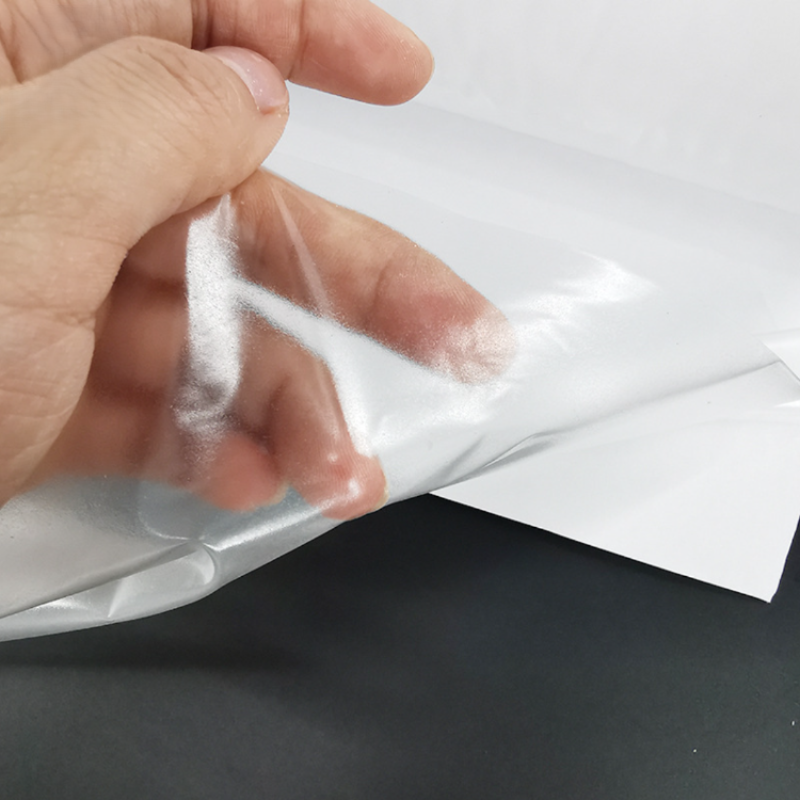
Process behavior guide
Viscoelasticity: Why Time and Temperature Matter
See how observation time, temperature, modulus and deformation interact, and why a short hot dwell and a long cooler dwell are not automatically equivalent.
Read the Viscoelasticity guideUse Tg as a reference, not an activation command
Glass transition describes a change in the plastic-like behavior of a polymer. Depending on the measurement method and sample history, it can be reported differently from the melting point, curing temperature, pressing temperature or the temperature at which an adhesive film bonds the selected substrates.
Time-temperature interpretation
Viscoelasticity means the same material can look more elastic or more flow-like as time and temperature change. Whether the measured response is near equilibrium depends on the real process: heating rate, dwell, load, cooling and the timescale of the end-use test.
Bond Failure Signals and Corrective Inputs
A failed joint should be classified before the next setting is chosen. The visible signal indicates the next controlled change, and a random increase in temperature or pressure can mask the problem and result in a different failure; ASTM D903 also frames peel results as comparative values under defined conditions.
Incomplete transfer
-
Possible inputs
insufficient bondline heat, short dwell, low contact, surface contamination or premature carrier removal.
-
Next check
verify adhesive-layer temperature, transfer pattern and surface preparation before increasing multiple settings.
Edge squeeze-out
-
Possible inputs
excess adhesive volume, excessive heat, long dwell, high load or low melt viscosity.
-
Next check
hold the material constant and reduce one press variable; confirm bondline thickness and edge acceptance.
Adhesive remains on one side
-
Possible inputs
poor compatibility, unequal surface preparation, thermal imbalance or peel geometry.
-
Next check
identify which interface failed and repeat with controlled surface and heating conditions.
Cohesive split inside adhesive
-
Possible inputs
excessive softening during test, insufficient cooling, internal weakness or an end-use load outside the selected grade.
-
Next check
record temperature and conditioning at failure; do not describe the result only as “low adhesion.”
Strong immediate bond, weak conditioned bond
-
Possible inputs
moisture, washing, chemical exposure, temperature cycling, creep or delayed substrate change.
-
Next check
make the intended conditioning part of the acceptance plan before material release.
Intermittent unbonded zones
-
Possible inputs
nonuniform platen contact, wrinkles, trapped air, coating variation, dust or uneven heat transfer.
-
Next check
map the defect position against tooling, pressure distribution and material orientation.
More heat is not a universal correction
In the reviewed thermoplastic pressure-sensitive adhesive test context, higher temperature improved some wetting-linked measures only until excessive softening changed the failure mode; shear resistance could fall as the mass softened. This is a qualified counterexample, not a Tengyang setting, and it shows why tack, peel and shear must not be treated as one interchangeable property.
Keep application temperature separate from use temperature
Depending on the application, the activated adhesive may need to become mobile during activation and remain flexible or strong after cooling, while other components of the system may be exposed to different temperatures in service. A controller setpoint cannot replace a bondline measurement, and unconditioned performance should not be confused with handling strength.
A seal, mounting layer, foil transfer, textile laminate and automotive interior assembly can fail through different paths even when they use the same nominal heat-activated format. The intended application defines which signal matters and which test has decision value.
Ordering, Quality and Technical Support
Shanghai Tengyang New Materials Technology Co., Ltd. offers hot melt adhesive films, webs, powders and granules, providing assistance with material selection and application. We support OEM requirements and customization of thickness, width, melting point, color and application-specific formulation.
Request a Specific Sample and Test Review
01 / REV Requirement review
Tengyang reviews substrate identity, material form, heat source, bonding process, target dimensions and acceptance conditions before recommending a trial direction.
02 / SEL Candidate selection
We narrow TPU, EVA, PA, PES or PO options against the assembly instead of promising that one family is best across every substrate and industry.
03 / ALN Sample and trial alignment
We help align the candidate’s thickness, width, melting-point requirement, color and formulation request with the buyer’s available equipment.
04 / QUO Quotation planning
Price follows material family, formulation, physical form, dimensions, quantity, packing, destination and requested support rather than a fixed public price list.
05 / SCH Production scheduling
We confirm production runs and lead time in the quotation after order review. The order record should preserve the agreed grade, dimensions, color, quantity and packing requirements.
06 / PAY Payment
Payment terms and transfer instructions are confirmed in the order’s commercial document. Confirm the beneficiary details on that document before payment.
07 / DOC Document and acceptance review
Product-specific technical documentation must be matched to the exact grade and requested market or application before it is treated as acceptance evidence. A polymer-family name is not a substitute for grade-level documentation, and we do not use another supplier’s patent or an unrelated certificate image as proof for a Tengyang order.
What to place on the purchase record
- Material family, grade or agreed formulation reference.
- Film, web, powder or granule with dimensions and color.
- Quantity, roll or packing configuration and delivery destination.
- Required documents, labeling and written acceptance method.
- Approved sample or trial record when it forms part of acceptance.
When a suitable hot melt system replaces a solvent-based adhesive step, it can reduce solvent vapor and solvent-handling tasks in that application step. This does not establish a fixed cost saving or make the bonded assembly automatically recyclable. End-of-life separation, material compatibility and local environmental requirements remain part of the product decision.
Request Material and Process Review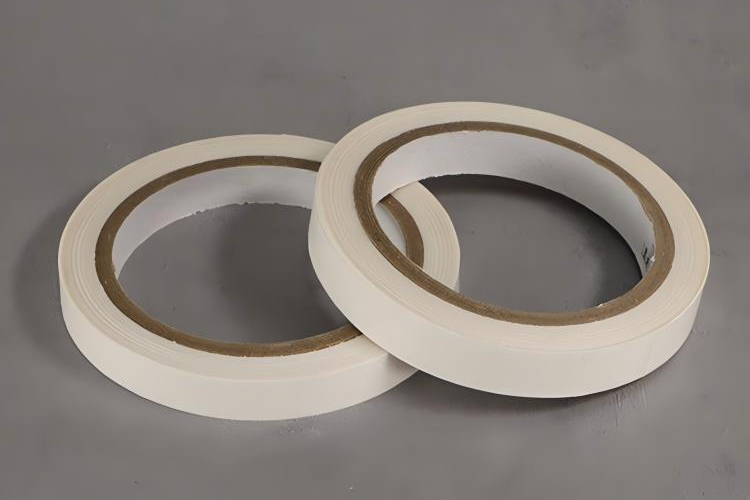
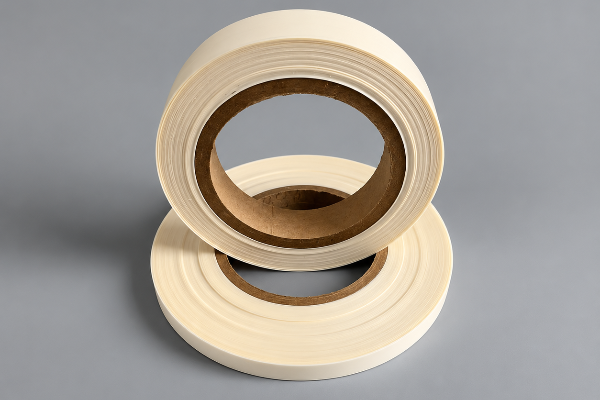
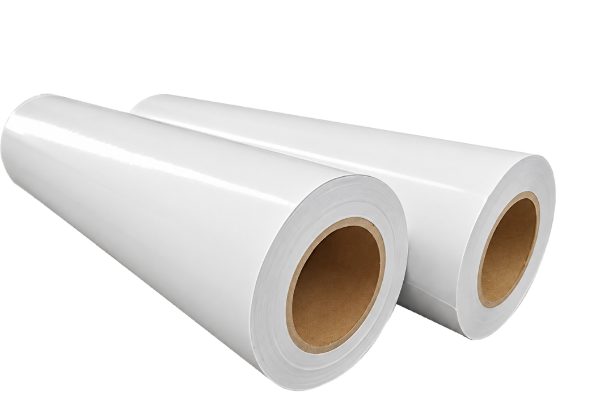
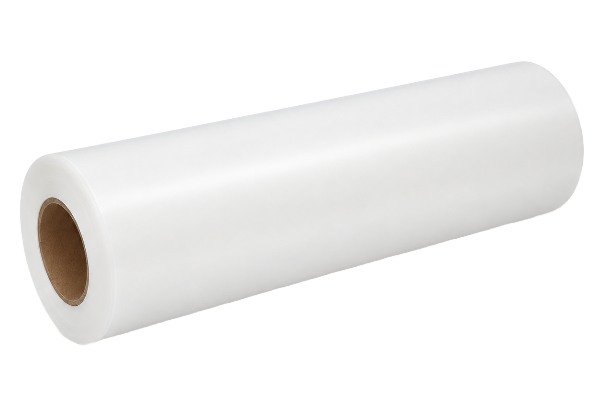
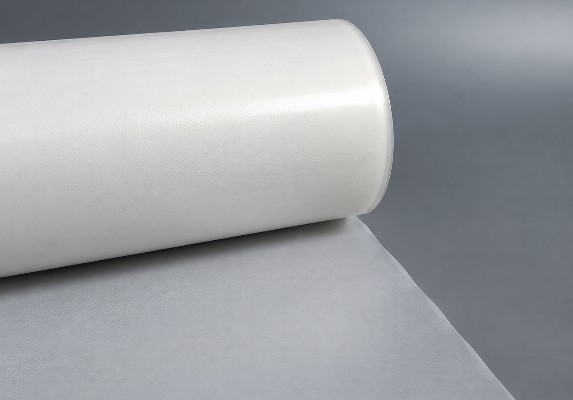
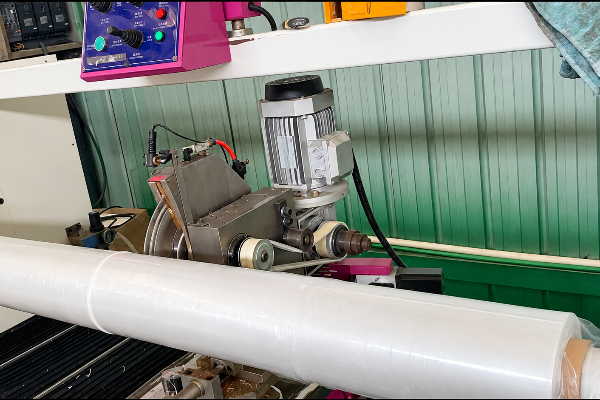
Hot melt adhesive web in roll form for controlled placement and converting trials.
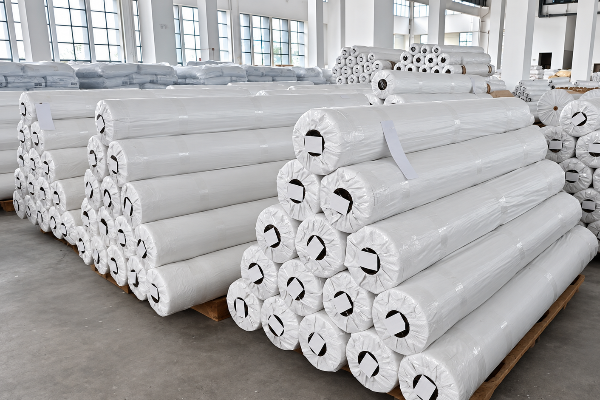
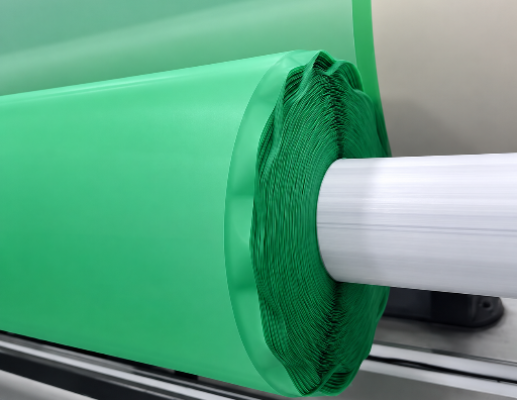
Packaged roll stock staged in the supplied Tengyang facility image library.
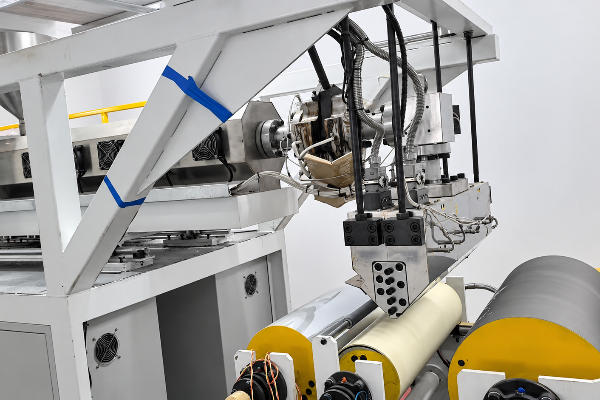
Processing equipment from the supplied Tengyang facility image library.
Where Hot Melt Film Is Not the Right Bonding Route
A dry thermoplastic film is well suited for assemblies where placement, clean handling and thermal activation are important. However, it may not be the right choice merely to avoid liquid adhesive if the substrate, geometry, exposure conditions or manufacturing method do not fit the film format.
01
Thermally sensitive components
Choose another route or a validated lower-temperature candidate when the required activation would distort, shrink, discolor or damage either substrate.
02
Deep irregular gaps
A defined film may not fill a large, changing or inaccessible gap without trapping air or starving part of the joint. A different form or application method may control the bondline better.
03
Incompatible low-energy surfaces
If the grade and allowed surface preparation cannot create stable contact, higher pressure is not a substitute for compatibility. Consider another formulation, an approved treatment or a different bonding technology.
04
Service above the validated range
Do not use early handling strength as evidence for long-term creep, heat, humidity or chemical exposure. The joint needs a grade-specific test under the intended service condition.
05
Required disassembly or repair
If the product must separate cleanly for repair or recycling, treat debonding as a design input. A durable bonded structure can conflict with an end-of-life separation requirement.
06
Uncontrolled heating
If the process cannot measure or reproduce the bondline response, a narrow activation window may create intermittent quality. Improve process control or choose a more tolerant route before production release.
Critical Boundary
Escalation rule
Do not continue gradually increasing settings after failure mode switches from incomplete wetting to squeeze-out, distortion or cohesive split.
Head back to the material-process boundary and think about the adhesive form, thickness, surface treatment or test method.Request a Bonding Review
Get in touch with Shanghai Tengyang for hot melt adhesive film, web, powder and granule solutions. Tell us the two materials, bonding process, available temperature, dwell, load, width, thickness and application requirements so our team can help narrow a suitable trial direction.
Discuss Your Bonding Process-
ContactBetty Fang
-
EmailBetty@hotmeltmaterial.com
-
Tel / WhatsApp+86 13122233268
-
Company
Shanghai Tengyang New Materials Technology Co., Ltd.
No.58, Fumin Branch Road, Hengsha Township, Chongming District, Shanghai, China
FAQ: Polymer Physics and Bonding Questions
01
Can melting point determine the press temperature?
No. Melting or softening information helps define a candidate region, but a transferable setting also depends on adhesive thickness, both substrate thicknesses, heat capacity, heating direction, platen or roller response, dwell, load, tooling contact and the temperature actually reached at the bondline. Confirm the complete stack on the intended equipment before treating any number as a production condition.
02
Is glass transition temperature the same as activation temperature?
No. Do not use glass transition as an activation setting; the two describe different events in the material report and assembly process.
03
Can longer dwell replace higher heat?
Sometimes time and temperature trade off inside a limited, grade-specific window, but they are not freely interchangeable. Long dwell changes the total thermal exposure and may damage a substrate, increase flow or change cooling even when the adhesive eventually reaches a similar temperature. Compare one controlled factor at a time.
04
Does more pressure always produce a stronger bond?
No. Excess load can squeeze adhesive out or mark the assembly.
05
Why does a controller setpoint differ from bondline temperature?
Heat passes through the platen or roller, release layers, carriers, fabrics, films and other substrate layers before reaching the adhesive. Heating rate, thermal mass, contact uniformity and sensor position can create a lag or gradient, while different areas of a large assembly may respond at different speeds. Measure close to the bondline when practical and record the probe position, because the number is incomplete without its location.
06
Why can a bond pass immediately and fail after conditioning?
Moisture, washing, chemicals, creep and temperature exposure reveal delayed failure modes. Put conditioning and inspection time in the trial plan.
07
Which Tengyang polymer family is best?
There is no context-free winner among TPU, EVA, PA, PES and PO.
08
How should peel strength be compared?
Use the same named method, peel angle, substrate pair, specimen width, conditioning, test speed and failure classification. A 90-degree peel bends the flexible member differently from a 180-degree peel, while T-peel uses another joint geometry. Keep the complete method with the result so a change in fixture or specimen does not look like a change in adhesive performance.
09
Can hot melt materials reduce solvent-based glue use?
Yes, when a suitable thermoplastic material replaces the solvent-based application step. That does not make the finished assembly automatically recyclable.
10
What information is needed for a material recommendation?
Send both substrate names and thicknesses, the contact sides, surface condition, adhesive form, target width and thickness, equipment, heating direction, temperature capability, dwell, load measurement and cooling method. Add the end-use exposure, named acceptance test, expected failure direction and any appearance limit. Photos, drawings and a failed sample description help the technical review distinguish a material problem from transfer, tooling or surface problems.
11
Can a laboratory trial be transferred directly to production?
Only after the production heating, contact, dwell, cooling and handling conditions have been compared.
12
What causes incomplete film transfer?
Possible inputs include insufficient bondline heat, short dwell, inadequate contact, contamination, a mismatched substrate, uneven tooling or early liner removal. First inspect the transfer pattern and identify the failed interface. Then change one controlled input while retaining the same material lot, specimen construction and verification method.
13
What affects quotation and delivery planning?
Material family, formulation, physical form, dimensions, quantity, packing, documents and destination affect the quotation. Production runs and lead time are confirmed in the quotation after order review.
14
What payment method is used?
Payment terms and transfer instructions are confirmed in the order’s commercial document.